

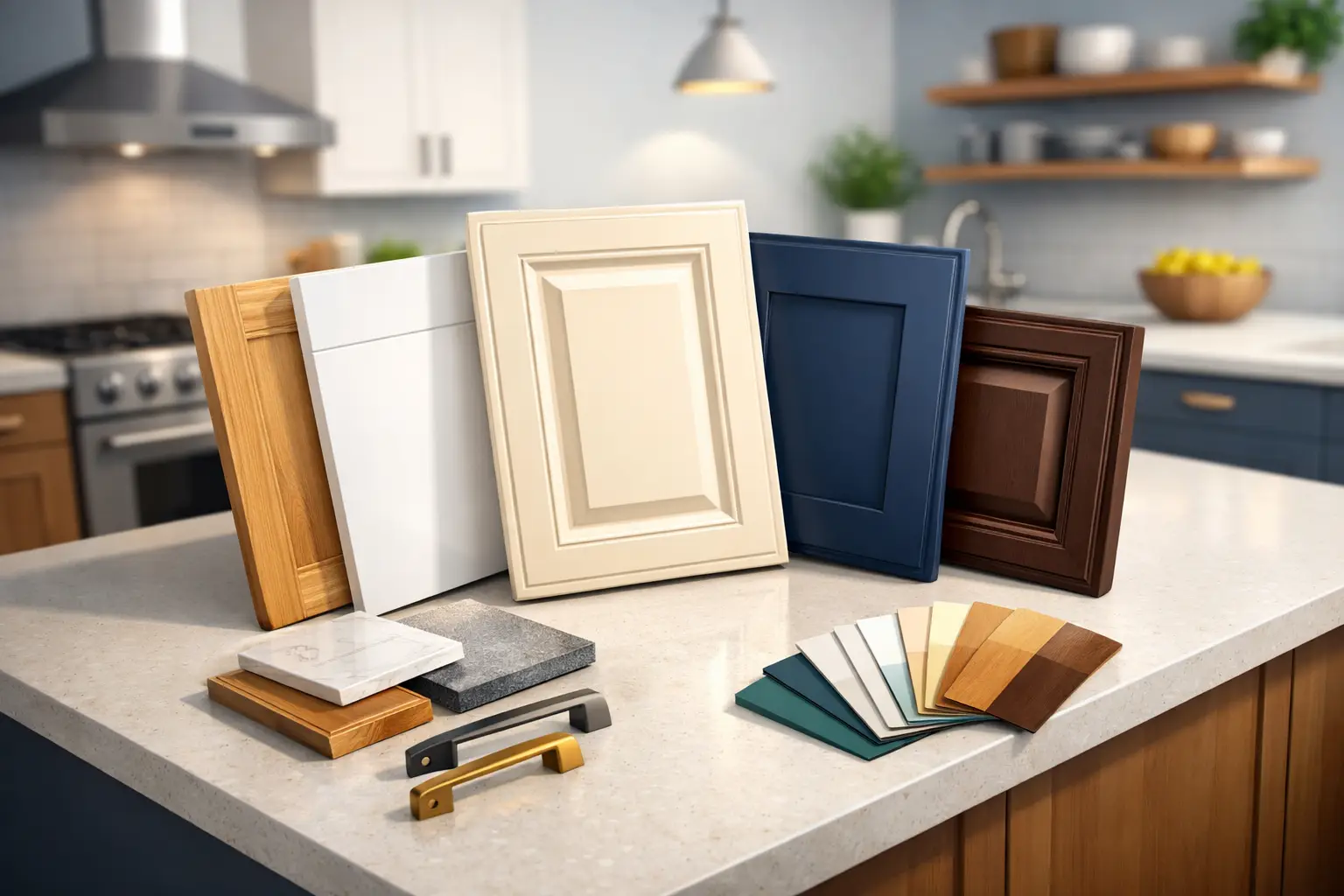

A cabinet door can make a dated kitchen feel newly designed or make a new kitchen feel out of step with the home. That is why a cabinet door style guide should be part of the planning process before colors, countertops, or hardware are finalized. Door style affects the room’s visual weight, how much detail it carries, how easily it cleans, and how well it supports the overall investment in your kitchen.
For homeowners replacing cabinets in Weston, Davie, Miramar, Southwest Ranches, or Pembroke Pines, the best choice is rarely about following a passing trend. It is about selecting a door profile that works with your layout, lighting, home style, and budget while giving you a kitchen you will be happy to use every day.
Cabinet Door Style Guide: Start With the Architecture
Before comparing door samples, look at the rest of the home. A clean-lined contemporary condo, a transitional family home, and a traditional residence call for different amounts of detail. Cabinet doors do not need to match every architectural element exactly, but they should feel intentional beside the flooring, trim, interior doors, and nearby living spaces.
South Florida homes also tend to have open floor plans, strong natural light, and sightlines from the kitchen into the main living area. In these spaces, cabinetry is a large visual surface. A heavily detailed door may feel busy once it is installed across a long wall of cabinets, while a very plain door can feel cold without the right wood grain, finish, lighting, or hardware.
The practical question is not simply, “Which style looks best in a showroom?” Ask which door will look balanced across your actual kitchen dimensions. A design plan and door sample make that decision much easier than choosing from a small online image.
Shaker Cabinet Doors: Flexible and Proven
Shaker doors feature a recessed center panel framed by clean, square rails and stiles. They remain one of the most requested cabinet styles because they can move comfortably between traditional, transitional, and modern kitchens.
A narrow-frame Shaker door often feels more current and refined, especially in a frameless cabinet design. A wider-frame version adds more presence and can suit a larger kitchen or a home with classic trim details. This flexibility makes Shaker a sensible choice when homeowners want a polished look without committing to a highly specific design era.
White, warm gray, soft greige, and natural wood finishes all work well with Shaker doors. For a kitchen that needs visual contrast, many homeowners use a light Shaker perimeter with a darker island. The style also pairs easily with quartz countertops, tile backsplashes, and a broad range of handles and pulls.
There is a trade-off. The recessed panel creates corners that collect more dust and kitchen residue than a flat slab door. It is still easy to maintain with routine cleaning, but it is not quite as simple as a completely flat front. Shaker is also common, which means the distinction comes from proportion, finish quality, construction, and the complete design rather than the profile alone.
Best uses for Shaker doors
Shaker is a strong fit for homeowners who want a versatile kitchen with broad resale appeal. It works particularly well when the goal is an elegant remodel that feels current now but is unlikely to look dated after a few years.
Slab Cabinet Doors: Clean Lines for Modern Kitchens
Slab doors, also called flat-panel doors, have a smooth, unframed face with no routed detailing or recessed center panel. They are the natural choice for modern, contemporary, and minimalist kitchen designs. In a small kitchen, their simple surface can help the room appear less crowded.
This style is especially effective in frameless cabinetry, where narrow reveals between doors and drawers create a clean, tailored appearance. A slab door in a warm wood finish can add a sophisticated organic look, while a matte painted slab door delivers a more streamlined result. High-gloss finishes create a dramatic statement, although they show fingerprints and reflections more readily than matte finishes.
The main practical advantage of slab doors is maintenance. Their flat faces wipe down quickly, which matters in a busy household. They also let other materials take the lead, such as a bold stone countertop, veined backsplash, or statement pendant lighting.
The design risk is that slab doors can appear plain if the rest of the kitchen lacks contrast or texture. Hardware choice becomes more noticeable, and details such as edge profiles, grain direction, cabinet alignment, and installation quality need to be precise. A flat door gives you less visual distraction from imperfections, so the cabinetry and installation should be handled carefully.
Best uses for slab doors
Choose slab doors if your home has contemporary architecture, you prefer an uncluttered look, or you want the easiest-to-clean cabinet front. They can also bring a more modern feel to an otherwise straightforward kitchen layout without requiring expensive decorative upgrades.
Raised-Panel Doors: Traditional Detail and Visual Depth
Raised-panel doors have a center panel that projects forward from the surrounding frame. The profile adds depth, shadow lines, and a more formal appearance. These doors are often associated with traditional, Mediterranean, and classic American kitchen design.
In the right setting, raised-panel cabinetry can make a larger kitchen feel substantial and finished. It works well with detailed crown molding, decorative range hoods, warm wood stains, and more ornate hardware. For homeowners updating a home with established traditional features, this door style may create better continuity than a sleek slab or narrow Shaker profile.
However, raised-panel doors are not the most forgiving choice for every space. They bring more visual activity, which can overwhelm a compact kitchen or compete with heavily patterned countertops and backsplashes. The grooves also require more attention during cleaning. If you like the traditional look but want a lighter result, consider a simpler raised-panel profile and limit additional ornamentation elsewhere.
Best uses for raised-panel doors
Raised-panel doors suit homeowners who want classic character and have enough kitchen space for architectural detail to breathe. They are most successful when the rest of the design supports the same traditional direction.
Other Door Styles Worth Considering
Beadboard or grooved-panel doors add a casual, cottage-inspired texture. They can work beautifully in a coastal or farmhouse-influenced kitchen, but they require more cleaning and are more style-specific than Shaker. They are often best used selectively, such as on an island or beverage station, rather than throughout the entire room.
Glass-front cabinet doors are not a primary door style, but they can soften a long wall of solid cabinetry. Use them for upper cabinets where you can display organized dishware or glassware. Because the cabinet interiors remain visible, glass fronts work best when storage is planned thoughtfully and shelves are not used as overflow space.
A five-piece flat-panel door is another useful middle ground. Like Shaker, it has a framed construction, but its center panel may sit flat rather than recessed. Depending on the proportions, it can feel more refined and less casual than a standard Shaker door while retaining a transitional character.
Match the Door Style to Finish, Hardware, and Construction
Door style is only one part of the cabinet decision. A simple door can look high-end when it is paired with consistent reveals, durable finishes, soft-close hinges, and quality drawer construction. Likewise, an ornate profile can lose its appeal if the cabinet box and hardware do not hold up to daily use.
For homeowners focused on long-term value, pay attention to the cabinet structure behind the door. Plywood cabinet boxes, dovetail drawer construction, and reliable soft-close hardware help the kitchen perform as well as it looks. Door samples should also be viewed in the actual room when possible. South Florida sunlight can make a white finish appear warmer, cooler, or brighter than it did under showroom lighting.
Hardware should reinforce the door profile rather than fight it. Slim bar pulls and integrated-style pulls often complement slab doors. Shaker doors work with many options, from simple bars to more traditional knobs. Raised-panel doors generally look best with hardware that has enough presence to match their detail, without becoming overly decorative.
Choose for Daily Life, Not Just the First Impression
A household that cooks frequently may prioritize easy-clean slab fronts. A homeowner planning to sell within several years may prefer the wide appeal of Shaker cabinetry. Someone restoring a traditionally styled home may be better served by a raised-panel door that respects the existing architecture. There is no single correct cabinet door style because the right answer depends on how the kitchen will be used and what the home needs to communicate.
The strongest remodels balance appearance with practical details: storage that functions well, finishes that suit the light, construction that supports everyday use, and installation that brings all those decisions together cleanly. Leonardo’s Kitchens helps homeowners compare cabinet styles in the context of the full room, so the final choice feels right long after the samples have left the table.
