

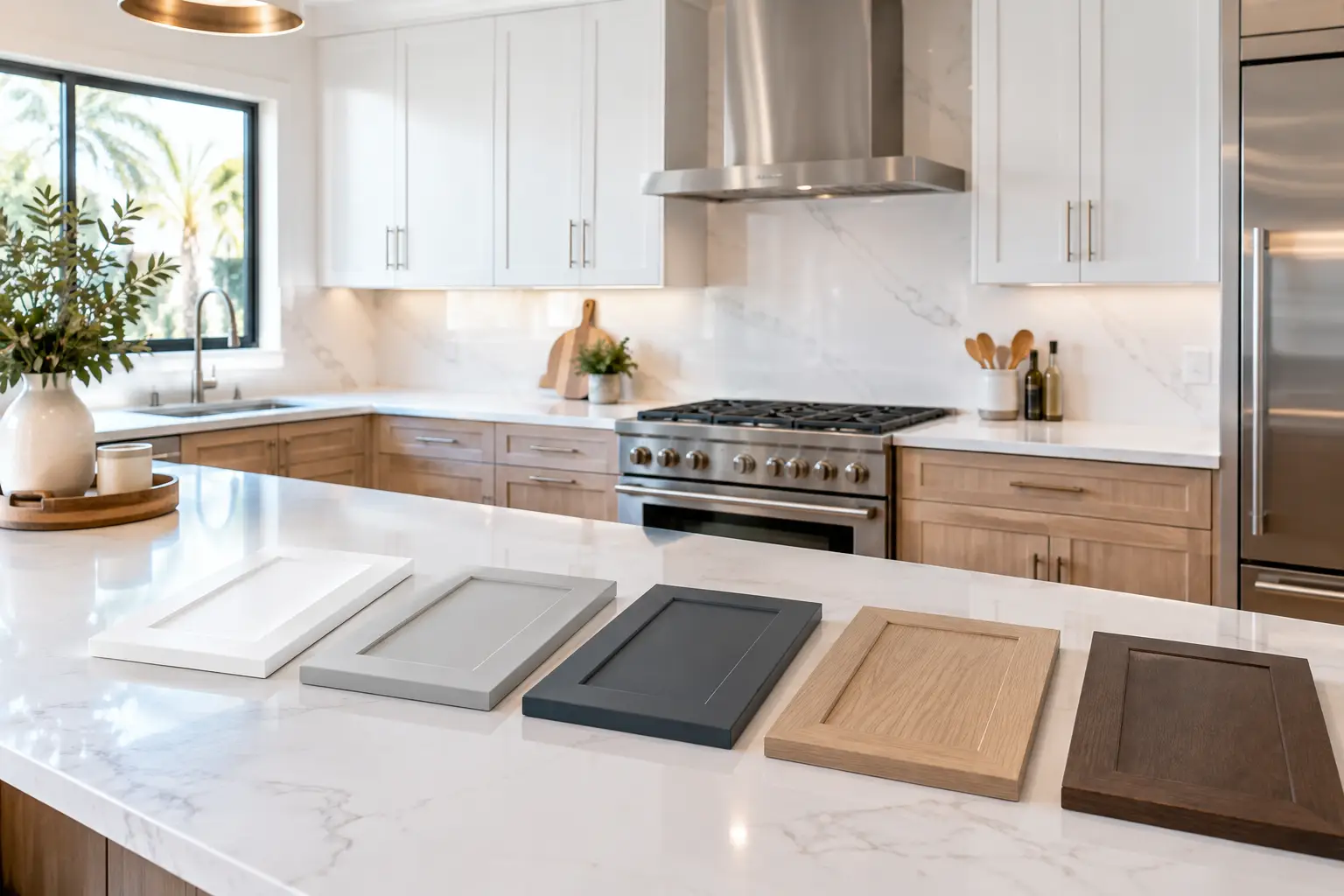

South Florida sunlight can make a white cabinet look crisp in the morning and slightly warm by late afternoon. Add under-cabinet lighting, quartz countertops, and an open floor plan, and the finish decision becomes more than choosing a color chip. Knowing how to select cabinet finish helps you create a kitchen that looks intentional, holds up to everyday use, and supports the value of your renovation.
A cabinet finish affects the room’s brightness, visual size, cleaning routine, and long-term style. The right choice should work with your cabinet door profile, countertop, backsplash, flooring, and the amount of natural light in the space. It should also fit the way your household actually uses the kitchen.
Start With the Look You Want to Live With
Before comparing paint colors or wood tones, decide what you want the kitchen to communicate. A bright White Shaker kitchen feels clean, open, and flexible. It works especially well in kitchens with limited natural light or homes where homeowners want a classic look that will remain easy to update with new hardware, lighting, or wall color.
Warm wood finishes bring depth and character. Light oak, natural maple, and medium walnut-inspired tones can make a modern kitchen feel less stark, particularly when paired with simple slab doors or frameless cabinetry. Dark espresso and deep gray finishes can be striking, but they generally need sufficient lighting and some lighter surfaces around them to keep the room from feeling enclosed.
Door style and finish should support each other. Shaker doors suit painted whites, soft grays, navy, green, and natural wood finishes. Flat-panel frameless cabinets often look strongest in clean matte colors, wood-grain textures, or two-tone combinations. Traditional raised-panel doors can carry richer stains and warmer painted finishes well. There is no universal best finish – the best finish is the one that reinforces the overall design rather than competing with it.
How to Select Cabinet Finish Based on Light
Lighting changes cabinet color more than most homeowners expect. In Broward County, large windows and strong daylight can intensify undertones that were not obvious in a showroom sample. A white finish may lean creamy, gray, or bright depending on the surrounding paint, countertop, and orientation of the room.
Look at samples beside the materials that will remain in the kitchen, especially flooring and countertops. If you are selecting new quartz, review the cabinet and quartz samples together. White quartz with cool gray veining can make a warm ivory cabinet appear yellow, while a creamy quartz can soften a bright, cooler white.
Artificial lighting matters just as much after sunset. Warm light tends to enrich wood tones and soften painted colors. Cooler light can make whites appear sharper and may emphasize gray or blue undertones. Under-cabinet lighting often highlights the cabinet finish against the backsplash, so it should be included in the design discussion instead of treated as an afterthought.
For darker kitchens, lighter cabinet finishes are usually the safest way to add visual openness. That does not mean every cabinet must be white. A practical option is a light perimeter with a deeper island finish, which adds contrast without making the whole kitchen feel dark.
Choose a Finish That Fits Daily Use
A beautiful finish should also be realistic for your household. Painted cabinets provide a smooth, tailored appearance and give homeowners the widest range of colors. They are a popular choice for White Shaker and other transitional kitchen designs. Like any painted surface, they can show dents or chips at high-contact areas over time, particularly near handles, corners, and trash pullouts. Quality construction, careful installation, and appropriate touch-up options all matter.
Stained wood cabinets highlight natural grain and variation. They can be forgiving in busy kitchens because the grain helps disguise minor marks and everyday dust. However, every wood door accepts stain differently, so variation is part of the character. Homeowners who want every door to look perfectly uniform may prefer a painted finish or a consistent wood-look material.
Textured and matte finishes are practical options for modern kitchens. They can reduce the appearance of fingerprints compared with high-gloss surfaces, while still offering a contemporary look. High-gloss cabinetry reflects light beautifully and can make a compact kitchen feel larger, but it may show smudges more readily and requires more frequent wiping in active cooking zones.
Consider where each finish will be used. The cabinetry around the range, sink, refrigerator, and frequently opened pantry will receive more wear than upper cabinets in a less-used area. A finish that looks excellent on a sample should still make sense for the traffic your kitchen receives.
Coordinate the Finish With Countertops and Backsplash
Cabinets occupy a large share of the visual space, but the finish does not need to do all the work. In fact, the strongest kitchens often balance one statement material with quieter surrounding choices.
If you select quartz with bold veining, consider a cabinet finish with a clean, understated color. White, light gray, pale greige, and natural wood tones often let a dramatic countertop remain elegant rather than busy. If the cabinetry is deep blue, black, forest green, or richly grained wood, a calmer quartz and backsplash can keep the composition balanced.
Undertones are more useful than broad color labels. Two finishes both described as gray may be very different: one may read blue-gray, while another has beige or green warmth. The same applies to white cabinetry. Review full samples in the room and compare them directly. A design that looks coordinated under showroom lighting may need an adjustment once it is viewed next to your actual flooring and wall color.
Backsplashes can either blend or create contrast. A backsplash close to the cabinet color creates a soft, continuous look. A contrasting tile brings definition, but it should not introduce a third competing undertone. This is particularly relevant in smaller kitchens, where too many visual changes can make the layout feel fragmented.
Decide Between One Finish and Two-Tone Cabinetry
One cabinet finish is timeless, efficient, and often the best value for a kitchen renovation. It creates a calm backdrop and makes a small or narrow kitchen feel more unified. White, off-white, light gray, and natural light wood are dependable choices when the goal is broad appeal and easy coordination.
Two-tone cabinetry can add dimension when it is used with purpose. A darker island paired with lighter wall cabinets gives the island a furniture-like presence while preserving brightness around the room. Wood-tone lower cabinets with painted uppers can add warmth without overwhelming the space. The key is restraint: use one main finish and one supporting finish, then repeat colors elsewhere through hardware, stools, or lighting.
Be cautious with a very dark island in a compact kitchen or a layout where the island already dominates the room. It can look beautiful, but it may become visually heavy. A free 3D kitchen design is particularly useful here because it shows the relationship between finishes across the full layout instead of on separate samples.
Consider Cabinet Construction Before Focusing Only on Color
Finish is highly visible, but it should not distract from cabinet quality. A lasting kitchen depends on sound cabinet boxes, reliable drawer hardware, properly fitted doors, and materials suited to normal kitchen moisture and heat. An attractive finish on poorly built cabinetry will not deliver the long-term value homeowners expect.
When comparing options, ask how the finish is applied, what material is beneath it, and how door edges are finished. Ask to see full door samples rather than relying on small swatches. A full sample reveals texture, sheen, wood variation, and the way light moves across the surface. It also helps you judge whether the cabinet color works at the scale of an entire kitchen.
For homeowners balancing affordability and durability, well-made RTA wood cabinets can offer strong value, while frameless cabinets can provide a streamlined modern appearance and efficient interior storage. The right finish should complement the cabinet style and construction level you choose, not stretch the budget away from essential quality details.
Do Not Choose From a Screen Alone
Online photos are useful for collecting ideas, but they cannot accurately show sheen, texture, or undertones. Screen settings, photography, and surrounding colors can change the appearance of a finish considerably. View cabinet samples in person whenever possible, then compare them under natural and artificial light.
Bring inspiration photos to a consultation, but focus on the common elements rather than copying one image exactly. You may be drawn to the contrast of light cabinetry and dark hardware, the warmth of a certain wood tone, or the simplicity of a matte finish. A professional kitchen design can adapt those ideas to your layout, storage needs, and budget.
For homeowners in Weston, Davie, and throughout Broward County, contact Leonardo’s Kitchens at 754-234-3838 to schedule a consultation. Serving the community since 2008, we offer free kitchen estimates, free 3D kitchen designs, a Davie showroom, and free local delivery. Seeing the right cabinet finish alongside your countertop and layout is the practical step that turns a good kitchen idea into a kitchen you will be glad to use every day.
