

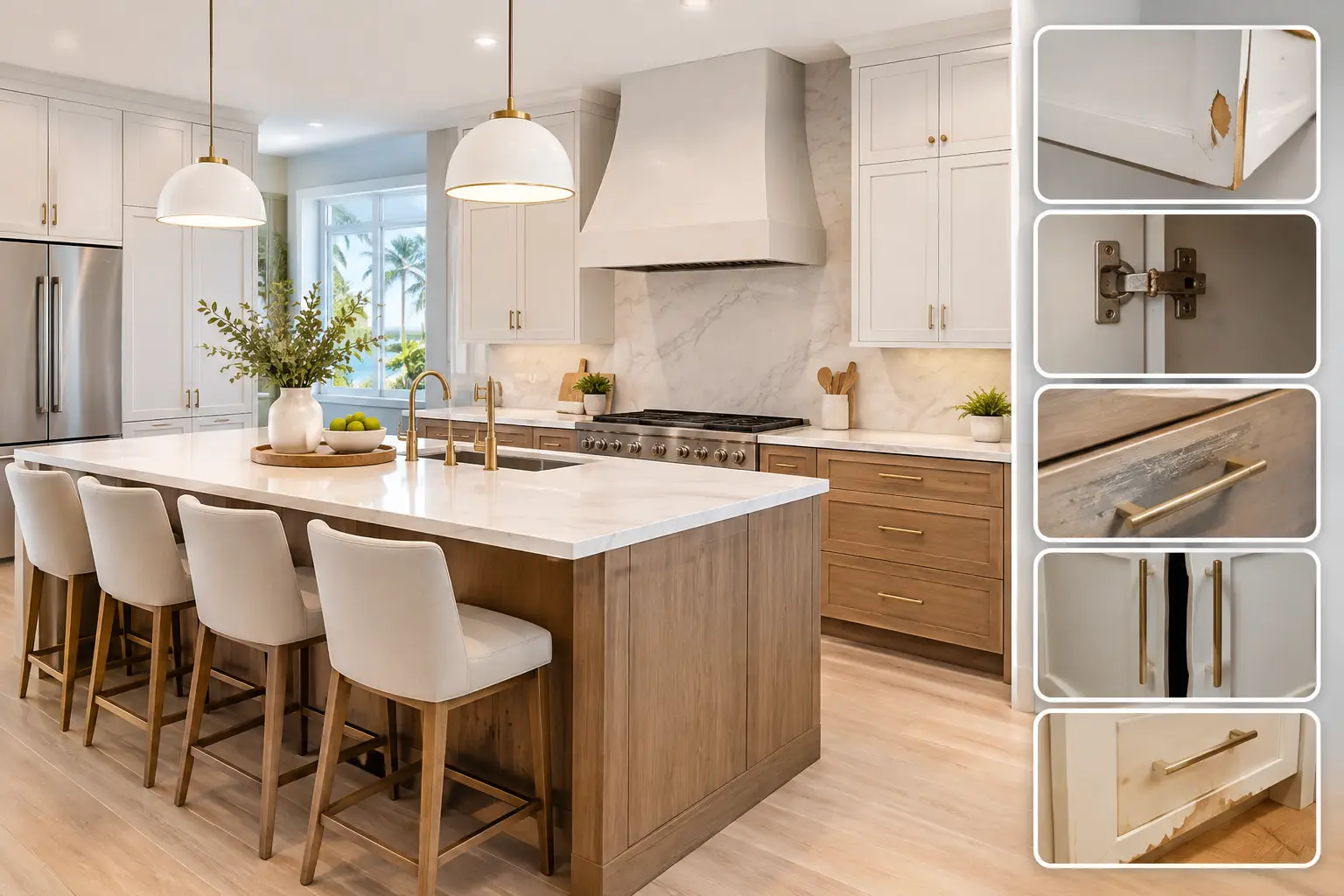

A cabinet door that will not stay closed, a sink base swollen from a slow leak, or drawers that scrape and stick every morning can turn a kitchen into a daily frustration. Knowing when should cabinets be replaced helps you avoid putting money into repairs that only postpone a larger problem. The right decision depends on cabinet condition, construction, layout, and the goals of your remodel.
For Broward County homeowners, humidity and plumbing leaks can be especially hard on lower cabinets and particleboard construction. Replacement is not always the first answer, but it is often the better long-term value when the cabinet boxes themselves have failed or no longer support the way your household uses the kitchen.
When Should Cabinets Be Replaced Instead of Repaired?
Cabinets are good candidates for repair when the problem is isolated. A loose hinge, worn drawer glide, damaged pull, or a single scratched door can often be corrected without removing the entire cabinet system. Solid wood cabinet boxes with a sound structure may also be refinished or updated with new doors, depending on the design.
Replacement becomes the practical choice when damage affects multiple boxes, the cabinets are structurally weak, or the room’s layout no longer works. New doors cannot correct sagging cabinet bases, delaminating interiors, inadequate storage, or a cramped arrangement that leaves little useful prep space. In those situations, putting money toward a new cabinet plan usually delivers more value than continuing to patch old construction.
A professional assessment is helpful because visible damage is only part of the picture. Cabinet boxes can look acceptable from the front while the bottoms, backs, and areas around plumbing have absorbed moisture or begun to break down.
8 Signs It Is Time to Replace Kitchen Cabinets
1. Water damage has swollen or softened the cabinet boxes
Water damage is one of the clearest reasons to replace cabinets. Look closely at the sink base, dishwasher area, refrigerator water line, and any cabinet next to an exterior wall. Swollen sides, peeling laminate, dark staining, soft spots, or a musty odor often mean moisture has reached the core material.
A repaired door will not solve a cabinet box that has expanded, weakened, or begun to crumble. The source of the leak should be corrected first, then the affected cabinetry can be evaluated. If damage is widespread, replacement protects the investment in new countertops and appliances.
2. Doors and drawers no longer operate reliably
A hinge adjustment can correct a minor alignment issue. But repeated door sagging, drawers that fall off their tracks, cabinet fronts that rub together, and boxes that have pulled away from the wall indicate more than normal wear.
Quality cabinetry should open and close smoothly under everyday use. When several components are failing at once, replacement provides an opportunity to choose durable drawer construction, dependable hardware, and a layout built for the way your family cooks and stores items.
3. The cabinet boxes are cracked, sagging, or separating
Cabinets carry significant weight from dishes, cookware, food, and countertops. Over time, lower-grade boxes can sag under heavy loads, shelves can bow, and joints can separate. Wall cabinets that appear to pull away from the wall deserve prompt professional attention.
Structural issues are not merely cosmetic. They affect safe storage, countertop support, and the longevity of the entire kitchen. New cabinets with sturdy box construction, properly installed by experienced professionals, offer a safer and more dependable foundation.
4. You see persistent mold, mildew, or pest damage
Small surface mildew from a brief spill may be manageable after the moisture problem is corrected. Recurring mold, extensive staining inside cabinet boxes, or deterioration from insects and rodents is different. These conditions can affect hidden areas behind the cabinets and may signal an ongoing moisture or access issue.
Replacing compromised cabinets allows the area to be properly inspected and addressed before new materials are installed. It also prevents an attractive kitchen update from being built over a problem that continues behind the walls.
5. Storage no longer matches how you use the kitchen
Sometimes cabinets are physically intact but functionally outdated. Deep corner cabinets with inaccessible space, narrow drawers, limited pantry storage, and crowded countertops can make a kitchen feel smaller than it is. This is especially common in older homes with layouts designed before today’s larger cookware, countertop appliances, and family routines.
Cabinet replacement allows storage to be planned rather than tolerated. Drawers for pots and pans, pull-out organization, tall pantry cabinets, dedicated trash storage, and well-placed upper cabinets can make the room much easier to use without increasing its footprint.
6. The layout limits a meaningful kitchen update
If you are changing the countertop footprint, moving appliances, adding an island, or improving traffic flow, existing cabinets may no longer fit the plan. Even cabinets in decent condition can become a constraint when they lock the kitchen into an inefficient layout.
This is where a professional 3D kitchen design is valuable. It shows how cabinet sizes, appliance clearances, walkways, and countertop runs work together before materials are ordered. A layout that looks good in a showroom may not work in a specific Broward County home without careful measuring and design planning.
7. The finish is worn beyond a reasonable refresh
Faded finishes, chipped edges, peeling thermofoil, and laminate that is lifting from doors can make a kitchen look tired. Cosmetic wear alone does not always require full replacement. However, when the finish problems appear throughout the kitchen and the cabinets also have poor storage or aging hardware, replacing them can be the more sensible investment.
New cabinetry gives homeowners a coordinated look from the cabinet style to the hardware and countertop selection. White Shaker cabinets remain a versatile choice for bright, timeless kitchens, while frameless modern cabinetry can create cleaner lines and more accessible interior space. The best style should fit the home’s architecture, your maintenance preferences, and your remodeling budget.
8. Repairs are becoming a recurring expense
One repair is maintenance. A cycle of hinge replacements, drawer fixes, water-damage repairs, shelf supports, and door adjustments can become an expensive way to keep failing cabinets in service. Track what you have spent and consider what still needs attention over the next few years.
Replacement has a higher initial cost, but it can be better value when it resolves multiple issues at once. A complete cabinet plan also lets you coordinate installation, countertops, and finishes so the finished kitchen is designed as one system rather than a collection of temporary fixes.
Cabinet Condition Matters More Than Age
There is no universal number of years after which cabinets must be replaced. Well-built wood cabinets that have been cared for can last for decades. Conversely, cabinets made from less durable materials may fail much sooner if exposed to humidity, repeated leaks, or heavy daily use.
Focus on condition rather than age alone. Check the cabinet interiors, bottoms, wall connections, shelf supports, and areas near water. Then consider whether the current kitchen supports your household. A cabinet that is technically usable may still be worth replacing if it creates daily storage problems or prevents a better layout.
Choosing Replacement Cabinets With Long-Term Value in Mind
The best replacement cabinet is not simply the least expensive option or the most elaborate one. It is a cabinet that provides dependable construction, an appropriate style, and the storage you need at a competitive price. Ask about cabinet box materials, door construction, drawer hardware, finish durability, and what installation includes.
RTA wood cabinets can offer strong value for homeowners who want quality cabinetry without paying for unnecessary markups. Frameless cabinets are often a smart fit for a contemporary kitchen because they provide clean lines and maximize usable interior space. Traditional framed cabinetry can be the right choice when a homeowner prefers a more classic profile and proven construction details.
Countertop selection should also be considered early. Cabinet bases need to be level, secure, and properly prepared before quartz countertops are installed. Planning cabinets and countertops together helps avoid awkward seams, incorrect overhangs, or costly changes later in the project.
Start With a Clear Look at Your Kitchen
Before deciding whether to repair or replace, take note of the problems that affect your kitchen every day: moisture damage, difficult storage, failing drawers, insufficient work space, and a layout that no longer fits your life. A free in-home consultation and 3D design can turn those observations into a realistic plan, with cabinet options that balance appearance, durability, and budget.
Leonardo’s Kitchens has helped Broward County homeowners make those decisions since 2008. The goal is not to replace cabinets simply because they are old. It is to create a kitchen that is structurally sound, easier to use, and worth enjoying for years to come.
