

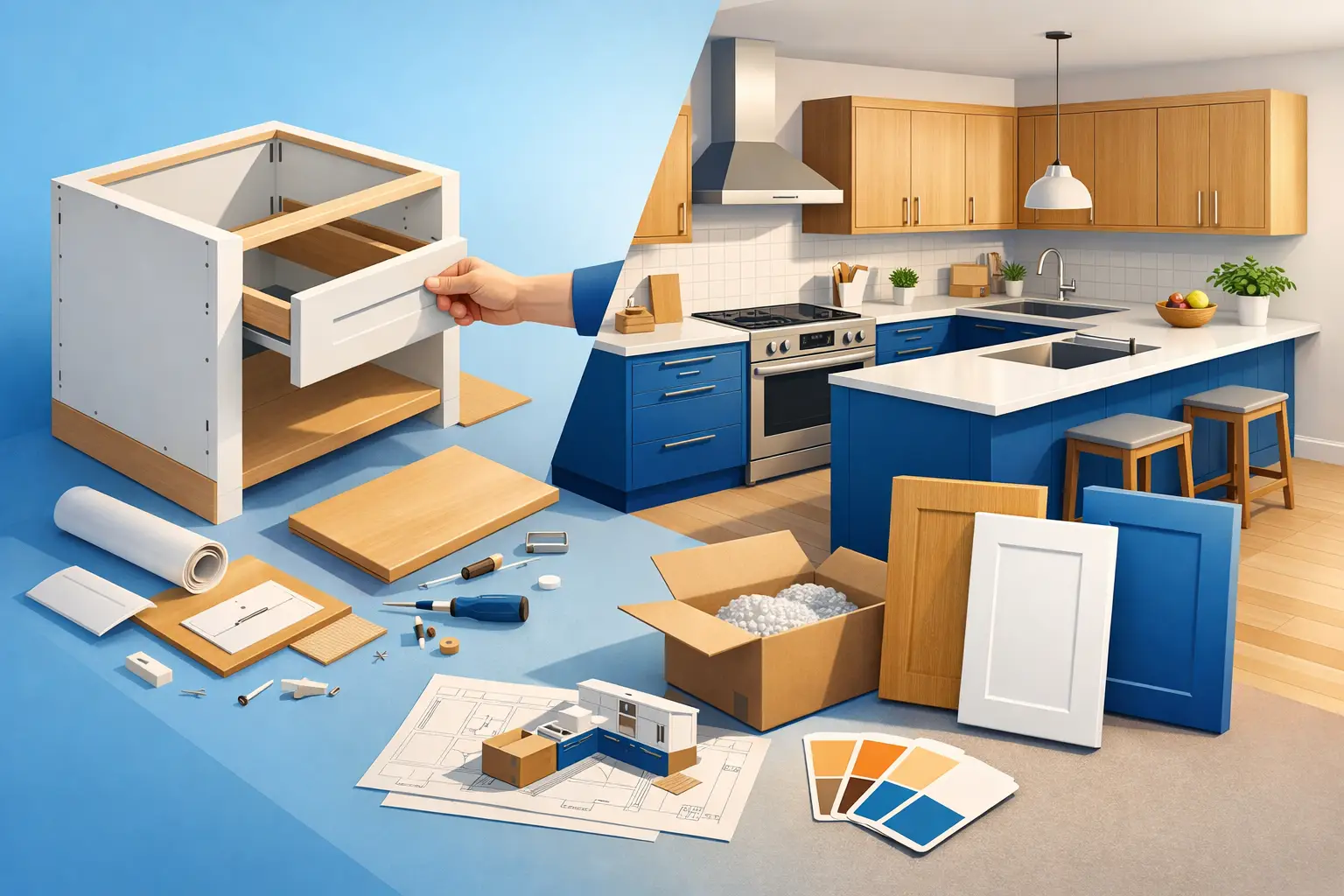

A kitchen can look dated long before its appliances fail. Worn cabinet finishes, cramped storage, drawers that stick, and a layout that wastes counter space are often the real reasons homeowners decide to remodel. RTA cabinets give many homeowners a practical way to make that change without paying the markup commonly associated with fully custom cabinetry.
RTA stands for ready-to-assemble. These cabinets are manufactured in components, shipped efficiently, and assembled before or during installation. That shipping model can reduce costs, but it does not tell you everything about cabinet quality. The materials, joinery, hardware, finish, design support, and installation plan still determine whether the finished kitchen feels refined and performs well for years.
What RTA Cabinets Actually Offer
The biggest advantage of RTA cabinets is value. Because the cabinets are packed flat and produced in established sizes and styles, manufacturers can reduce transportation and storage costs. Those savings can make room in a remodeling budget for better construction details, upgraded countertops, improved lighting, or professional installation.
For a homeowner replacing an outdated kitchen, this can be a meaningful difference. Rather than settling for thin boxes and basic hardware simply to stay within budget, it may be possible to choose cabinet features that improve daily use: deeper drawers, soft-close doors, pull-out storage, and a finish that gives the room a more polished appearance.
RTA does not mean every cabinet arrives as a loose pile of parts. Quality cabinet lines are designed for precise assembly, with labeled components and engineered connections that create a solid cabinet box when properly built. The important question is not whether a cabinet is RTA. It is whether the specific cabinet line is built with materials and construction details appropriate for your kitchen.
How to Evaluate RTA Cabinet Quality
Cabinets are one of the most heavily used parts of a home. Doors open constantly, drawers carry cookware and dishes, and base cabinets support countertops and appliances. A favorable price only represents a good value if the cabinetry can handle that use.
Start With the Cabinet Box
Look closely at the box material. Plywood cabinet boxes are generally a stronger choice than thin particleboard or low-density fiberboard, particularly for homeowners who want a more durable kitchen. Plywood offers dependable screw-holding strength and is well suited to the demands of everyday cabinet use.
This does not mean every component must be solid wood. Cabinet construction uses different materials for different purposes. Doors and drawer fronts may use solid wood, engineered wood, veneers, or painted finishes depending on the style. What matters is that the materials are used thoughtfully and that the cabinet box, shelves, and fastening points are built to support the load they will carry.
Ask about shelf thickness, back panel construction, and how the cabinet connects to the wall. These details are not as visible as door color, but they affect how stable the installation will be once countertops, dishes, and appliances are in place.
Check Drawers, Hinges, and Interior Details
A drawer is a simple test of cabinet quality. Dovetail drawer construction is a strong sign because the interlocking joints help the drawer withstand repeated opening, closing, and loading. Full-extension drawer glides are also worth considering, since they allow you to reach items stored at the back instead of losing usable space.
Soft-close hinges and drawer slides are not merely a luxury feature. They reduce slamming, make the kitchen quieter, and give doors and drawers a controlled feel. Hardware quality matters because it is used every day, long after the newness of the cabinet finish has worn off.
Pay attention to interior storage as well. A well-planned cabinet package may include a pantry cabinet, trash pull-out, drawer bases near the cooking area, and organized storage for pots or utensils. Choosing the right configuration often improves a kitchen more than adding extra decorative details.
Consider the Finish in Real Kitchen Conditions
White, warm wood tones, light gray, and modern flat-panel styles can all work beautifully, but the finish should suit the room’s natural light, floor color, countertop selection, and maintenance expectations. A darker finish may add contrast, while a lighter cabinet color can make a smaller kitchen feel more open.
For homes in South Florida, kitchens also need materials and installation practices that account for normal humidity, active family use, and frequent cleaning. A well-made finish and properly installed cabinetry are more valuable than a trendy color that does not fit the rest of the home. Reviewing a door sample in your actual lighting can prevent an expensive surprise after the cabinets arrive.
RTA Cabinets Compared With Other Options
RTA cabinets are not automatically the right answer for every remodel. They occupy a useful middle ground between inexpensive stock cabinetry and fully custom cabinet work.
Basic stock cabinets can be convenient when a homeowner needs a fast replacement and the available sizes happen to fit the room. Their limitations become clear in kitchens with unusual dimensions, corner challenges, or a need for specialized storage. Some stock lines also offer fewer finish and configuration choices.
Fully custom cabinetry provides the greatest flexibility. It can be designed around irregular walls, highly specific architectural details, and one-of-a-kind storage needs. That flexibility often comes with a considerably higher price and a longer production timeline.
RTA cabinets can be an excellent fit when the kitchen can work within standard cabinet sizes but still needs an elevated look and dependable construction. Fillers, panels, trim, and thoughtful layout planning can create a finished appearance without the cost of building every cabinet from scratch. The best choice depends on the room, the budget, and how much customization the design truly requires.
Good Design Makes RTA Cabinets Look Built In
Cabinet quality is only part of the result. A beautiful cabinet line can still look disappointing if the layout is not planned carefully. Before ordering, measure the room accurately and account for wall conditions, window locations, appliance specifications, plumbing, electrical outlets, soffits, and flooring changes.
Appliance planning deserves special attention. Refrigerator panels, dishwasher clearances, range hood dimensions, microwave placement, and cabinet depth all affect the final layout. A cabinet plan should also create sensible work zones: food storage near the refrigerator, preparation space near the sink, and accessible cookware storage close to the range.
Door swings and aisle clearances matter just as much. An island may look appealing on a floor plan but become frustrating if it restricts traffic or prevents the dishwasher and refrigerator from opening comfortably at the same time. This is where design guidance can protect both the appearance and usability of the remodel.
Assembly and Installation Are Not an Afterthought
RTA cabinetry gives homeowners choices. Some experienced homeowners prefer to assemble cabinets themselves to reduce labor costs. That can work well for a small project when the person assembling them has the time, tools, patience, and space to keep components organized.
For a larger kitchen remodel, professional assembly and installation are often the more efficient path. Cabinets must be leveled, shimmed, secured correctly, aligned across long runs, and prepared for countertops. Small errors compound quickly. A cabinet that is slightly out of level can affect drawer operation, countertop installation, crown molding, and the finished reveal between doors.
Installation also needs to coordinate with demolition, plumbing, electrical work, flooring, backsplash, and countertop templating. Leonardo’s Kitchens helps homeowners move from cabinet selection through design and installation, reducing the burden of trying to manage separate product suppliers and trades on their own.
When RTA Cabinets May Not Be the Best Fit
There are situations where a different cabinet solution may make more sense. A room with severely uneven walls, unusual angles, or historic architectural details may need more custom modification. Homeowners who want rare wood species, highly specialized finishes, or cabinetry built to nonstandard depths may also find custom work better suited to their goals.
The timeline matters too. While RTA cabinets can be an efficient choice, cabinet ordering, delivery, assembly, and installation still require planning. Do not schedule demolition based only on an estimated cabinet arrival date. Confirm product availability, inspect the order when it arrives, and make sure all required panels, fillers, trim pieces, and hardware are included before the installation phase begins.
A well-chosen RTA cabinet package is not about buying the least expensive box available. It is about investing in solid construction, useful storage, a design that fits the room, and installation that makes the finished kitchen feel intentional. When those pieces come together, an affordable cabinet decision can become the foundation of a kitchen homeowners enjoy using every day.
