

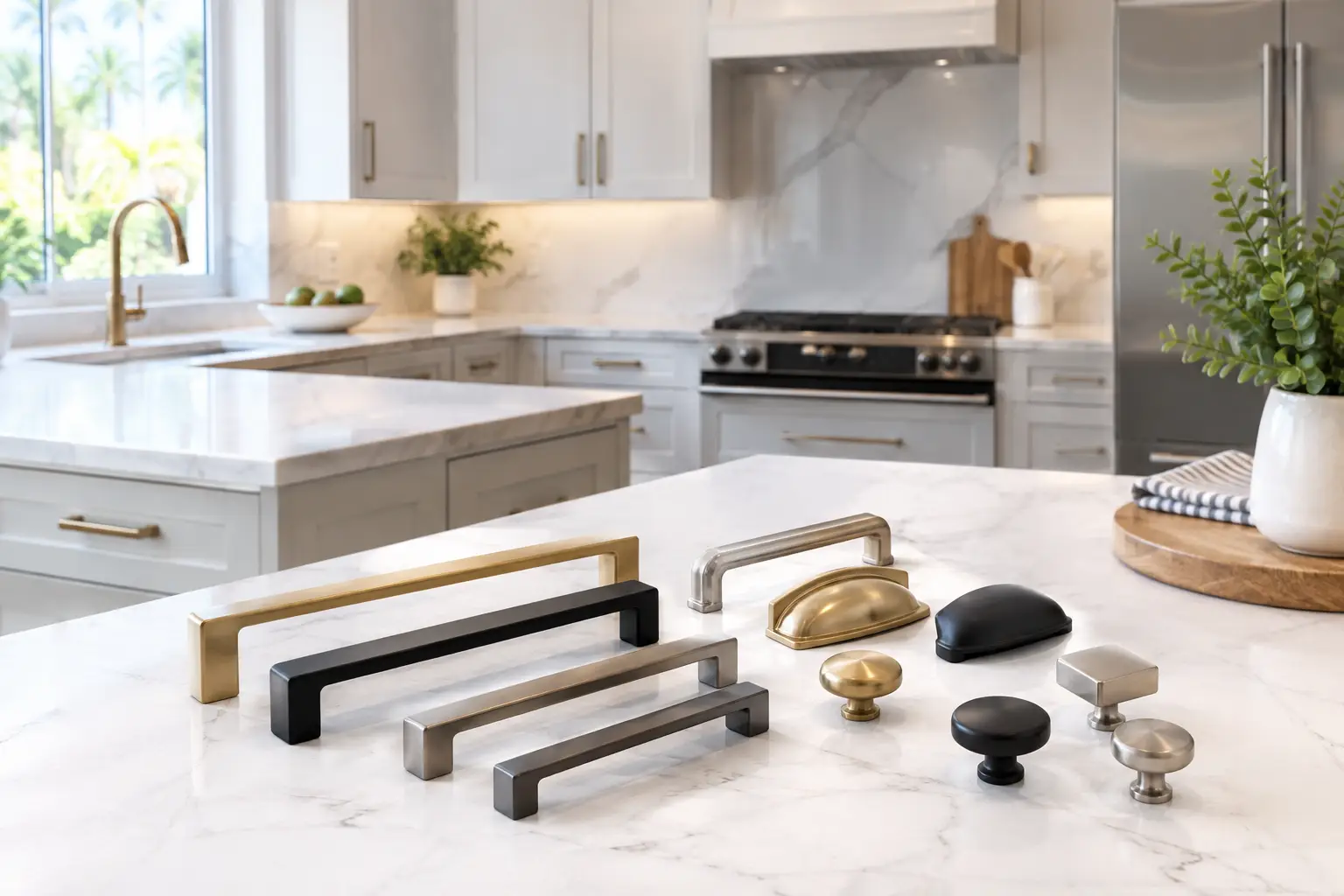

Cabinet hardware is a small detail with an outsized effect. The wrong knobs or pulls can make well-built cabinets look unfinished, while the right selection gives a kitchen a coordinated, intentional appearance. Knowing how to choose cabinet hardware helps you balance style, comfort, durability, and cost before installation begins.
For a kitchen remodel, hardware should not be an afterthought. Handles and knobs are the parts of the cabinetry your family touches every day. They need to feel comfortable in the hand, hold up to frequent use, and complement the cabinet door style, countertop, faucet, and appliances without competing with them.
Start With Your Cabinet Style
Your cabinet door profile should guide the hardware selection. Clean-lined slab doors and modern frameless cabinets typically look best with simple bar pulls, slim edge pulls, or other minimal designs. Long, straight pulls reinforce the horizontal and vertical lines of a contemporary kitchen without adding visual clutter.
White Shaker cabinets and other transitional door styles offer more flexibility. Bar pulls in brushed nickel, matte black, or champagne bronze work well, as do simple round or square knobs. The goal is to choose a shape that feels current but not overly decorative. Shaker doors already have detail in their frame, so hardware usually looks best when it is straightforward.
Traditional cabinets with raised panels, warm wood finishes, or more elaborate molding can support hardware with softer curves, rounded ends, or subtle detailing. This does not mean every pull needs to be ornate. In many Broward County homes, a simpler finish and classic profile create a more lasting look than heavily detailed hardware.
How to Choose Cabinet Hardware by Size
Size is where many otherwise attractive choices go wrong. A pull that is too short can look undersized on a wide drawer, while an oversized pull can overwhelm a narrow cabinet door. There is no single measurement that works for every kitchen, but proportion matters more than a rigid rule.
For standard cabinet doors, knobs or shorter pulls often work well. Wider drawers generally need longer pulls because they create better visual balance and provide a more comfortable grip. Deep pot-and-pan drawers, pantry pull-outs, and wide base cabinet drawers are especially good candidates for longer handles.
One common approach is to use a consistent pull style in two or three coordinated lengths. For example, you may use a shorter pull on cabinet doors, a medium length on standard drawers, and a longer version on wide drawers. This keeps the kitchen organized rather than making every cabinet opening look exactly the same.
Before committing, hold a sample against the actual cabinet door or drawer front. A display board can be useful, but it cannot show how the hardware will look next to your specific door width, countertop color, and surrounding finishes. A professional kitchen design can help you see these proportions before the cabinets are installed.
Knobs, Pulls, or a Combination?
Knobs are compact, economical, and well suited to many upper cabinet doors. They are also a practical choice when a homeowner wants a simple, classic appearance. Pulls provide more hand clearance and are often easier to use on heavy drawers, large doors, and lower cabinets.
A combination of knobs and pulls can work beautifully when it follows a clear pattern. Many kitchens use knobs on doors and pulls on drawers. This approach adds variety without making the design busy. Another option is to use pulls throughout for a more streamlined, modern appearance.
Function should have the final say. If a cabinet stores heavy cookware or is opened frequently, a pull is often more comfortable than a small knob. Households with children, older family members, or anyone who prefers an easier grip may also find pulls more practical.
Match the Finish to the Whole Kitchen
Hardware does not need to match the faucet or lighting fixtures perfectly, but the finishes should look purposeful together. Brushed nickel is a reliable choice for many kitchens because it is versatile, understated, and less likely to show fingerprints than polished finishes. Matte black creates contrast against white, light gray, and natural wood cabinets, making it popular in both modern and transitional remodels.
Warm metals such as champagne bronze, satin brass, and brushed gold can add depth to a kitchen with warm white cabinets, beige quartz, or wood tones. These finishes work best when repeated elsewhere in a measured way, such as in the faucet, light fixtures, or a small decorative accent. Too many different metal finishes can make a kitchen feel disconnected.
Consider maintenance as well as appearance. In South Florida, kitchens see frequent use, and light-colored or highly polished surfaces can reveal fingerprints, water spots, and smudges more readily. Brushed and satin hardware tends to be more forgiving for active households. Quality hardware with a durable finish is worth considering because low-grade coatings can wear at the edges after repeated cleaning and use.
Pay Attention to Comfort and Clearance
Cabinet hardware should feel good, not just look good. Test the grip by placing your hand behind the pull. There should be enough clearance for your fingers, especially if you have larger hands or regularly use kitchen towels while cooking. A beautiful pull that pinches your fingers will become frustrating quickly.
Also consider where doors and drawers meet. Pulls on adjacent corner cabinets should not collide when both doors are opened. Appliance handles, refrigerator doors, dishwasher placement, and cabinet crown molding can all affect the best hardware choice and placement. These details are easier to resolve during kitchen planning than after installation.
For cabinets near a range or sink, choose hardware that is easy to wipe down. Knurled, deeply textured, or highly detailed pieces can collect grease and dust in the grooves. They may suit a less-used cabinet, but simple, smooth pulls are often the more practical option for everyday cooking zones.
Keep Placement Consistent
Even premium hardware can look unpolished when it is installed inconsistently. On upper cabinet doors, knobs and pulls are commonly positioned near the lower corner of the door frame. On base cabinets, they are generally placed toward the upper corner. Drawer pulls are usually centered, although wide drawers may use two pulls for balance and easier operation.
The exact placement depends on the door style, rail width, and chosen hardware length. A Shaker cabinet, for instance, gives installers defined frame lines that help establish a clean, repeatable position. Flat-panel cabinets may require more deliberate measuring because there is no frame detail to guide placement.
Consistency matters across the entire kitchen, particularly when cabinets are visible from an open living area. Professional installation helps ensure the spacing, alignment, and mounting remain precise from one cabinet run to the next.
Set a Budget Without Sacrificing Daily Use
Hardware pricing varies widely, and it is easy to underestimate the total when a kitchen has dozens of doors and drawers. Count every piece before choosing a collection. Include pantry doors, island drawers, trash pull-outs, and any specialty storage cabinets so the final selection fits the overall remodeling budget.
This is one area where value matters more than chasing the lowest initial price. You do not need the most expensive hardware to get a refined result, but handles should be solid, properly finished, and designed for regular use. Select a style that supports the quality of your cabinetry and that you will still appreciate after several years of daily cooking and cleaning.
Ordering a few samples before finalizing the full order is a smart step. Look at them in your kitchen during the day and evening, hold them against the cabinet finish, and test how they feel. The best choice is usually the one that looks balanced from across the room and feels natural every time you open a drawer.
For homeowners planning a kitchen update in Weston, Davie, or throughout Broward County, Leonardo’s Kitchens can help coordinate cabinet styles, hardware, quartz countertops, and professional installation into one practical plan. Serving the community since 2008, we offer free kitchen estimates, free 3D kitchen designs, a Davie showroom, and free local delivery. Call 754-234-3838 to schedule a consultation and see how the right hardware can give your finished kitchen its polished final touch.
