

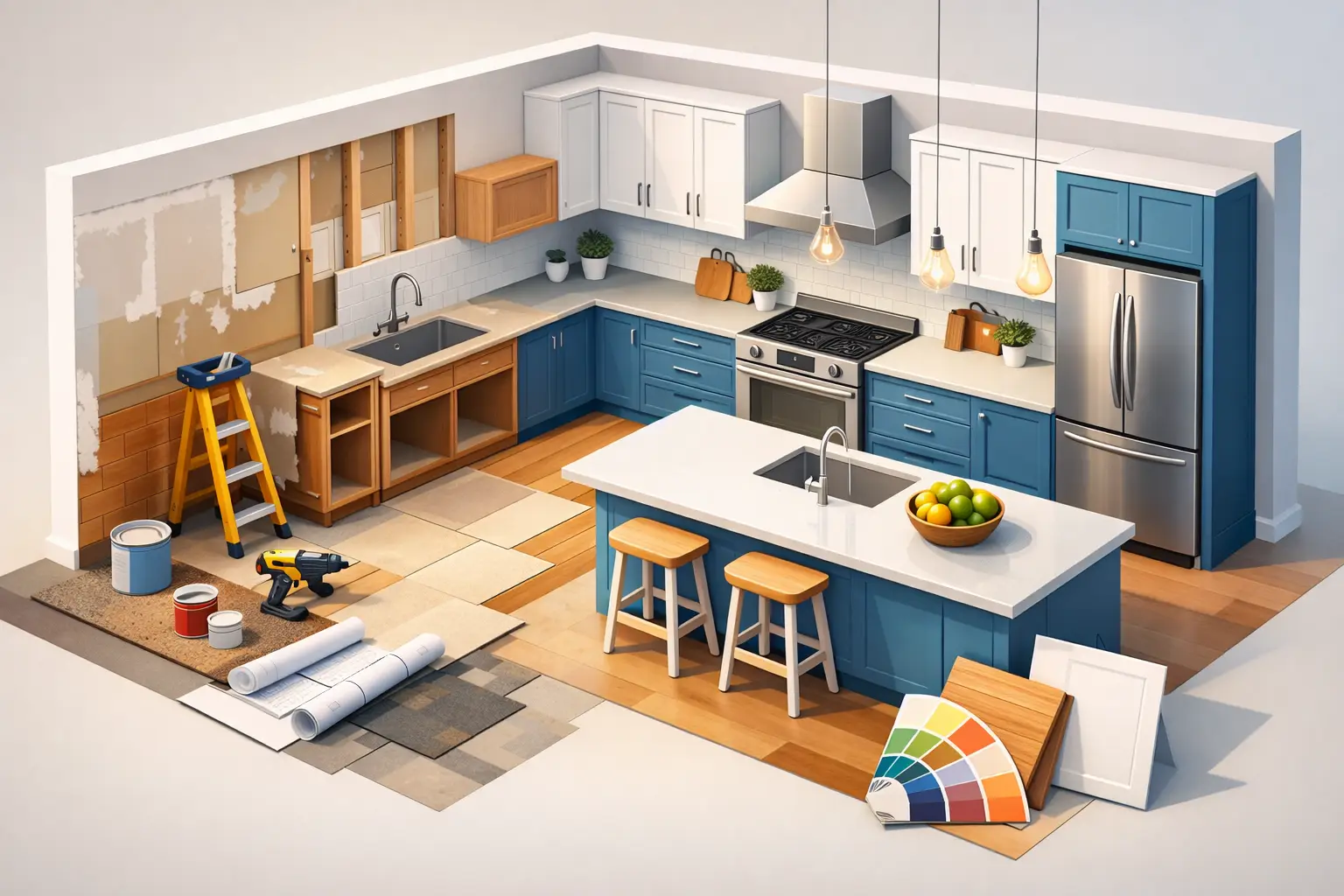

An affordable kitchen remodel Miramar homeowners can feel good about is not built around the lowest cabinet quote. It is built around choices that improve daily function, hold up to real use, and avoid the expensive corrections that can appear when a project is poorly planned. A dated kitchen may need better storage, brighter finishes, more usable counter space, or a layout that finally works for the household. The goal is to invest where it matters and keep the scope disciplined everywhere else.
For many homeowners, cabinetry is the largest visual and functional decision in the room. Choosing well-built, value-priced cabinets and coordinating the work carefully can create a polished kitchen without paying luxury-showroom prices.
Start With the Problems Your Kitchen Must Solve
Before choosing a door style or countertop color, identify what is not working. Is there too little pantry space? Are drawers shallow and difficult to organize? Does the refrigerator interrupt the cooking area? Is the kitchen dark because the existing layout limits lighting and sightlines? Specific answers create a clearer remodeling plan and reduce the chance of spending on features that look good but do little for everyday use.
An affordable project does not always mean keeping every element in the same location. Sometimes a modest layout adjustment provides more value than a costly decorative upgrade. Moving plumbing, gas, or major electrical lines can raise labor costs quickly, so it should be considered carefully. If the existing sink, range, and dishwasher locations work reasonably well, keeping them in place may leave more room in the budget for stronger cabinets, better hardware, or a countertop that will last.
Bring measurements, photos, and a list of must-haves to the design conversation. A homeowner who knows that a deep pot drawer, pullout trash storage, and a pantry cabinet are essential can make smarter trade-offs than someone choosing features one cabinet at a time.
Affordable Kitchen Remodel Miramar Priorities
The most effective budget is based on priorities, not a single number assigned to the whole room. Cabinetry, labor, countertops, appliances, lighting, permits, and finish materials all affect the final investment. Setting aside a contingency is also sensible, especially in older homes where wall, plumbing, or electrical conditions may not be fully visible until demolition begins.
Start by protecting the categories that affect durability and daily use. Cabinet box construction, drawer quality, installation, and functional storage generally deserve more attention than decorative accessories. A low-priced cabinet with thin materials, weak drawer slides, or poor assembly can become costly when doors require adjustment, boxes shift, or hardware wears prematurely.
Frameless cabinets are often a strong value choice for a modern kitchen. Their full-access construction creates wider usable openings, which can improve storage without increasing the room’s footprint. When paired with plywood cabinet boxes, dovetail drawer construction, and soft-close hardware, they offer details homeowners commonly expect from more expensive cabinet lines.
Door style and finish can be adjusted to fit the budget without sacrificing a refined result. A clean shaker door remains versatile for many South Florida homes, while flat-panel doors can deliver a more contemporary look. White, warm wood tones, soft gray, and carefully selected two-tone combinations can create character without requiring highly specialized custom finishes.
Choose Cabinets for Construction, Not Just Appearance
Cabinet samples can look similar from the front. The difference is often found in the box, drawer, hinges, and interior construction. These are the details that influence how the kitchen feels after years of opening, closing, cleaning, and loading it with cookware.
Look for solid cabinet boxes rather than relying on the door style alone. Plywood construction is valued for strength and resistance to sagging, particularly around sink bases and heavily used drawer banks. Dovetail drawers provide a durable joinery detail, while soft-close slides and hinges help drawers and doors operate quietly and consistently.
RTA wood cabinetry can be a practical way to control product costs, provided it is properly selected and professionally assembled and installed. It gives homeowners access to attractive wood cabinetry and flexible configurations without automatically moving into the price range of fully custom shop-built cabinets. The trade-off is that planning and assembly matter more. Accurate design, proper leveling, and careful installation are what make the finished kitchen look intentional.
Avoid treating cabinets as a standalone purchase. The cabinet plan needs to account for appliance specifications, filler requirements, crown or trim details, countertop overhangs, and door clearances. A refrigerator that cannot open fully or a dishwasher blocked by a handle can turn an attractive design into a daily frustration.
Make Layout Changes Only When They Earn Their Cost
A kitchen remodel is an opportunity to improve flow, but not every kitchen needs a complete reconfiguration. In a compact space, replacing inefficient base cabinets with deep drawers and adding a tall pantry may create more usable storage than moving walls. In a larger kitchen, an island can be valuable if it improves prep space and circulation rather than simply filling an open area.
Maintain realistic walking paths between work zones. The sink, cooktop, refrigerator, and prep areas should support the way your household actually cooks. A family that prepares meals together may benefit from wider landing areas and drawer storage near the range. A homeowner who entertains frequently may prioritize seating, beverage storage, or an island that separates guests from the main work zone.
Structural changes, major plumbing relocation, and custom modifications can be worthwhile when they solve a meaningful problem. They are less worthwhile when the same result can be achieved through cabinetry configuration, lighting, or a more thoughtful appliance selection. The best affordable design is not the one with the most changes. It is the one where each change has a clear purpose.
Use Finishes That Work Together
Keeping materials coordinated makes a kitchen look more expensive than it is. Rather than selecting each finish independently, begin with the cabinets and build around them. Countertops, backsplash, flooring, paint, and hardware should support one consistent direction.
A simple backsplash can be a smart budget decision when the cabinetry and countertop already carry the room. Larger-format tile, a classic subway pattern, or a clean slab-style look can provide visual continuity without excessive labor. Complex tile layouts, specialty edges, and numerous material transitions may add cost through both materials and installation time.
Lighting is another area where modest upgrades produce a noticeable result. Recessed lighting, under-cabinet lighting, and a properly placed decorative fixture can make food preparation easier and help cabinet finishes look their best. Electrical work should be planned before cabinet installation so outlets, switches, and fixture locations are addressed in the correct sequence.
A Coordinated Process Protects the Budget
Kitchen remodeling costs often rise when products arrive late, measurements change, or trades are scheduled without a clear sequence. Cabinet installation, countertop templating, plumbing, electrical work, backsplash installation, and final appliance connections depend on one another. Coordination is not an extra detail. It is part of protecting the investment.
A complete remodeling partner can help homeowners move from cabinet design to installation and the related trade work with fewer handoffs. That matters when questions arise about wall conditions, appliance dimensions, or finish timing. It also provides one point of contact for decisions that would otherwise involve several separate suppliers and contractors.
Before work begins, confirm the cabinet layout, product specifications, finish selections, appliance cut sheets, scope of labor, and expected order of work. Ask which items are included and which may be separate, such as permit fees, demolition, backsplash materials, painting, or appliance installation. Clear expectations do not eliminate every surprise, but they make the project easier to manage.
Know Where to Save and Where Not to Compromise
Saving money is reasonable when it does not create a weaker kitchen. Homeowners can often control spending by keeping a workable layout, choosing a standard cabinet finish, limiting highly customized storage accessories, and selecting a straightforward backsplash design. These choices can reduce cost while preserving an elegant overall result.
It is usually wiser to avoid cutting corners on cabinet construction, installation quality, functional drawer storage, or necessary electrical and plumbing work. Those decisions affect safety, performance, and the long-term appearance of the room. A countertop can be upgraded later more easily than a poorly installed cabinet run can be corrected.
For Miramar homeowners, a well-planned kitchen renovation should feel like a practical improvement, not a series of costly compromises. Leonardo’s Kitchens helps bring cabinetry selection, design guidance, installation, and remodel coordination into a focused process so the finished kitchen can deliver the durability, storage, and refined appearance your home deserves.
