

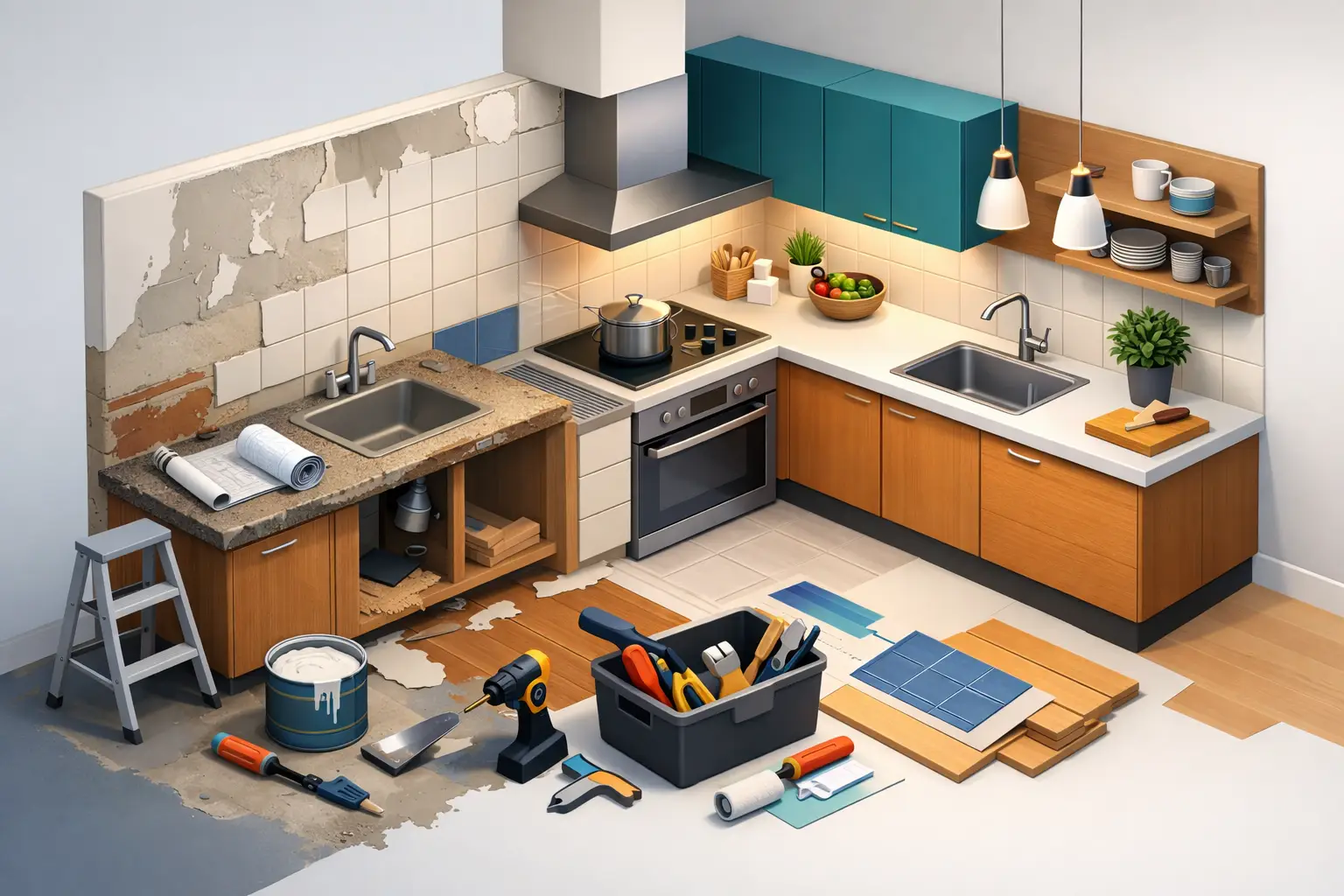

Sticker shock usually hits when homeowners start pricing out cabinets, countertops, and labor all at once. If you are wondering how to remodel kitchen for cheap, the good news is that a lower budget does not have to mean a patched-together result. The real savings come from choosing the right upgrades, keeping what still works, and spending where the kitchen shows and performs every day.
For most homes in South Florida, the biggest budget mistakes are moving plumbing without a strong reason, replacing everything instead of the worn-out items, and buying low-quality materials twice. A cost-conscious remodel works best when you focus on layout efficiency, durable cabinets, and finishes that give the room a cleaner, newer look without forcing a full custom project.
How to remodel kitchen for cheap without cutting the wrong corners
A cheap kitchen remodel should not be built on cheap construction. There is a difference. Saving money by choosing a practical cabinet line, simplifying the layout, or selecting a durable mid-range countertop is smart. Saving money by installing weak particleboard boxes, poor hardware, or finishes that will fail in a year usually creates a second remodel sooner than expected.
That is why the first step is deciding what actually needs to change. In many kitchens, the layout is inconvenient but still workable. If your sink, range, and refrigerator are reasonably placed, keeping them where they are can remove a major chunk of plumbing, electrical, and labor costs. That one decision alone often creates room in the budget for better cabinetry or professional installation.
Cabinets usually deserve the closest attention because they drive both function and appearance. When cabinets are damaged, poorly built, or badly configured, the kitchen never feels fully improved no matter what countertop or backsplash goes on top. A value-driven remodel often gets the best result by prioritizing well-made frameless or RTA wood cabinetry with plywood box construction, soft-close hardware, and storage that fits the way the household actually cooks.
Start with a budget that matches the room, not wishful thinking
Before choosing finishes, break the project into categories: cabinetry, countertops, labor, flooring, backsplash, lighting, and paint. This helps you see where the money goes and where you have flexibility. Most homeowners are surprised to learn that cabinets and installation often shape the budget more than decorative upgrades.
A practical budget also needs a reserve for hidden issues. Older kitchens may reveal wall damage, outdated electrical work, or floor leveling problems once demolition starts. If every dollar is assigned before the work begins, even a small surprise can force poor choices later. A modest contingency keeps the project moving without panic.
It also helps to rank your priorities early. If your goal is a cleaner, more modern kitchen that adds daily value, put the budget into cabinets, layout improvements, and lighting first. If you spend too much on statement tile or premium fixtures at the beginning, you may end up compromising on the parts of the remodel that matter most.
Keep the layout if it is doing its job
Layout changes are expensive because they trigger more trades. Moving a sink can mean plumbing, countertop revisions, wall repair, and sometimes flooring patchwork. Relocating a range or adding an island can involve electrical work, venting changes, and permit considerations.
That does not mean layout changes are always wrong. If the kitchen is genuinely inefficient or lacks enough storage and prep space, a targeted redesign may be worth it. But if the current footprint is basically sound, keeping the major services in place is one of the best answers to how to remodel kitchen for cheap while still improving the room in a meaningful way.
Choose cabinets for value, not just the lowest ticket price
Cabinets are where many budget remodels either hold up well or start to fail. Ready-to-assemble wood cabinets can be a smart solution when the construction is solid and the design is handled properly. Plywood cabinet boxes, dovetail drawers, and soft-close hardware offer much better long-term value than lower-grade options that look acceptable on day one but wear quickly.
Frameless cabinetry is also worth considering if you want a clean, modern look without paying for full custom millwork. It makes efficient use of space, creates a refined appearance, and can deliver a more upscale feel while staying within a realistic remodeling budget.
For many homeowners, replacing cabinets makes more sense than refacing when the existing boxes are low quality or the layout wastes storage. Refacing can save money in the right situation, but it is not automatically the better deal. If the cabinet structure is poor, new doors and veneers only dress up a weak foundation.
Spend less on surfaces by being selective
Countertops can swing a project budget quickly. Natural stone has appeal, but plenty of homeowners get a strong result from durable quartz options in simpler colors and edge profiles. Choosing a standard pattern rather than a rare or heavily veined slab often lowers cost without making the kitchen look basic.
The same principle applies to backsplash tile. A full wall of intricate tile can look beautiful, but simple subway tile or clean-format porcelain often gives a sharper, more current result for less money. Installation costs matter here too. Straightforward tile patterns are usually less expensive to install than mosaics or highly detailed layouts.
Flooring is another area where restraint helps. If the current floor is in good shape and works with the new kitchen, keeping it may be the right move. If it needs replacement, choose a floor that is durable and consistent throughout the space rather than something trendy that may date quickly.
Use lighting and paint to do more of the visual work
Some of the most affordable improvements are also the most noticeable. Better lighting can make an older kitchen feel larger, brighter, and more finished. Recessed lights, updated fixtures over a peninsula or dining area, and under-cabinet lighting can dramatically improve both function and appearance.
Paint matters too, especially in kitchens where walls, trim, or adjoining areas still reflect an older style. A fresh, lighter paint color can make budget-conscious cabinetry and countertops look more polished. This is one of the easiest ways to support the overall remodel without adding major labor or material cost.
Hardware is a small line item with an outsized effect. New pulls and knobs can make cabinetry look more tailored, but the finish should coordinate with the rest of the room. There is no need to overspend here. Consistency usually looks better than choosing something flashy that competes with every other element.
Where labor saves money and where it costs money
Homeowners trying to cut costs often ask what work they can do themselves. Painting, demolition in limited cases, and simple finish decisions can sometimes be handled without much risk. Cabinet installation, layout planning, and countertop templating are different. Mistakes there are expensive and visible.
A poorly installed cabinet run can create gaps, crooked lines, drawer problems, and countertop issues. The same is true for trying to coordinate multiple trades without a clear sequence. Saving money on labor only works if the work still gets done correctly the first time.
This is why many homeowners prefer a remodeling partner that can guide design, cabinet selection, and installation together. It reduces delays, avoids mismatched responsibilities, and helps the budget stay tied to a realistic plan rather than a series of disconnected purchases. Leonardo’s Kitchens works with homeowners who want that balance of quality product and project execution without paying luxury-level pricing.
How to remodel kitchen for cheap and still make it look finished
A budget kitchen looks expensive when the choices are coordinated. That means matching cabinet style to the home, keeping the color palette controlled, and avoiding too many competing materials. Three good decisions usually beat ten average ones.
For example, white or natural-tone cabinets, a simple quartz countertop, clean hardware, and a straightforward backsplash can produce a more refined result than a room packed with trendy details. The goal is not to make the kitchen look inexpensive but to make every dollar visible in the right places.
It also helps to think beyond the showroom sample. A door style that looks plain by itself may look elegant once installed across a well-designed kitchen with proper lighting and aligned finishes. Good remodeling value often comes from composition, not from the most expensive individual item.
The most affordable kitchen remodel is not the one with the smallest invoice. It is the one that solves storage problems, improves daily use, holds up over time, and still looks right years from now. If you treat the budget as a design tool instead of a restriction, you can build a kitchen that feels like a real upgrade rather than a temporary fix.
