

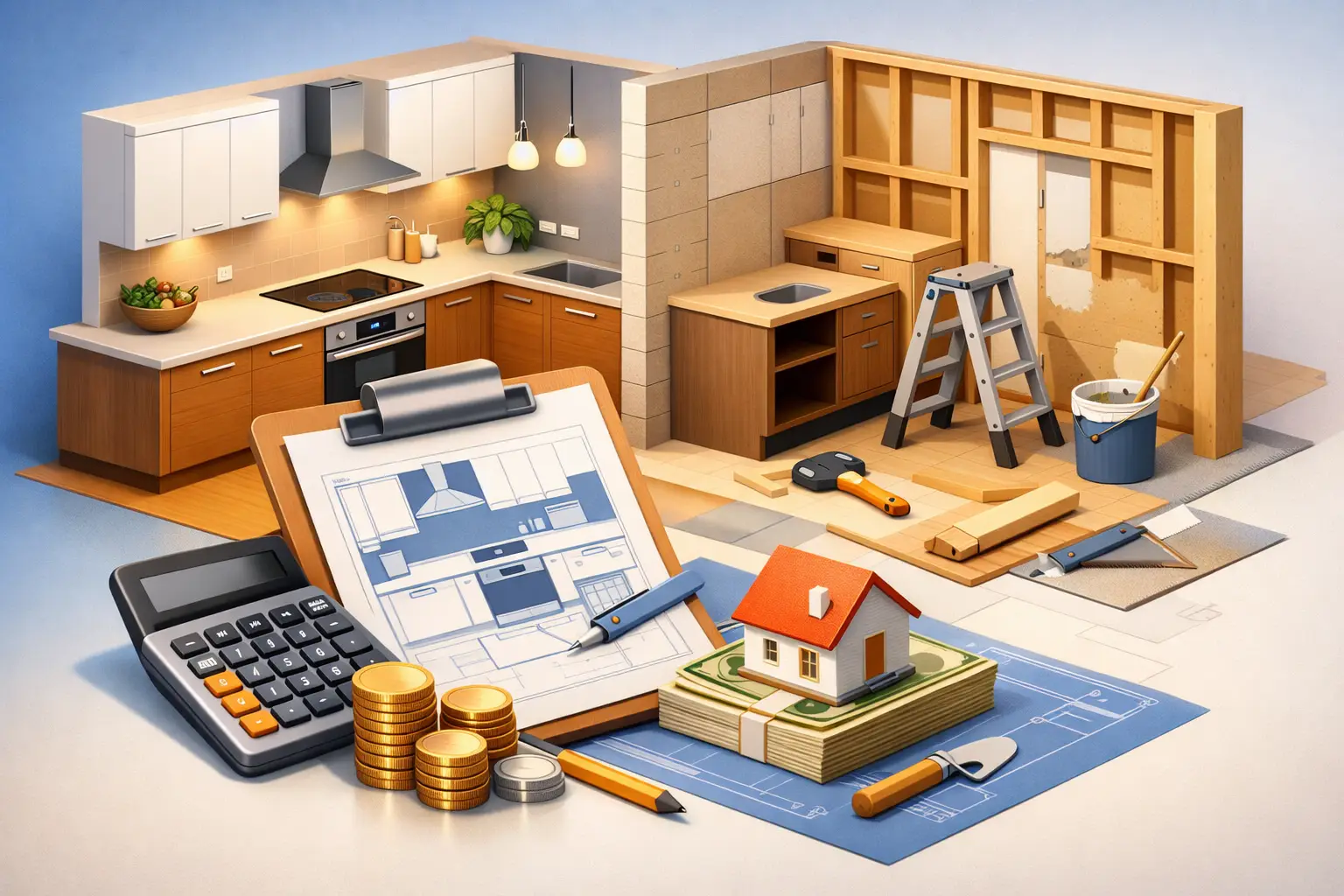

Sticker shock usually hits in the same place – right after the first exciting design ideas. New cabinets, better storage, upgraded counters, improved lighting, maybe a layout change. That is exactly why homeowners ask how to budget kitchen renovation projects before they commit to materials or demolition. A good budget is not just a spending cap. It is a plan for where your money should work hardest.
For most kitchens, the biggest mistake is budgeting backward. Homeowners often start with finishes they like, then try to force labor, installation, and hidden costs into whatever is left. A better approach is to build the budget in layers: scope first, cabinets second, labor third, then finishes and contingency. That keeps the project grounded in function, not just appearance.
How to budget kitchen renovation work the right way
The first decision is not color, door style, or countertop edge. It is scope. Are you doing a cosmetic update with the existing layout, or are you moving plumbing, electrical, and walls? Those are very different budgets.
A kitchen that keeps the sink, range, and major appliance locations in place is usually far more cost-controlled. Once you start relocating plumbing lines or changing electrical circuits significantly, labor costs rise quickly. That does not mean layout changes are always the wrong choice. It means they need to solve a real problem, such as poor workflow or lack of usable storage.
If your budget is limited, spend on improvements that change daily use. Better cabinet storage, stronger cabinet construction, more functional drawers, and improved lighting often produce more value than expensive decorative upgrades. Homeowners tend to feel those benefits every day.
Start with a realistic total range
Before selecting products, define a target range and a hard ceiling. Those are not the same number. Your target range is where you want to land. Your ceiling is the maximum you can handle without creating financial stress.
For a practical kitchen remodel, many budgets break down into several major categories: cabinetry, countertops, labor, appliances, flooring, backsplash, lighting, and permit or correction costs. Cabinets often take the largest share because they shape the look, storage, and long-term durability of the kitchen. That is why cabinet selection should never be treated like an afterthought.
In many projects, cabinetry and installation consume a substantial part of the budget, especially if you want quality features like plywood boxes, dovetail drawers, and soft-close hardware. Those details cost more than entry-level construction, but they also tend to perform better over time. If the goal is an elegant kitchen without overspending, this is often where value-conscious homeowners should spend carefully rather than simply choosing the cheapest option.
Put cabinetry at the center of the budget
When homeowners ask how to budget kitchen renovation costs, cabinetry should be one of the first line items, not one of the last. Cabinets affect storage capacity, layout efficiency, style, and how durable the finished kitchen feels after years of use.
This is also where there is a wide range between price and value. Fully custom cabinets can push a project higher than many homeowners need, especially when the kitchen can be served well by high-quality frameless or RTA wood cabinetry with strong construction specs. A cabinet with plywood construction, quality drawer boxes, and reliable hardware can deliver the clean look and function people want without luxury-showroom pricing.
That is the practical middle ground many homeowners are looking for. You do not want a cabinet that looks good for six months and starts failing under normal use. At the same time, you may not need bespoke millwork if a well-designed semi-custom or assembled system fits the space and supports the remodel goals.
Separate must-haves from nice-to-haves
A budget gets clearer once you divide the project into essentials and upgrades. Essentials are the items that make the kitchen work better or avoid future problems. Nice-to-haves improve appearance or add convenience, but they are not always necessary in phase one.
For example, replacing damaged cabinets, correcting poor layout issues, upgrading weak lighting, and addressing worn flooring may belong in the must-have category. Pot fillers, decorative open shelving, specialty inserts in every cabinet, and premium appliance packages may fall into the nice-to-have category.
This does not mean those upgrades are bad choices. It means they should earn their place. If one premium feature forces you to compromise on cabinet quality or installation quality, the trade-off may not be worth it.
Budget for labor with fewer surprises
Homeowners often focus heavily on material prices and underestimate labor. In kitchen remodeling, labor includes much more than cabinet installation. Depending on scope, it can include demolition, disposal, electrical work, plumbing, flooring, drywall repair, painting, countertop templating, backsplash installation, and finish adjustments.
This is where a coordinated remodeling approach can protect the budget. When too many trades are hired separately, scheduling problems and miscommunication can create delays, rework, and extra charges. A remodel that looks cheaper on paper can become more expensive once change orders and downtime start piling up.
If you are comparing proposals, do not compare price alone. Check what is actually included. One estimate may appear lower because it excludes haul-away, wall repair, basic electrical updates, or installation details that another company has already accounted for.
Leave room for the hidden costs
Every kitchen has at least a few unknowns. Once old materials come out, contractors may find uneven walls, water damage, outdated wiring, or floor level issues. Older homes especially can reveal problems that were invisible during planning.
That is why a contingency allowance matters. A common mistake is spending every dollar on visible finishes and leaving nothing for corrections. Even a modest reserve can keep the project moving without forcing rushed compromises later.
The exact amount depends on the age of the home and the complexity of the work. If your project includes major layout changes or work in an older kitchen, the cushion should be higher. If the scope is mostly replacing finishes within the same footprint, the contingency may be more modest.
Know where to save and where not to
Good budgeting is not about choosing the lowest number in every category. It is about deciding where lower cost still gives you acceptable performance and where it does not.
Cabinet hardware, internal storage upgrades, and backsplash tile often give you some flexibility. You can usually find attractive options at different price points. Cabinet box construction, drawer quality, and installation precision are less forgiving. Poor materials or sloppy installation tend to show up quickly in alignment issues, wear, and reduced lifespan.
Countertops depend on your priorities. If you want a durable, low-maintenance surface, it may make sense to invest there. But if the cabinets are weak and the layout is inefficient, premium counters will not fix the kitchen’s main problems. The order of importance matters.
Use design decisions to control cost
Some of the best budget moves happen before construction starts. Standard cabinet sizes, straightforward layouts, and avoiding unnecessary structural changes can keep a project more efficient. Even finish choices matter. A simple, refined cabinet style often looks more current for longer and can reduce unnecessary upcharges.
Appliance decisions also affect the budget in ways homeowners sometimes miss. If you choose appliances after cabinets are ordered, size conflicts can force revisions. It is better to coordinate appliances, cabinetry, and layout early so the budget reflects the real plan.
For homeowners in markets like Weston, Davie, or Pembroke Pines, where many families want a polished kitchen without overspending on custom luxury solutions, this planning step often makes the difference between a controlled remodel and a frustrating one.
Get specific before you sign anything
A clear budget needs a clear scope of work. If an estimate uses broad allowances without explaining material levels, installation details, or what happens if site conditions change, the final price can drift fast.
Ask practical questions. What cabinet construction is included? Are soft-close hinges and drawer glides standard? Does installation include trim, fillers, and adjustments? Are demolition and disposal included? What about permit handling or basic electrical code updates if needed?
This is where a company that understands both cabinetry and remodel execution can be a real advantage. Leonardo’s Kitchens, for example, operates in the middle ground many homeowners actually need: quality cabinet construction, design guidance, and renovation support that helps align product choices with the realities of labor and budget.
A kitchen budget works best when it reflects how you live, not just what looks good in a showroom. Spend where function, durability, and installation quality will keep paying you back long after the remodel is finished.
