

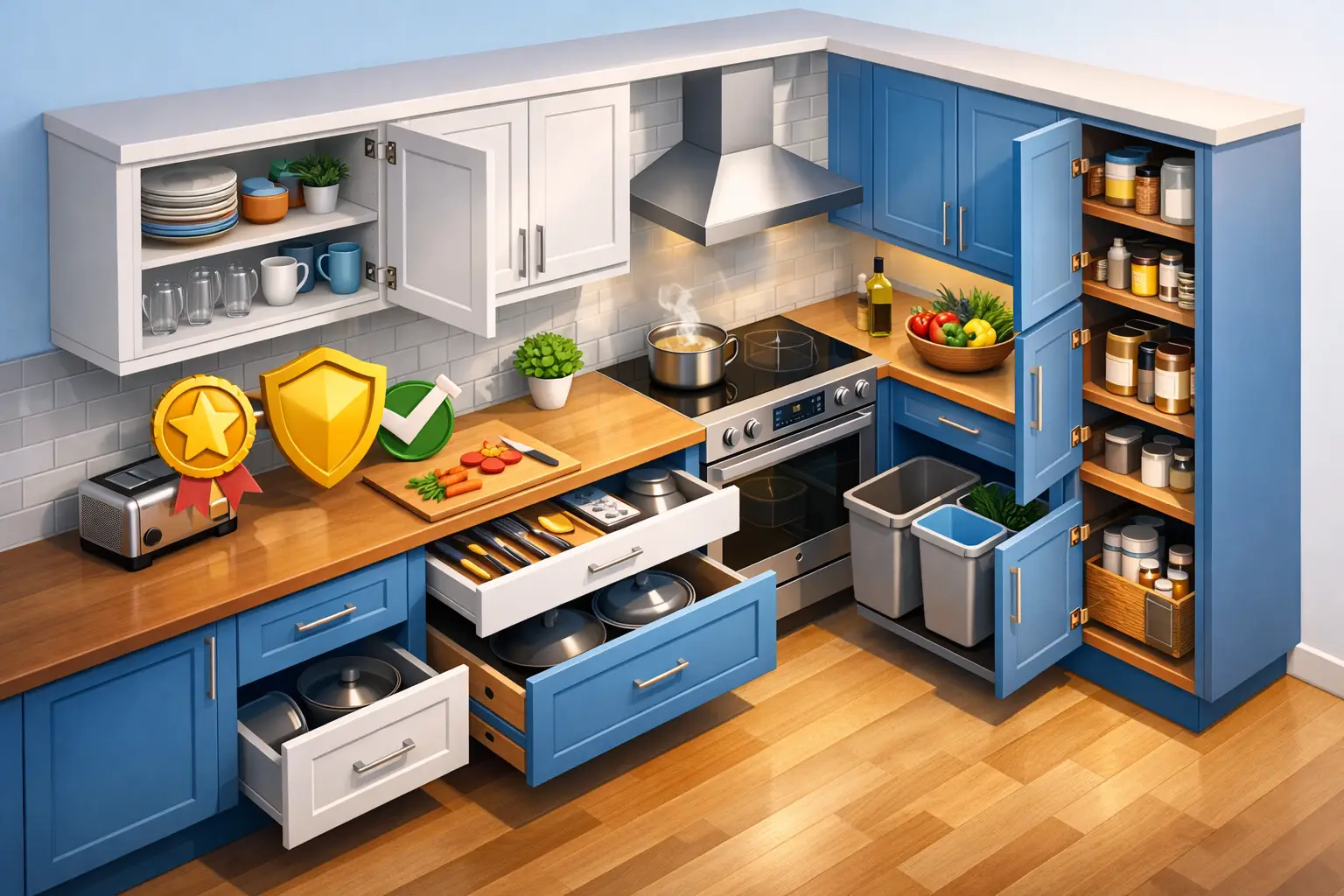

A kitchen can look newly remodeled on day one and still disappoint within a few years if the cabinets were chosen for appearance alone. Quality kitchen cabinets do more than set the visual tone of the room. They carry heavy cookware, withstand daily opening and closing, organize the way your household lives, and give countertops, backsplashes, and appliances a solid foundation.
For homeowners planning a renovation in Weston, Davie, Miramar, Southwest Ranches, or Pembroke Pines, cabinet quality is often where the budget becomes confusing. One showroom may offer a similar door style at a much higher price, while another may advertise a low cabinet price without clearly explaining what is behind the doors. The right decision comes from looking past the display and comparing the construction, finish, storage design, and installation plan together.
What Defines Quality Kitchen Cabinets?
The strongest cabinets are built to perform under real household conditions, not simply photograph well. Construction materials matter because cabinet boxes support the weight of dishes, pantry goods, countertops, and everyday use. Plywood boxes are a popular upgrade because they provide strength, hold fasteners well, and offer reliable durability for a busy kitchen.
That does not mean every cabinet made with engineered material is automatically a poor choice. High-density furniture board can perform well in the right application, particularly when it is properly finished and protected from water exposure. Still, homeowners comparing cabinet lines should ask direct questions about box material, panel thickness, back-panel construction, and how the cabinets are assembled. Vague descriptions such as wood construction do not tell the full story.
Drawers are another fast way to judge value. Dovetail drawer boxes, full-extension drawer glides, and soft-close hardware are details that improve both longevity and daily comfort. A drawer should pull out fully enough to reach items in the back, close quietly, and feel stable when loaded with pots, utensils, or dishes. These features are not just decorative upgrades. They affect how the kitchen works every day.
Cabinet Boxes Should Be Built for the Load
Look for cabinet boxes with dependable joinery, a solid back, and fastening points that support secure installation. Wall cabinets need to be anchored correctly because they carry the combined weight of plates, glassware, food storage, and sometimes heavy serving pieces. Base cabinets need to remain square so doors and drawers continue to align over time.
For a renovation involving stone countertops, strong base cabinet construction is especially valuable. Countertops add substantial weight, and an uneven or weak cabinet run can create problems during installation. A capable cabinet and remodeling team considers these details before the countertop template is scheduled, not after issues appear on site.
Door Materials and Finishes Deserve Equal Attention
The door is the cabinet component you touch and see most often. Solid wood doors bring natural grain and warmth, while painted wood or MDF door options can create a clean, refined look with smooth profiles. Neither choice is universally better. It depends on the desired style, finish color, budget, and the conditions in the home.
South Florida humidity makes finish quality and proper installation especially relevant. Wood naturally expands and contracts, so small movement at joints can occur over time. A well-made painted door, a durable finish process, and appropriate care help preserve the cabinet appearance. Homeowners should also expect normal variation in natural wood grain and color when selecting stained cabinetry. That variation is part of what makes real wood distinctive.
Frameless Quality Kitchen Cabinets: More Usable Space
Frameless cabinets are a practical option for homeowners who want a modern appearance and efficient storage. Unlike traditional face-frame cabinetry, frameless construction uses a thicker cabinet box structure without a front frame. This allows wider drawers, more accessible openings, and a streamlined full-overlay door style.
The added usable space may seem modest cabinet by cabinet, but it becomes noticeable across a full kitchen. Wider drawer openings make it easier to store cookware. Full-height pantry interiors can be planned around pull-out shelves or adjustable shelving. Clean door lines also fit naturally with contemporary kitchens, flat-panel designs, and modern shaker styles.
Frameless cabinets do require accurate installation. Because the door and drawer reveals are intentionally tight and consistent, cabinets must be leveled, secured, and adjusted carefully. A cabinet line can have excellent materials and hardware, yet still look unfinished if installation is rushed. Proper shimming, alignment, filler planning, and final door adjustments are part of the quality equation.
Spend More Where the Kitchen Works Hardest
A realistic cabinet budget does not require choosing the most expensive option in every category. It means placing investment where it will make the largest difference over the life of the kitchen. For many households, that starts with the cabinet box, drawer construction, hardware, and the areas used most often.
A large bank of drawers near the range is usually more functional than several lower cabinets with fixed shelves. Deep drawers provide easier access to cookware and reduce the need to crouch and reach into dark corners. A well-planned pantry can prevent countertop clutter and make groceries easier to organize. These decisions often improve the kitchen more than a costly decorative add-on.
Consider giving special attention to these high-use areas:
- Sink base and nearby waste storage, where moisture protection and convenient access matter most.
- Cooking-zone drawers, which should handle the weight of pots, pans, and cooking tools.
- Pantry storage, where adjustable shelves or pull-outs can prevent wasted vertical space.
- Corner cabinets, which need a practical solution rather than a deep, hard-to-reach void.
Less visible choices can be simplified when appropriate. For example, an upper cabinet with standard adjustable shelving may serve a household just as well as a more elaborate accessory. The goal is not to add every available feature. The goal is to create storage that matches how the household cooks, cleans, shops, and entertains.
Design Decisions That Protect Your Investment
Quality cabinetry performs best when the kitchen layout supports it. Before selecting door colors or hardware, evaluate workflow. Is there enough landing space beside the refrigerator? Can more than one person move through the kitchen comfortably? Are the dishwasher, sink, and trash pull-out located where cleanup will actually happen?
Cabinet dimensions and appliance specifications should be coordinated early. A new refrigerator may be deeper or taller than the existing opening. A range hood may need a custom cabinet or a revised duct route. Island seating affects aisle clearance, while microwave placement can influence upper cabinet configuration. These are planning issues, not last-minute cabinet adjustments.
A complete remodeling approach helps reduce the usual gaps between cabinet supply, design, installation, countertop coordination, and related trades. Leonardo’s Kitchens helps homeowners make these decisions as part of a workable renovation plan, with cabinet construction and installation requirements considered from the start.
Questions to Ask Before You Buy
A cabinet proposal should make it easy to understand what you are receiving. Ask whether the boxes are plywood or furniture board, whether drawers are dovetailed, what type of glides and hinges are included, and whether soft-close hardware is standard. Request clarity on door material, finish options, cabinet lead time, and what installation includes.
Also ask how the team handles walls and floors that are not perfectly level. Most homes have some variation, particularly in older properties. Professional installers account for this through careful layout, shimming, scribing, and trim work. The finished cabinet run should look straight and balanced even when the room itself presents challenges.
Finally, compare the total project value rather than the cabinet price alone. A lower initial cabinet quote can become less attractive if it leaves design gaps, excludes installation details, or creates coordination problems with countertops and other trades. A clear scope protects both the budget and the schedule.
The best cabinet choice is one you will appreciate long after the renovation dust is gone: doors that stay aligned, drawers that carry the load, storage that makes sense, and a finish that still makes you glad you changed the kitchen.
