

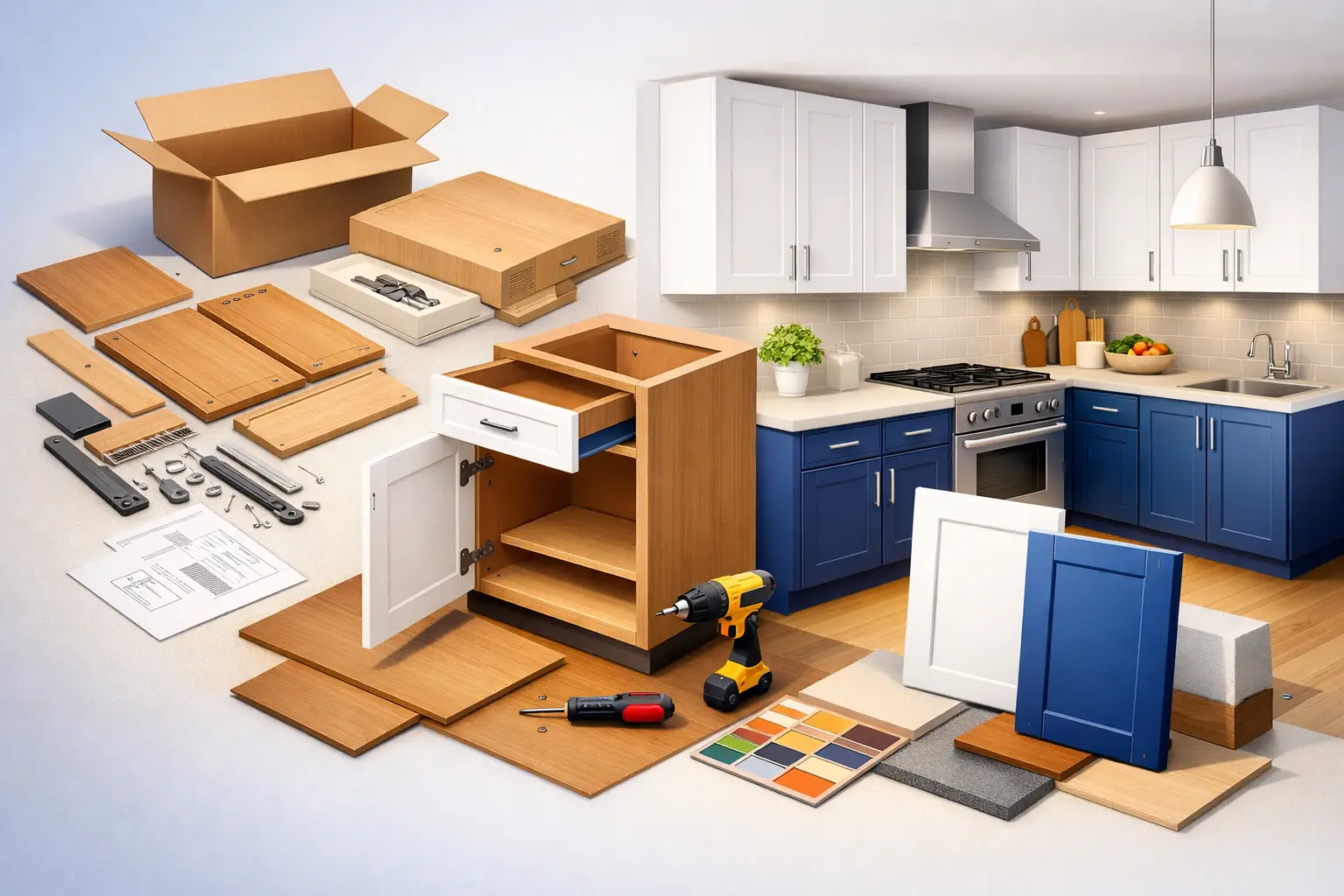

A cabinet quote can change the direction of a kitchen remodel quickly. Homeowners often find that the cabinet style they want comes with a price that strains the rest of the project budget. That is why many ask, are RTA cabinets worth it? For the right project, they can be an excellent value: attractive, durable cabinetry with more room in the budget for countertops, appliances, lighting, and installation.
The key is understanding that RTA, or ready-to-assemble, describes how cabinets are shipped, not whether they are well made. A thoughtfully built RTA cabinet with plywood construction, quality drawer hardware, and durable finishes can serve a South Florida kitchen very well. A poorly built one can create frustration before the first door is hung.
What RTA Cabinets Actually Mean
Ready-to-assemble cabinets arrive in flat-packed cartons and are assembled before or during installation. This packaging method reduces warehouse space and shipping volume, which helps lower the final cost compared with many preassembled cabinet lines.
RTA does not automatically mean particleboard, thin drawers, or limited style choices. Quality varies widely among manufacturers. Better RTA cabinet collections can include frameless construction, solid wood doors, furniture-grade plywood cabinet boxes, dovetail drawer boxes, adjustable shelving, and soft-close hinges and drawer glides.
Frameless cabinetry is especially popular for homeowners seeking a clean, modern kitchen. Because there is no face frame around the cabinet opening, it offers a more streamlined appearance and makes efficient use of interior storage space. The result can look tailored and refined without requiring a fully custom cabinet budget.
Are RTA Cabinets Worth It? It Depends on Construction
The strongest argument for RTA cabinets is value, but only when the cabinets are built to handle daily use. Price alone is not a useful comparison. A low initial price can become expensive if cabinet boxes swell near the sink, drawer bottoms sag, or hinge adjustments fail after a few years.
Start with the cabinet box. Plywood is typically a stronger and more moisture-resistant choice than particleboard, an important consideration in humid South Florida homes and in kitchens where spills are unavoidable. A plywood box also holds screws more reliably, which matters for wall cabinet installation, hardware, and long-term stability.
Drawer construction deserves equal attention. Dovetail drawer boxes are a practical sign of quality because the interlocking joinery is designed to withstand repeated opening and closing. Soft-close glides and hinges add more than a luxury touch. They reduce slamming, improve day-to-day function, and help cabinet doors and drawers operate smoothly.
Door material and finish should also match the demands of the household. Painted finishes offer a crisp, versatile look, while wood finishes bring warmth and natural character. Neither is automatically better. What matters is that the finish is applied consistently and that the cabinet line provides components that fit the final design, including filler panels, trim, end panels, and matching accessories.
Where the Savings Come From
RTA cabinets are often less expensive than comparable preassembled or custom cabinets because they are packed and transported efficiently. The savings can be meaningful in a full kitchen, particularly when cabinets make up a large portion of the renovation budget.
That lower cabinet cost can give homeowners more flexibility elsewhere. It may allow for better countertop material, under-cabinet lighting, a larger island, upgraded organizers, or the professional installation needed to make the finished kitchen look right.
However, RTA cabinets are not always the lowest-cost option once assembly and installation are included. If a homeowner buys cabinets independently, then hires separate people to assemble, deliver, install, and correct issues, the project can become more complicated than expected. The best value is often a complete plan that accounts for the cabinetry, design, assembly, installation, and the details around them.
Assembly Is the Main Trade-Off
Assembly is where ready-to-assemble cabinets require an honest assessment. A small number of basic cabinets may be manageable for a skilled homeowner with time, tools, and a suitable workspace. A complete kitchen is different. There may be dozens of boxes, doors, drawer fronts, panels, and hardware pieces that must be assembled accurately and kept organized.
Cabinets must also be installed level, plumb, and square. Walls and floors are rarely perfectly straight, especially in older homes. Correct installation requires careful shimming, proper fastening into wall studs, door and drawer adjustments, and attention to appliance clearances. A cabinet that is only slightly out of level can create visible gaps, uneven countertop support, or doors that do not align.
Professional assembly and installation can remove that burden. It is particularly valuable when the project includes a new layout, an island, tall pantry cabinets, crown molding, or coordination with plumbing, electrical, flooring, and countertops. A good installer also knows how to handle the small adjustments that separate a cabinet installation that looks acceptable from one that looks finished.
When RTA Cabinets Make the Most Sense
RTA cabinets are a strong fit for homeowners who want a polished kitchen but do not need every cabinet built from scratch for an unusual space. They work well for standard and semi-custom layouts, including kitchens that need wider drawer bases, pantry storage, islands, and efficient corner solutions.
They are also a smart choice when construction quality is a priority but the budget has limits. A cabinet line with plywood boxes, dovetail drawers, soft-close hardware, and an appealing door style can deliver many of the features homeowners expect from more expensive cabinetry.
The option may be less suitable for highly irregular rooms, historic homes with extreme wall variations, or projects requiring specialized sizes that a stock cabinet system cannot accommodate. In those situations, custom cabinetry may justify its added cost because it can be built precisely around the space.
How to Compare RTA Cabinet Quotes Fairly
Before comparing quotes, make sure each proposal includes the same scope. A cabinet price without delivery, assembly, panels, trim, installation, or design support may look appealing at first but does not reflect the final project cost.
Ask about box material, drawer-box construction, door material, hardware brand or specifications, finish options, and warranty terms. Confirm whether the quote includes the pieces needed to finish exposed cabinet sides and close gaps at walls and ceilings. Those details affect both appearance and budget.
It also helps to review the kitchen layout before ordering. The right cabinet sizes can improve traffic flow, create better landing space around appliances, and make storage easier to use. Design guidance is not simply an extra service. It can prevent costly ordering mistakes and help the cabinet investment work harder for the home.
For homeowners in Weston, Davie, Miramar, Southwest Ranches, and Pembroke Pines, a local kitchen professional can also help coordinate cabinetry with the realities of the room and the remodel schedule. Leonardo’s Kitchens focuses on this balance: elegant frameless cabinet options, quality construction details, and support from design through installation.
The Bottom Line for Your Remodel
RTA cabinets are worth considering when they offer the right construction quality, design options, and installation plan for your kitchen. They are not a shortcut around careful planning, but they can be a practical way to achieve a more refined kitchen without paying luxury-showroom pricing.
Before making a decision, look beyond the flat-pack label. Focus on the cabinet box, drawer construction, hardware, finish, and the expertise behind the installation. A well-selected RTA cabinet line can give your kitchen the durable, polished foundation it needs for years of daily use.
