

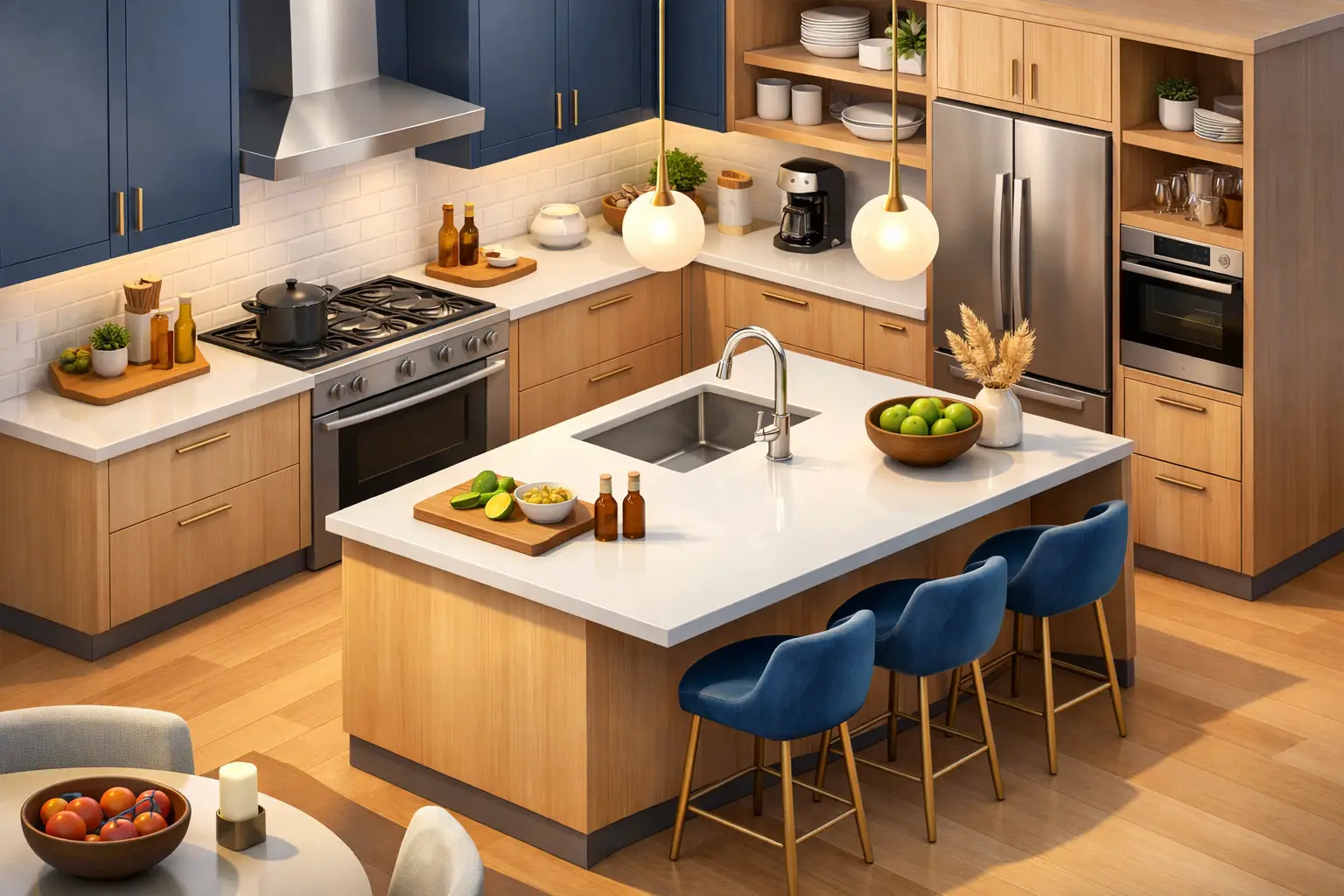

A kitchen can look expensive long before the budget gets expensive. That is the core idea behind affordable upscale kitchen design: spend where quality shows, avoid upgrades that only raise the invoice, and build the room around cabinetry, layout, and finishes that hold up in daily use.
For many homeowners, the problem is not a lack of inspiration. It is knowing which choices actually create a refined kitchen and which ones just sound premium in a showroom. A polished result usually comes from disciplined design decisions, not from choosing the most expensive option in every category.
What affordable upscale kitchen design really means
Affordable upscale kitchen design is not about making a budget kitchen pretend to be luxury. It is about creating a kitchen that feels clean, tailored, and well built without paying custom-level pricing for every detail. That usually means focusing on proportion, finish consistency, storage function, and cabinet construction first.
In practical terms, the biggest visual surface in most kitchens is the cabinetry. If the cabinets look dated, flimsy, or poorly fitted, high-end countertops and designer lighting will not save the room. On the other hand, well-made frameless cabinets with a modern door style, soft-close hardware, and durable finishes can instantly move the kitchen into a more upscale category.
This is where homeowners often get better value from semi-custom or well-built RTA wood cabinetry than from paying a premium for brand names alone. Construction details matter. Plywood cabinet boxes, dovetail drawers, and dependable drawer glides are the kinds of upgrades that improve both appearance and longevity.
Start with the cabinet foundation
If the goal is a kitchen that looks refined and performs well, cabinets should carry a meaningful share of the budget. That does not mean overspending. It means choosing the right cabinet system from the beginning so the design does not have to be corrected later.
Frameless cabinetry is one of the clearest ways to get a more upscale look at an accessible price point. The clean lines suit both contemporary and transitional kitchens, and the wider interior access improves storage. In smaller kitchens, that extra usable space matters more than many people expect.
Door style also affects whether the room feels current or stuck between trends. Simple shaker profiles, slim shaker doors, and flat-panel styles tend to deliver the best value because they look intentional without becoming too ornate. Highly decorative profiles can date the kitchen faster, and they often cost more without improving function.
Color choice matters just as much. White remains reliable for brightness, but many homeowners now get a richer result from warm wood tones, soft taupes, muted greens, or a two-tone cabinet plan with a deeper island color. The right color should work with the home, the natural light, and the level of maintenance the household can realistically handle.
Where to spend and where to stay disciplined
A well-balanced remodel rarely treats every material as a splurge item. The better approach is to identify the elements that most affect daily use and visible quality.
Cabinet construction is worth paying for because weak boxes, poor drawer hardware, and thin materials create problems that show up quickly. Countertops are also a smart place to invest, especially when the kitchen gets heavy use. Quartz remains a strong value choice because it offers an upscale appearance, consistent patterning, and easier maintenance than some natural stone options.
Backsplashes, by contrast, often do not need to be expensive to look sharp. A simple full-height tile or a clean subway tile with careful installation can look better than a costly mosaic that competes with everything else in the room. Lighting can go either way. Decorative fixtures add personality, but under-cabinet lighting often delivers more daily value because it improves visibility and makes the kitchen feel more finished.
Appliances depend on priorities. Panel-ready units and professional-grade ranges can raise the design level, but they can also consume budget quickly. If the kitchen layout, cabinetry, and countertop selection are strong, mid-range appliances with a clean finish can still support an upscale result.
Layout is what makes the kitchen feel expensive
Many kitchens look ordinary not because the finishes are cheap, but because the room is hard to use. Poor spacing, weak storage planning, and awkward work zones make even attractive kitchens feel unfinished.
An upscale kitchen usually feels calm. There is enough landing space near the refrigerator and range. Drawers are placed where cookware and utensils are used. Trash pull-outs do not block the main path. Tall storage is integrated rather than added as an afterthought.
This is one reason a remodel should be treated as more than a cabinet swap when the existing layout is inefficient. In some homes, keeping plumbing and electrical in place is the right budget decision. In others, moving one major element creates a much better kitchen and prevents years of frustration. It depends on the room, the home, and how the kitchen is actually used.
For homeowners in established South Florida neighborhoods, this question comes up often because many older kitchens were built for a different style of cooking and entertaining. A modern layout with frameless cabinets, better drawer storage, and improved circulation can make the entire home feel updated.
The details that create an upscale finish
Small details are often what separate a kitchen that looks good in photos from one that feels genuinely polished in person. Crown treatment, filler placement, panel finishes on exposed cabinet ends, and hardware alignment all matter.
One common mistake is mixing too many statements into one room. Bold veining in the countertop, decorative backsplash tile, ornate hardware, open shelving, and dramatic lighting can quickly make the kitchen feel busy. A more upscale result usually comes from restraint. Let one or two features lead, then keep the rest coordinated and clean.
Hardware is a good example. Solid pulls in a consistent finish can elevate the cabinets without adding much cost relative to the total remodel. The same goes for soft-close doors and drawers. These are not just comfort upgrades. They reinforce the sense that the kitchen was built with care.
Another overlooked factor is installation quality. Even well-made cabinets can look average if reveals are uneven or trim details are rushed. This is why many homeowners prefer a company that can support design, cabinet selection, and installation together. It reduces guesswork and helps the finished kitchen match the original plan.
Affordable upscale kitchen design works best with realistic trade-offs
Every project has trade-offs, and pretending otherwise is how budgets get stretched past the point of comfort. Some homeowners want the upscale look most in the cabinetry and are willing to choose a simpler backsplash. Others care more about opening the room and will keep a more modest appliance package to make layout improvements possible.
There is no single formula. A family that cooks daily may benefit more from drawer organization, durable finishes, and easy-clean surfaces than from a statement hood. A homeowner preparing to stay in the home long term may justify spending more on cabinet quality and installation because those choices affect daily life for years.
That is why product specifications should be part of the conversation early. Plywood boxes, wood dovetail drawers, and reliable soft-close hardware are easier to evaluate than vague terms like premium or designer. When the quality is clear, homeowners can compare options with more confidence.
At Leonardo’s Kitchens, that value-focused approach is what helps many projects land in the sweet spot between budget control and a finished kitchen that looks meaningfully upgraded.
How to plan a kitchen that looks high-end without overspending
The smartest projects usually begin with three questions. First, what is making the current kitchen feel outdated – the layout, the cabinets, the finishes, or all three? Second, which upgrades will improve how the kitchen works every day? Third, where will better materials be most visible and most useful over time?
When those answers are clear, the design becomes easier to prioritize. It is easier to choose cabinets that support the style, countertop materials that fit the workload, and storage solutions that suit the household. It also becomes easier to avoid expensive detours.
A refined kitchen does not need every luxury feature on the market. It needs good bones, consistent design choices, and materials that perform well under normal use. When cabinetry is well built, the layout is thoughtfully planned, and the finish selections are controlled, the result can look far more expensive than the budget suggests.
If you are planning a remodel, the best next step is not chasing the flashiest inspiration photo. It is building a kitchen around the choices that will still look right and work well after the excitement of the renovation is over.
