

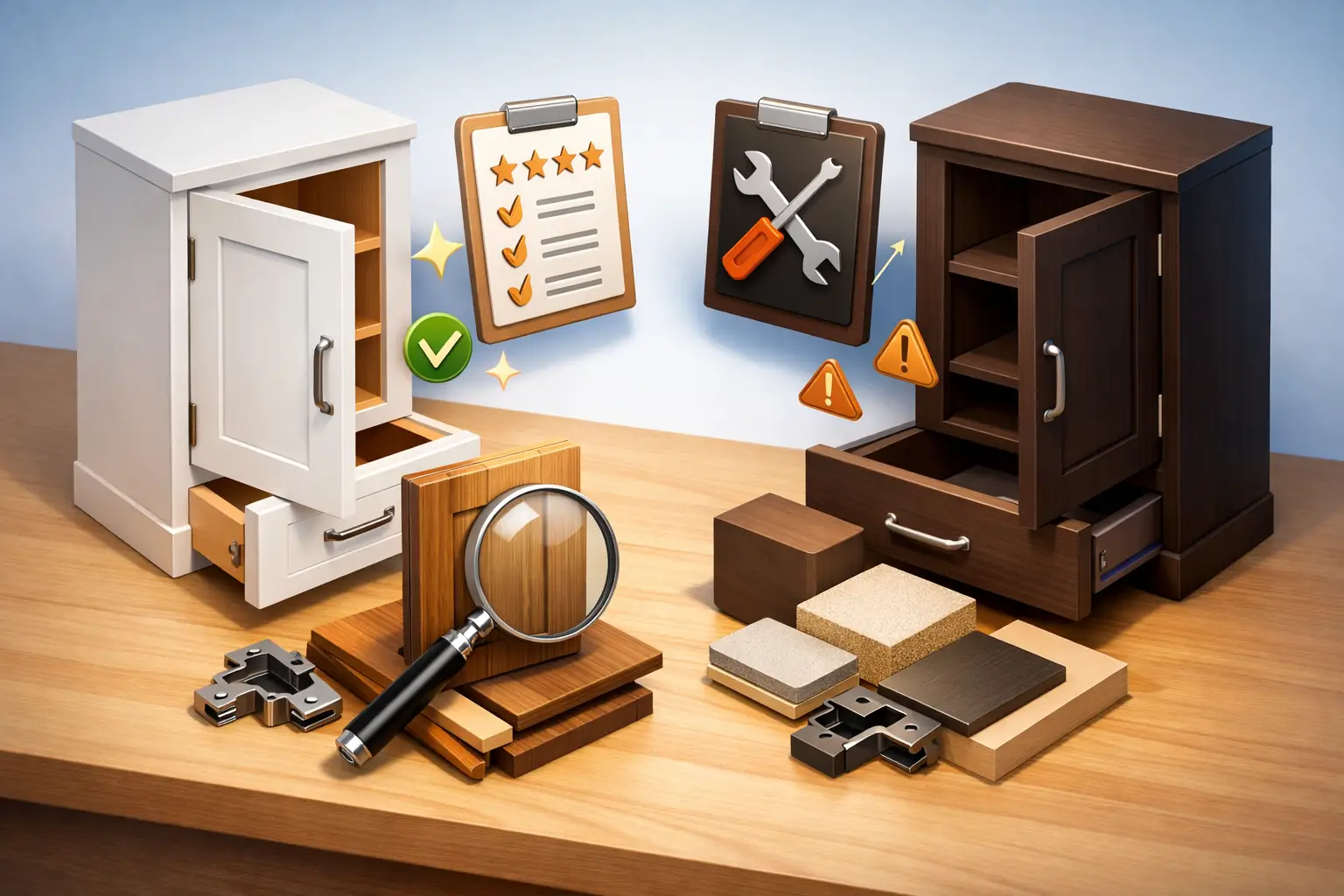

A cabinet door can look great in a showroom and still be a poor long-term buy. That is why homeowners who want a kitchen remodel done right need to know how to compare cabinet quality beyond color, style, and price. The details that matter most are usually the ones you do not notice at first glance.
If you are replacing an outdated kitchen, cabinet quality affects more than appearance. It influences how well drawers hold up under daily use, whether doors stay aligned, how the finish wears over time, and how much value you really get from your remodel budget. A lower upfront price can become expensive if the cabinets chip, sag, swell, or need early replacement.
How to compare cabinet quality without getting distracted by looks
The easiest mistake is comparing cabinet lines by door style alone. Shaker, slab, and raised-panel doors can all be built well or built poorly. The better approach is to look at construction first, then finish, then price.
Start with the cabinet box. This is the structure that carries the weight of your countertops, dishes, cookware, and daily use. A strong cabinet box typically uses plywood rather than particleboard for the sides and structural panels. Plywood generally handles moisture better, holds fasteners more securely, and resists sagging more effectively over time. In a kitchen, where humidity and spills are part of normal life, that difference matters.
That does not mean every particleboard cabinet is automatically unacceptable. Some budget cabinet lines use engineered materials in limited areas and still perform reasonably well. But if you are comparing two cabinets at similar price points, plywood construction is usually a better value.
Back panel thickness is another detail worth checking. Thin backs can weaken the cabinet and make installation less secure. A sturdier back panel helps the cabinet stay square and gives installers a better base for fastening it properly to the wall.
Check the drawer box, not just the drawer front
Many homeowners focus on what they can see, but drawer performance often tells you more about quality than the door style does. Open the drawer fully. Pull it in and out several times. It should glide smoothly, feel stable, and close without racking side to side.
Now look at the drawer box itself. Solid wood drawer boxes with dovetail joints are usually a strong sign of better construction. Dovetail joinery is designed to resist pulling apart, which is important in kitchen drawers that carry heavy utensils, pots, and storage containers. Stapled or thin composite drawer boxes may cost less, but they tend to loosen sooner under daily wear.
Also check the drawer bottom. A thicker, well-supported bottom will handle more weight without bowing. This matters most in deep drawers, which many homeowners now use for cookware and dishes instead of traditional lower-door cabinets.
Hardware quality changes the daily experience
Cabinet hardware does not get much attention until it fails. Hinges and drawer slides are working parts, and they take constant use. Cheap hardware can make an otherwise decent cabinet feel flimsy.
Soft-close hinges and soft-close drawer glides are not just upgrades for comfort. They reduce slamming, limit wear, and help the cabinetry hold up better over time. Full-extension drawer slides are another feature worth looking for because they allow you to access the entire drawer instead of losing storage in the back.
Ask what brand or grade of hardware is being used. If a cabinet supplier cannot clearly explain the hardware quality, that is usually a sign to look closer. Better cabinet lines tend to be more transparent about these specifications because they know the details help justify the value.
Compare the finish like you would compare flooring or paint
Cabinet finish affects both appearance and maintenance. A clean-looking painted door on day one tells you very little about how it will look after a few years of cooking, cleaning, and regular use.
Inspect painted and stained surfaces up close. The finish should look even, smooth, and consistent across doors, drawer fronts, and exposed panels. Rough spots, visible drips, uneven sheen, or thin coverage around edges can signal lower production standards.
Edges and corners are especially important. These are the first places where poor finishing work tends to show wear. If the finish already looks weak in those areas before installation, it will not improve in your home.
It is also worth asking how the finish is applied. Multi-step finishing systems generally provide better durability than basic single-pass applications. For homeowners who want an elegant kitchen without paying luxury showroom pricing, finish quality is one of the clearest places to judge real value.
Door material matters more than many buyers realize
Solid wood doors are often associated with quality, and in many cases they are a strong choice. They offer durability, a more substantial feel, and repair potential if minor wear develops over time. But engineered center panels or MDF components also have a place, especially in painted cabinetry where stability is important.
This is one of those areas where it depends on the cabinet style and finish. For painted doors, MDF center panels can help reduce visible movement and cracking compared with some all-wood constructions. For stained finishes, natural wood grain may be the better fit aesthetically. What matters is that the materials are used intentionally and that the manufacturer is not cutting corners where strength is needed.
How to compare cabinet quality on installation value
Even well-built cabinets can perform poorly if they are installed badly. That is why homeowners should compare not just the cabinet product, but the full cabinet package. Leveling, fastening, spacing, filler use, crown alignment, and panel finishing all affect how the final kitchen looks and functions.
A lower quote can become less attractive if it does not include proper installation details or if it leaves the homeowner coordinating adjustments, countertops, and punch-list issues alone. In a real remodel, cabinet quality and installation quality work together.
This matters even more in older homes where walls and floors may not be perfectly straight. An experienced kitchen remodeler knows how to account for those conditions so the cabinetry still looks clean and refined when the project is finished.
Watch for pricing that is low for the wrong reasons
Price matters. Most homeowners are balancing design goals with a realistic budget, and there is nothing wrong with wanting strong value. But when one cabinet quote comes in far below the others, there is usually a reason.
Sometimes the savings come from thinner materials, lower-grade hardware, weaker joinery, or reduced finish quality. Sometimes the quote excludes parts of the job that will be added later. The smart comparison is not cheapest versus most expensive. It is construction, features, and installation scope compared side by side.
A cabinet line with plywood boxes, dovetail drawers, soft-close hardware, and a durable finish often gives better long-term value than a cheaper option that looks similar in photos. This is especially true for busy family kitchens, where cabinets need to perform every day, not just look good at delivery.
Questions worth asking before you commit
When you are evaluating options, ask direct questions. What is the box made from? Are the drawers dovetail or stapled? Are the slides full extension? Is the hardware soft-close? What does the installation include? How are exposed ends and trim handled? Clear answers usually indicate a company that understands its product.
If the responses stay vague or focus only on door style and color, you may not be getting the full picture. Good cabinet providers are comfortable discussing construction because that is where quality lives.
For many homeowners in Weston, Davie, Miramar, Southwest Ranches, and Pembroke Pines, the best result comes from working with a company that can explain both the cabinet specifications and how those cabinets fit into the larger remodeling plan. Leonardo’s Kitchens takes that practical approach because the right cabinetry should look refined, function well, and make sense for the budget you are actually working with.
The best cabinet choice is usually not the most expensive one in the room. It is the one built with the right materials, fitted with dependable hardware, finished properly, and installed with care so your kitchen still feels solid years after the remodel is done.
