

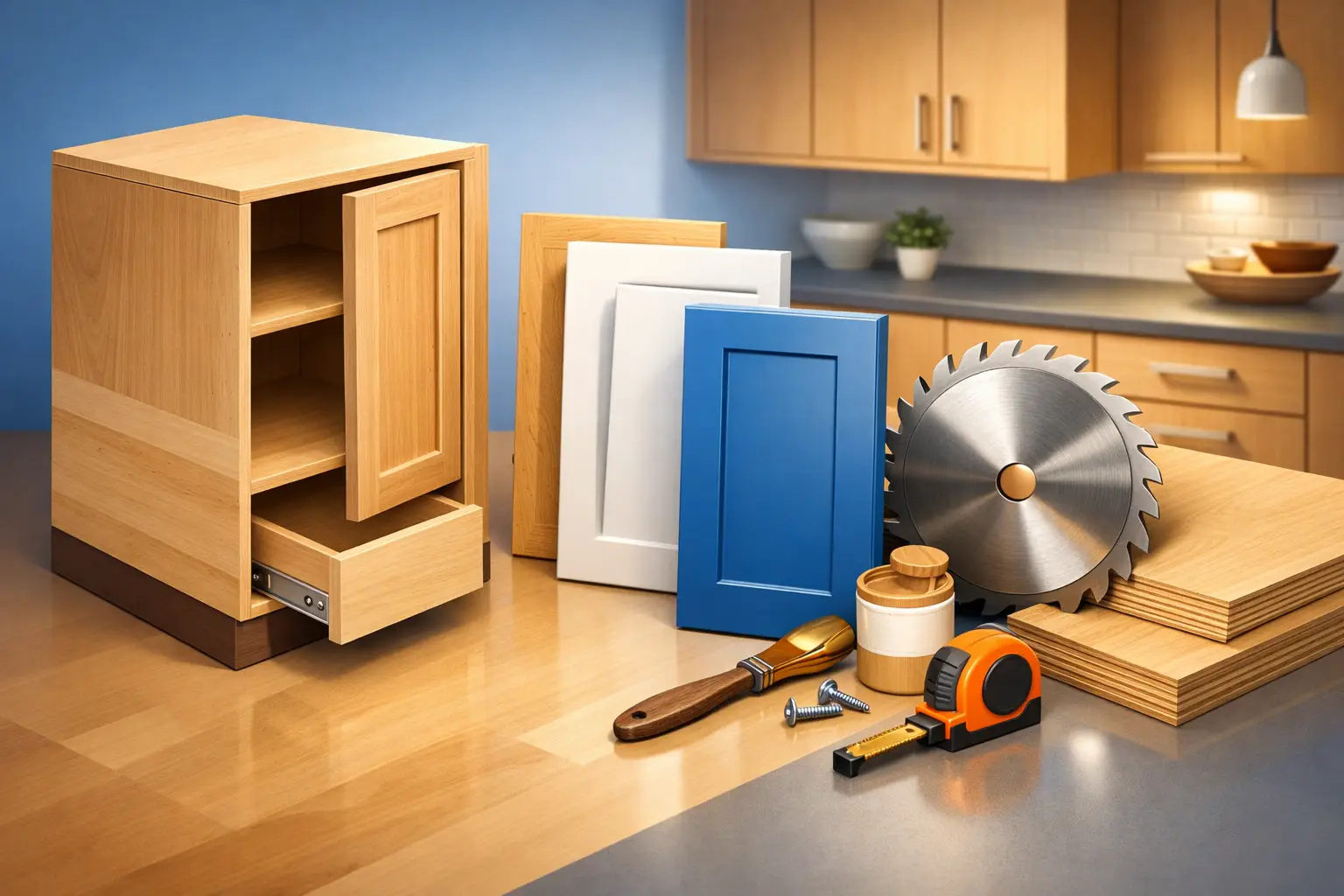

A cabinet door can make any kitchen look polished on day one. The cabinet box tells you far more about how that kitchen will perform after years of daily use, humidity, heavy cookware, and the occasional plumbing leak. Knowing how to select plywood cabinets means looking past door color and promotional labels to evaluate the construction details that create real long-term value.
For homeowners planning a kitchen remodel in Weston, Davie, Miramar, Southwest Ranches, or Pembroke Pines, plywood cabinet boxes are often a smart middle ground: stronger and more moisture-tolerant than many entry-level alternatives, without the pricing of fully custom cabinetry. Still, not every cabinet described as “plywood” is built the same way.
Start With the Cabinet Box, Not Just the Door
The cabinet box, sometimes called the carcass, is the structural part of the cabinet. It includes the sides, bottom, back, shelves, and fixed support rails. Doors and drawer fronts create the visual impression, but the box is what carries the weight of dishes, appliances, pantry items, and countertops.
A quality plywood cabinet box is generally made from layered wood veneers bonded together with adhesive. Because its grain direction alternates between layers, plywood offers good strength and stability. It also holds screws well, which matters for hinges, drawer slides, mounting rails, and adjustments made during installation.
Ask a cabinet provider exactly which components are plywood. Some cabinet lines use plywood sides and shelves but use another engineered material for backs, bottoms, or toe kicks. That is not automatically a problem. The right answer depends on where the material is used and how the cabinet is assembled. What matters is transparency and whether the structural components are suited to their job.
Understand Plywood Thickness and Core Quality
Plywood is not one uniform product. Thickness, veneer count, face quality, and interior core all influence performance. In most kitchen cabinetry, 1/2-inch plywood can be appropriate for cabinet sides, while 3/4-inch plywood is often preferred for shelves, bottoms, and areas carrying heavier loads. A 3/4-inch adjustable shelf is less likely to sag under stacks of plates, small appliances, or pantry goods.
Thickness alone is not the whole story. Look for plywood with a consistent core and minimal voids between veneer layers. Low-grade plywood can have hidden gaps that reduce its holding power and create weak points at fasteners. Cabinet-grade plywood should feel solid at exposed edges rather than showing large hollow areas or rough, uneven layers.
For visible interiors, a clear-coated birch or similar hardwood veneer can provide a clean, finished appearance. It is especially attractive inside glass-door cabinets, open shelving sections, or tall pantries. For concealed areas, a durable, properly finished panel may be more important than the species of the face veneer.
Why “All Plywood” Needs a Closer Look
“All plywood construction” is a useful starting point, but it should not end the conversation. Confirm whether the claim applies to the cabinet box only or also to shelves, backs, and drawers. Ask about the thickness of the sides and shelves, the material used for drawer boxes, and how the cabinet components are joined.
A well-designed cabinet with plywood sides, a full back panel, reinforced corner support, and reliable hardware can be a better investment than a loosely assembled cabinet that simply carries an all-plywood label.
Compare Plywood With Particleboard and MDF Fairly
Plywood is often the preferred choice for cabinet boxes because it is lighter, strong for its weight, and generally more forgiving around moisture than particleboard. If water reaches an unfinished edge of particleboard, the material can swell and lose structural integrity. That is a meaningful concern near sinks, dishwashers, and refrigerators.
However, material choice should be evaluated by application, not marketing alone. MDF can create an exceptionally smooth surface for painted cabinet doors, and it is commonly used for that purpose. It is less suitable for cabinet boxes that need to resist moisture and hold mounting screws over time. Particleboard can also be used responsibly in budget cabinet lines when it is properly laminated, edged, and installed in lower-risk locations, but it usually does not offer the same durability margin as plywood.
For a kitchen intended to support a long-term renovation, plywood boxes offer a practical upgrade. They provide added confidence without requiring homeowners to pay for every premium option available in a luxury custom cabinet package.
Inspect How the Cabinets Are Assembled
Construction details are where a cabinet either earns its value or gives it away. Look inside a sample cabinet and inspect the corners, back panel, shelves, and drawer boxes. Quality cabinets should feel rigid, square, and substantial when doors and drawers are opened.
Look for secure joinery, such as dado grooves, dowels, locking joints, or well-executed cam-lock assembly systems in RTA cabinets. RTA cabinetry can be an excellent value, but only when the parts fit accurately and the cabinet is assembled correctly. Stapled joints, thin back panels, and weak corner connections can create problems even if plywood is used elsewhere.
The back panel deserves special attention. A full-height, securely attached back gives wall cabinets and base cabinets more rigidity. It also provides a more dependable surface for mounting cabinets to wall studs. This matters when cabinets will support stone countertops, heavy dishes, or tall pantry storage.
Check the Drawers and Hardware
Drawers take more abuse than almost any other cabinet component. A quality drawer box should use solid wood or durable plywood sides rather than thin, flimsy material. Dovetail joints are a strong sign of craftsmanship because they mechanically lock the drawer sides together and resist pulling apart under repeated use.
Soft-close drawer slides and hinges improve the daily experience, but they are not just a luxury feature. Good hardware reduces slamming, helps doors close consistently, and allows for adjustment during installation. Test the drawers fully extended. They should glide smoothly, stay level, and feel stable when loaded.
Also consider drawer depth and usable storage. Deep drawers for pots and pans, roll-out trays for base cabinets, and pull-out waste storage can improve how a kitchen functions more than adding another decorative cabinet feature.
Choose a Finish That Protects the Cabinet
The cabinet finish affects appearance, cleanability, and durability. Painted finishes create a refined look and work well with many kitchen styles, from bright transitional spaces to modern flat-panel designs. Stained wood finishes show natural grain and can add warmth, especially when paired with light countertops and simple hardware.
Ask how the finish is applied and whether exposed cabinet edges are sealed. A quality finish should be even, smooth, and durable enough for regular cleaning. Inspect door edges, cabinet interiors, and the underside of wall cabinets, where cost-cutting can be easier to spot.
South Florida kitchens also benefit from careful moisture management. Plywood helps, but no cabinet material is immune to prolonged water exposure. A leaking supply line, poor dishwasher connection, or unsealed countertop seam can damage even well-built cabinetry. Proper installation and fast repair of leaks protect the investment as much as the material selection does.
Match the Cabinet Style to the Layout and Budget
The best plywood cabinets are not necessarily the most expensive ones. They are the ones that fit the room, support the way your household uses the kitchen, and include durable construction where it counts.
Frameless cabinets are a strong option for homeowners who want a clean, modern appearance and more accessible interior storage. Because they do not have a face frame around the cabinet opening, they can provide wider drawers and a more streamlined look. They also require precise installation so reveals, doors, and drawer fronts align correctly.
Before choosing a cabinet line, balance your budget across cabinetry, countertops, appliances, lighting, flooring, and labor. It can be wiser to select a well-built plywood cabinet with reliable hardware and a practical door style than to overspend on decorative upgrades while compromising the layout or installation quality.
Ask the Right Questions Before You Buy
When comparing cabinet options, request clear specifications rather than relying on broad descriptions. Confirm the plywood thickness, shelf material, drawer box construction, hardware brand or rating, cabinet back design, finish type, and warranty coverage. If you are viewing a showroom display, open every door and drawer you can. A cabinet should feel as good in operation as it looks from across the room.
It is also worth discussing who will measure, assemble, install, and coordinate the project. Cabinet quality can be undermined by inaccurate measurements, uneven walls, poor shimming, or rushed installation. A professional remodeling partner can help identify layout limitations before the order is placed and make sure the finished kitchen performs as intended.
Leonardo’s Kitchens helps homeowners evaluate plywood cabinet construction alongside design, storage, and installation needs, so the decision is based on usable value rather than a label alone.
A well-chosen cabinet should give you more than a beautiful first impression. It should make the everyday work of cooking, cleaning, hosting, and storing easier for years to come.
