


If you are comparing cabinet quotes and the pricing seems all over the map, the material is usually one of the biggest reasons. When homeowners ask what is kitchen cabinets made of, they are really asking three things at once: how long will these cabinets last, how will they look in a few years, and are they worth the price.
The answer is not one material. Most kitchen cabinets are made from a combination of materials, and each part of the cabinet can be built differently. The cabinet box, doors, drawer fronts, drawer boxes, back panel, shelving, and finish may all use different products. That is why two cabinets can look similar from the outside and perform very differently over time.
What is kitchen cabinets made of in most homes?
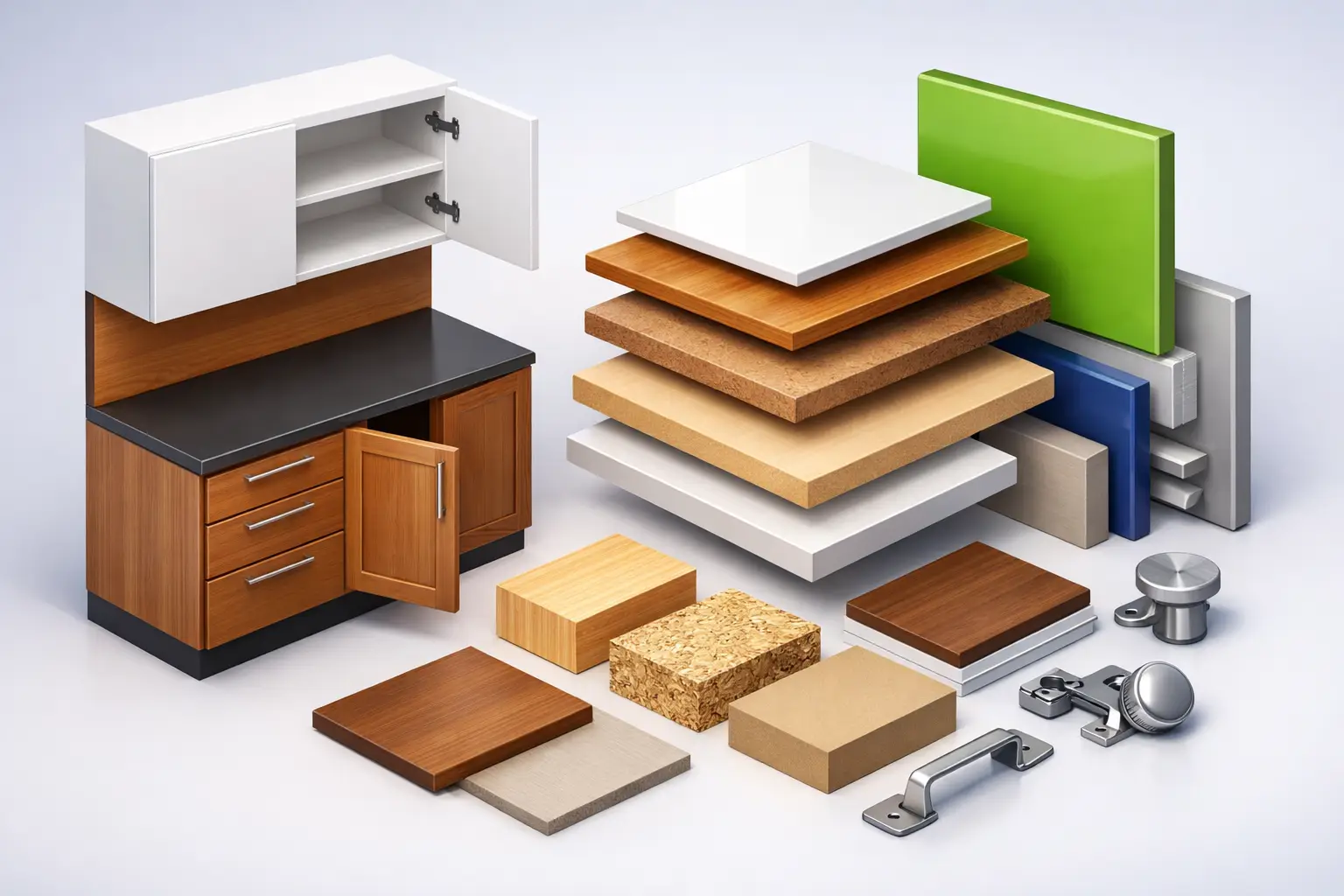
In most kitchens, cabinets are made from plywood, particleboard, medium-density fiberboard (MDF), solid wood, or a mix of these materials. The exact combination depends on the cabinet style, budget, and whether the cabinets are stock, semi-custom, or custom.
For example, a cabinet may have a plywood box, MDF center panel doors, solid wood door frames, and dovetail solid wood drawers. Another may use a particleboard box with a thermofoil door and a thinner back panel. Both can be sold as “new kitchen cabinets,” but they are not in the same class when it comes to durability, moisture resistance, and long-term value.
For homeowners planning a remodel, the best approach is to look beyond the door style and color. The real quality is often in the cabinet construction you do not notice at first glance.
The main materials used in kitchen cabinets
Plywood
Plywood is one of the most respected materials for cabinet boxes, and for good reason. It is made by layering thin sheets of wood veneer with the grain running in alternating directions. That cross-layer construction gives it strength and helps it resist warping better than some lower-cost engineered materials.
In kitchen cabinet construction, plywood is often used for the sides, tops, bottoms, and shelves of the cabinet box. It tends to hold screws well and generally performs better in humid environments than particleboard. In places like South Florida, where moisture and humidity are always part of the equation, that matters.
Plywood does cost more. But if you want a cabinet that feels solid, handles installation well, and offers better durability over time, plywood is often worth the upgrade.
Particleboard
Particleboard is made from wood particles and resin pressed into sheets. It is a common cabinet material because it is affordable and easy to manufacture at scale. Many budget cabinets use particleboard for the cabinet box or shelving.
The main advantage is price. For a homeowner trying to keep a remodel cost under control, particleboard can make a project more accessible. The trade-off is performance. It is heavier than plywood, does not hold fasteners as well, and is more vulnerable to swelling if exposed to moisture.
That does not mean every particleboard cabinet is automatically a bad purchase. In a dry, lightly used space, it may perform acceptably. But in a busy kitchen with cooking moisture, sink splash, and years of daily use, it is not usually the strongest long-term option.
MDF
MDF, or medium-density fiberboard, is made from fine wood fibers compressed with resin. It has a very smooth surface, which makes it useful for painted cabinet doors and decorative profiles. If you want a clean painted finish with minimal grain showing through, MDF is often part of the conversation.
Its surface consistency is a real benefit, especially for modern or shaker-style painted cabinets. It also resists some of the expansion and contraction that can affect solid wood. On the other hand, MDF is heavy, and like particleboard, it does not respond well to water exposure.
MDF can be a smart choice for painted doors in the right application. It is less ideal when moisture exposure is likely or when a homeowner expects the natural character of real wood.
Solid wood
Solid wood is commonly used for cabinet doors, face components, drawer boxes, and decorative details. It brings natural grain, warmth, and a more traditional sense of craftsmanship. Different species offer different looks and price points, from maple and birch to oak, cherry, and walnut.
Many homeowners assume solid wood should be used for every part of the cabinet, but that is not always necessary or even ideal. Solid wood expands and contracts with changes in humidity, which can create movement over time. That is one reason quality cabinet makers often reserve solid wood for doors, drawer fronts, and visible elements rather than the full cabinet box.
Used in the right places, solid wood is a premium feature. Used everywhere, it can raise cost without always improving performance.
What each cabinet part is usually made of
Understanding how cabinets are built is more useful than focusing on one material alone.
The cabinet box is often made of plywood or particleboard. This is the structural shell mounted to the wall and supporting the countertop, shelves, and hardware. A stronger box usually means better long-term performance.
Cabinet doors can be solid wood, MDF, plywood-core construction, or engineered material with a laminate or thermofoil finish. For painted styles, MDF or a wood-and-MDF combination is common. For stained finishes, solid wood is often preferred because it shows grain naturally.
Drawer boxes are an important quality marker. Better cabinets often use solid wood drawer boxes with dovetail joinery. Lower-cost options may use stapled particleboard or thinner engineered material. Since drawers open and close constantly, this is an area where better construction pays off.
Cabinet backs and shelves also matter. A full or thicker back panel adds strength, especially for wall cabinets. Shelves made from thicker plywood or furniture-grade engineered panels will usually sag less over time than thin particleboard shelves.
Which material is best for kitchen cabinets?
There is no one-word answer because the best material depends on budget, finish, and how long you plan to stay in the home. Still, some patterns are easy to spot.
If durability is the priority, plywood cabinet boxes and solid wood dovetail drawers are a strong combination. If a smooth painted finish matters most, MDF doors may make sense. If the project is highly budget-sensitive, some engineered materials can still work, but the construction details become even more important.
For many homeowners, the best value is not the cheapest cabinet and not the most expensive one. It is a cabinet built with quality where it counts most: a sturdy box, reliable hardware, durable drawer construction, and a finish that fits the design goal.
What affects cabinet quality besides material?
Material matters, but it is only part of the story. Two plywood cabinets can still differ a lot in quality depending on how they are assembled.
Look at joinery, drawer construction, hinge quality, soft-close hardware, shelf thickness, and the strength of the back panel. A cabinet with plywood boxes, dovetail drawers, and solid installation details will usually outperform one that advertises a single premium feature but cuts corners elsewhere.
Finish quality also matters. A beautiful door style loses its appeal quickly if the finish chips easily or the surface does not hold up to normal cleaning. That is especially true in active family kitchens where cabinets are touched all day.
Installation is another factor homeowners often underestimate. Even a well-built cabinet can perform poorly if it is installed out of level, poorly supported, or forced into a layout that does not fit the room correctly.
How to choose the right cabinet material for your remodel
Start with your priorities. If your goal is a long-lasting remodel with strong resale appeal, it usually makes sense to invest in better box construction and drawer quality first. Those structural details affect daily use more than many decorative upgrades.
Next, think about finish. If you want a stained wood look, solid wood doors are often the better fit. If you want painted white, gray, or greige cabinets with a smooth finish, MDF or a mixed-material door may be perfectly appropriate.
Then consider your environment. In humid areas, moisture resistance becomes more than a technical detail. It directly affects how cabinets age. That is one reason many homeowners prefer plywood cabinet boxes when they want stronger long-term value.
Finally, compare cabinets as complete products, not just by one label. Asking whether a cabinet is “wood” is not enough. Ask what the box is made from, what the drawers are made from, how the shelves are built, and what hardware is included. A clear answer usually tells you a lot about the company behind the product.
At Leonardo’s Kitchens, that kind of comparison is where many homeowners start to see the difference between a low upfront price and a better overall cabinet investment.
The smartest cabinet choice is usually the one that balances construction quality, appearance, and budget without forcing you to compromise on the parts you will notice every day. When you know what your kitchen cabinets are made of, you can choose with a lot more confidence.
