

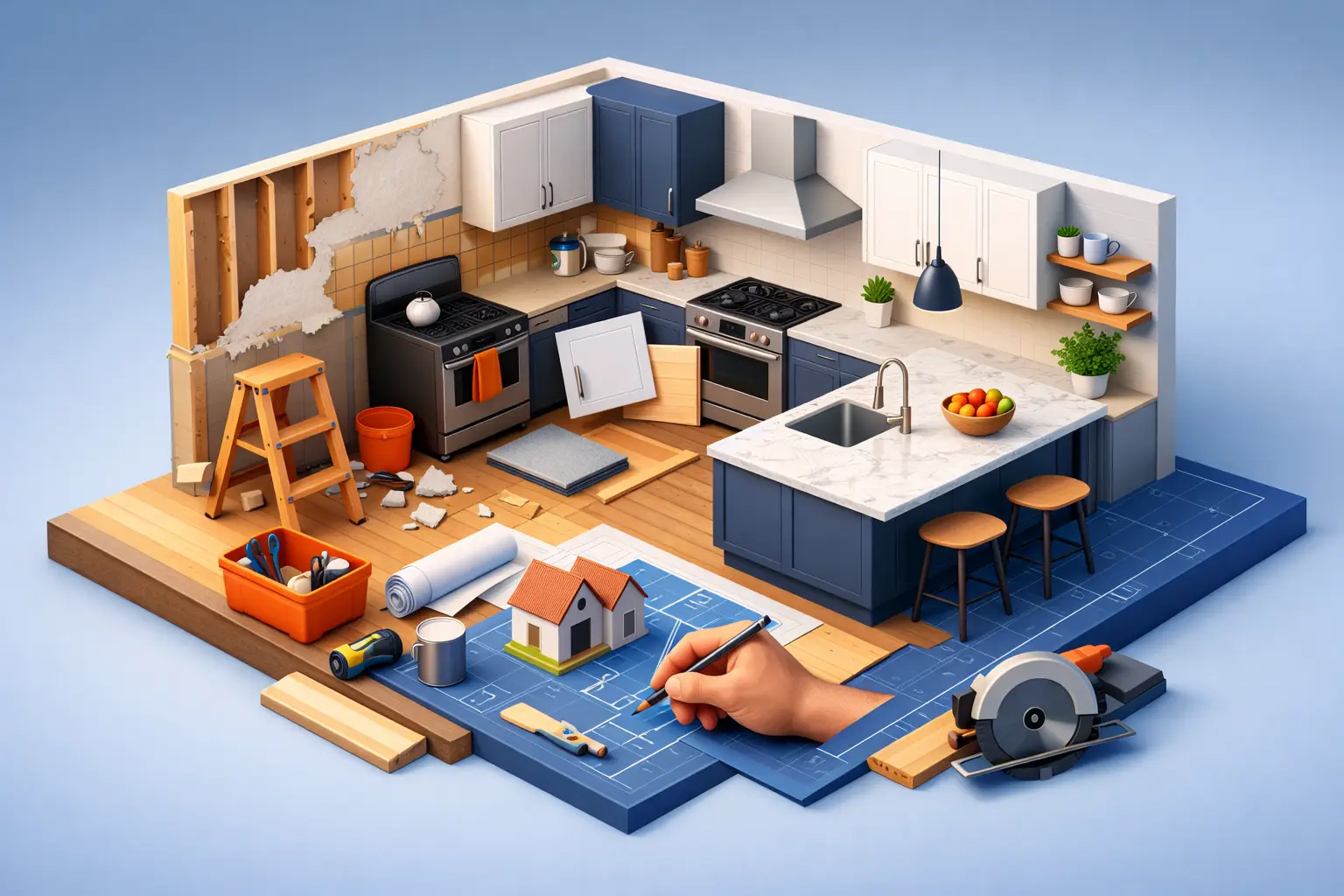

If you are standing in your kitchen wondering whether new cabinets alone will fix the problem, you are already asking the right question: what is kitchen remodeling? For most homeowners, it is not just replacing old finishes. It is the process of improving how the kitchen looks, works, and holds up over time, whether that means a cabinet upgrade, a layout change, or a full renovation that touches nearly every surface.
A lot of confusion comes from the fact that people use terms like remodel, renovation, and update as if they mean the same thing. In practice, they do not. A kitchen can be refreshed without being remodeled, and it can be remodeled without becoming a high-end custom project. The real difference comes down to how much is changing and whether the space will function differently when the work is done.
What Is Kitchen Remodeling?
Kitchen remodeling is the planned improvement of a kitchen’s layout, storage, finishes, fixtures, and sometimes its structure to create a more functional and attractive space. That can include replacing cabinetry, upgrading countertops, changing flooring, installing new lighting, updating plumbing fixtures, or reworking the flow of the room.
In some homes, remodeling means keeping the same footprint and replacing outdated materials with better-performing products. In others, it means removing a wall, adding an island, shifting appliances, or correcting a layout that never worked well in the first place. The scope can be modest or extensive, but the goal is the same: make the kitchen better suited to the way the household actually lives.
That is why cabinets often sit at the center of the discussion. Cabinets do more than set the visual style. They determine storage capacity, accessibility, daily convenience, and much of the project budget. If the cabinets are poorly built, undersized, or arranged inefficiently, the whole kitchen feels it.
Remodeling vs. Updating a Kitchen
A cosmetic update usually changes the look of the space without changing how it functions. Painting walls, replacing a faucet, or swapping light fixtures can freshen the room, but the kitchen still operates the same way it did before.
A remodel goes further. It addresses problems, not just appearances. Maybe the pantry is too small, the work triangle is awkward, the cabinet boxes are failing, or there is not enough counter space near the range. Remodeling is what happens when you solve those issues instead of covering them up.
This distinction matters because it affects budget, timeline, and expectations. Homeowners sometimes start by thinking they need a simple refresh, then realize the kitchen has deeper problems – poor storage, worn-out cabinetry, or a layout that wastes space. At that point, remodeling becomes the smarter investment.
What a Kitchen Remodel Usually Includes
Most kitchen remodels involve a combination of cabinetry, surfaces, fixtures, and labor. The exact mix depends on the home and the goals of the project.
Cabinets are typically the anchor. Replacing old cabinets can improve storage, give the kitchen a cleaner look, and create room for better organization. Frameless cabinets are especially popular in modern remodels because they offer a streamlined appearance and maximize usable interior space. Construction quality matters here. Plywood cabinet boxes, dovetail drawers, and soft-close hardware are not marketing details – they affect durability and day-to-day use.
Countertops and backsplashes usually follow. These surfaces take heavy wear, so the choice is about more than appearance. The right material should fit the household’s cooking habits, maintenance preferences, and budget.
Appliances, sinks, and faucets often get upgraded as well, especially if the existing setup is inefficient or outdated. Lighting is another major piece. Many older kitchens rely on a single ceiling fixture, which leaves task areas underlit. A remodel can correct that with better layered lighting over prep, cooking, and gathering zones.
Flooring, paint, trim, and minor drywall work may round out the job. In larger remodels, electrical and plumbing updates are part of the process too, particularly when appliance locations change.
Why Homeowners Choose to Remodel
Most people do not remodel a kitchen just because they are bored with the color of the cabinets. They remodel because the room is no longer serving the household well.
Sometimes the issue is age. Cabinets may be swollen from moisture, drawers may not close properly, and countertops may show years of wear. In other homes, the problem is layout. A kitchen might have enough square footage but still feel cramped because storage is poorly planned or the appliance placement interrupts the flow.
For many South Florida homeowners, remodeling is also about value discipline. They want a kitchen that looks refined and current, but they do not want to overpay for features that add little practical benefit. That is where a well-designed remodel makes a difference. Good planning helps homeowners invest where it counts – cabinet construction, smart storage, durable surfaces, and experienced installation – while avoiding unnecessary markup.
The Biggest Decisions in a Kitchen Remodel
The first major decision is scope. Are you improving the kitchen within the existing layout, or are you changing the floor plan? Keeping plumbing and major appliances in the same general locations usually controls cost. Changing the layout can improve function dramatically, but it adds labor and coordination.
The second decision is cabinet strategy. If the cabinets are structurally sound and the layout works, a smaller project might make sense. But if the boxes are failing, the storage is inefficient, or the style is too dated to support the rest of the investment, replacement is usually the better long-term move.
The third decision is whether to manage everything separately or work with a company that can handle design guidance, cabinetry, installation, and overall remodel coordination. For homeowners, this is often less about convenience alone and more about reducing mistakes. Kitchens involve sequencing. Measurements, cabinet orders, demolition, delivery, installation, countertops, and finishing work all need to line up.
What Affects Cost
There is no single price for kitchen remodeling because the range is wide. A project that keeps the same footprint and focuses on cabinets, counters, and finishes will cost less than one that moves walls, relocates plumbing, or requires extensive electrical work.
Cabinet selection has one of the biggest impacts on budget. Stock, semi-custom, and frameless RTA wood cabinetry each carry different price points and lead times. What matters is not just the initial cost, but the value behind it. Better cabinet construction often saves money over time because the kitchen performs better and lasts longer.
Labor also matters. Installation quality can make even good products look average if the work is rushed or misaligned. On the other hand, a carefully installed kitchen feels more polished, functions better, and avoids many of the problems that lead to repairs later.
What Good Remodeling Looks Like
A successful kitchen remodel does not only photograph well. It works better on a busy Tuesday morning.
That means drawers open fully where they should, cabinet storage matches what the household actually uses, and the counter space is where prep work happens naturally. It also means the materials feel consistent with the home. An elegant kitchen does not need to be flashy. It needs to be coherent, durable, and thoughtfully planned.
This is where experienced design guidance matters. Homeowners often focus first on door style or countertop color, but those are not the only decisions that shape the result. Depth, clearances, cabinet placement, hardware quality, and installation precision all influence whether the finished kitchen feels truly improved.
What Is Kitchen Remodeling for Your Home?
The answer depends on what your kitchen is missing. For one homeowner, it is a cabinet replacement project with better storage and upgraded finishes. For another, it is a full reworking of the space to create better flow, more function, and a cleaner design.
A smart remodel starts with honest diagnosis. If the kitchen is dated but functional, the project may stay focused and cost-conscious. If the room has deeper layout or quality issues, it makes sense to address them properly instead of spending money around the edges.
That is also why value matters more than the cheapest quote. The best kitchen remodel is not the one with the lowest number on paper. It is the one that gives you dependable construction, attractive design, and a finished space that feels easier to live in every day. Companies such as Leonardo’s Kitchens build their value around that balance – quality cabinetry, practical design support, and remodeling services that help homeowners avoid the usual disconnect between product selection and project execution.
If you are trying to decide whether your kitchen needs a simple update or a true remodel, start by looking past the surface. The right project is the one that fixes what frustrates you now and still makes sense years from today.
