

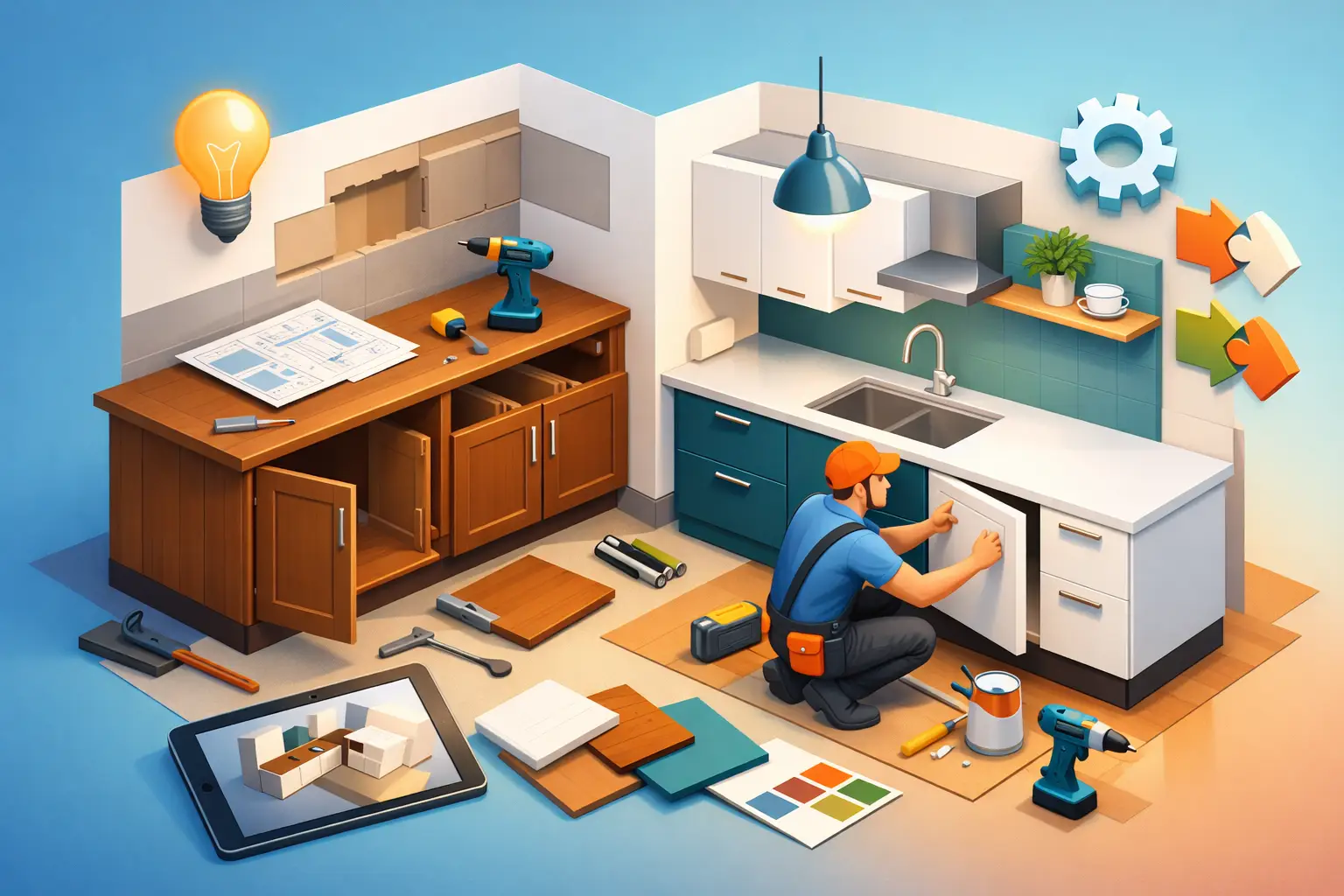

If you are searching for how to remodel kitchen cabinet projects without wasting money, the first decision is not color or door style. It is whether your current cabinets deserve a cosmetic update or whether the kitchen needs a more complete cabinet remodel to fix storage, layout, and daily function.
That distinction matters because many homeowners try to solve a layout problem with paint, or a worn-out cabinet problem with new hardware. Sometimes that works. Often it does not. A good cabinet remodel starts by looking at how the kitchen performs, not just how it looks.
How to remodel kitchen cabinet without guessing
The most cost-effective remodel is the one that solves the right problem the first time. Before choosing finishes, take an honest look at your cabinet boxes, doors, drawers, and traffic flow.
If the cabinet boxes are structurally sound, the layout works, and storage is mostly adequate, a lighter remodel may be enough. That can include replacing doors, upgrading drawer hardware, adding soft-close hinges, or refinishing surfaces. If the boxes are swollen, poorly built, sagging, or laid out in a way that wastes space, replacing cabinets is usually the smarter investment.
In many older South Florida kitchens, the issue is not only appearance. Homeowners often deal with shallow storage, awkward corner cabinets, low-quality particleboard boxes, and drawers that no longer glide properly. In those cases, remodeling cabinets means improving how the kitchen works every day, not just changing the style.
Start with function before finish
A cabinet remodel should answer a few practical questions. Are you short on drawer space? Do you need deeper pots-and-pans storage? Is there dead space in corners? Are upper cabinets too low, too few, or simply outdated? If you cook often, host family gatherings, or need better organization, these details matter more than a trendy finish.
This is where layout planning pays off. A more modern frameless cabinet design can increase usable interior space compared to bulky older cabinet construction. Full-extension drawers, soft-close hardware, and better shelf access can make the kitchen feel more organized without increasing the room size.
Decide between refacing, refinishing, and replacing
There is no single answer for every kitchen. The right approach depends on cabinet condition, budget, and what you want the remodel to accomplish.
Refinishing works best when the cabinet doors and boxes are in good condition and the goal is mainly aesthetic. It can freshen up the room, but it will not improve cabinet quality or fix a poor layout. Refacing goes a step further by replacing doors and drawer fronts while keeping the existing cabinet boxes. That can create a cleaner, updated look, but only if the old boxes are worth keeping.
Replacing cabinets is the bigger move, but it gives you the most control. You can improve storage, change the layout, add taller uppers, switch to better materials, and choose stronger construction details. For homeowners who plan to stay in the home, replacement often delivers better long-term value than putting money into old cabinet structures.
When replacement is the better investment
If your cabinets have water damage, weak drawer boxes, misaligned doors, or poor internal storage, replacement usually makes more sense than patching them up. The same is true if you want to open up the kitchen, add an island, or change appliance locations.
Cabinet construction matters here. Plywood cabinet boxes, dovetail drawers, and soft-close hardware tend to hold up far better than lower-grade materials. Paying attention to those details during a remodel can help you avoid another cabinet project sooner than expected.
Choose materials that balance looks, durability, and cost
A smart cabinet remodel is not about choosing the cheapest option. It is about choosing materials that look refined, perform well, and justify the cost.
For many homeowners, wood cabinetry or well-built RTA wood cabinets can offer strong value when selected carefully and installed properly. The key is not whether cabinets arrive assembled or ready to assemble. The key is how they are built, what materials are used, and how well the installation is handled.
Door style also affects the final result. A simple shaker door remains a strong choice because it works in both modern and transitional kitchens. Slab fronts create a more contemporary look. Painted finishes can brighten the room, but they may show wear more readily in high-touch areas than stained wood finishes. That does not mean painted cabinets are a bad choice. It just means expectations should match the household.
Countertops, backsplash, and flooring should also be considered early. Even if cabinets are the focus, they do not exist in isolation. A cabinet color that looks great under showroom lighting may feel too stark or too dark once paired with your floor and wall color at home.
Budget for the parts homeowners forget
One reason cabinet remodel budgets go sideways is that homeowners price only the cabinets themselves. The real project cost often includes demolition, wall repair, installation, trim work, hardware, countertops, backsplash, plumbing adjustments, and sometimes electrical work.
That does not mean every cabinet remodel turns into a full renovation. It means you should plan for the surrounding work that helps the cabinets fit and function correctly. For example, changing from a short upper cabinet run to full-height uppers may require touch-up work on walls and ceiling areas. Adding a larger sink base may involve plumbing changes. Reworking the layout around a new island can affect flooring and lighting.
A well-planned project budget should separate must-haves from nice-to-haves. Better drawer storage and stronger cabinet boxes are often worth prioritizing over decorative extras. If the budget is limited, it is usually smarter to spend on construction quality and practical storage than on flashy details that add less daily value.
Installation can make or break the result
Even excellent cabinets can look disappointing if they are installed poorly. Gaps, uneven reveals, doors that do not align, and drawers that rub are usually installation issues, not product issues.
That is why cabinet remodeling should be viewed as both a product decision and an execution decision. A good installer checks wall conditions, floor level, appliance clearances, filler placement, and crown or trim alignment before the job gets too far. Those details are what make the finished kitchen look polished instead of pieced together.
For homeowners in places like Weston, Davie, or Pembroke Pines, working with one company that helps with design, cabinet selection, and installation can reduce costly handoff mistakes. It also makes it easier to coordinate timeline decisions if countertops, backsplash, or other remodel steps are part of the same project.
How to remodel kitchen cabinet for better storage
Most homeowners are not remodeling cabinets just to replace what is old. They want a kitchen that works better. Storage planning is where that value becomes obvious.
Deep drawers for cookware are often more useful than lower cabinets with shelves. Trash pull-outs help keep traffic areas clean. Narrow pull-outs can turn small gaps into usable storage. Taller upper cabinets can reduce clutter by making room for less frequently used items. Drawer organizers and tray dividers are small upgrades, but they improve how the kitchen feels every day.
This is also where custom-looking results do not always require fully custom pricing. With the right cabinet line and thoughtful design, many homeowners can get a clean, built-in look using well-made semi-custom or RTA cabinetry.
Avoid remodeling around bad habits in the old kitchen
Many people automatically recreate the kitchen they already have, just with newer doors and finishes. That is a missed opportunity. If the old kitchen had too few drawers, poor pantry access, or awkward corner storage, the remodel should correct that.
Think about how you actually use the kitchen now. A household that cooks nightly needs different storage than one that mainly needs clean serving space and hidden clutter control. The best cabinet remodel reflects real routines, not just a showroom display.
Plan for resale, but live for your daily use
Resale value matters, but it should not control every cabinet decision. Most buyers respond well to durable construction, practical storage, and a clean, current style. That usually means you do not need overly personal design choices, but you also do not need to strip the kitchen of function just to play it safe.
Neutral finishes, quality hardware, and a cohesive layout are usually smart choices. At the same time, if soft-close drawers, plywood boxes, or better pantry access will improve your day-to-day life, those upgrades are often worth it. Buyers appreciate quality, but homeowners feel function first.
A cabinet remodel goes best when it is treated as a practical investment instead of a cosmetic impulse. If you assess the existing cabinets honestly, choose durable materials, and plan around how your kitchen is actually used, the result will look better and work better for years. That is the kind of upgrade that keeps paying you back long after the dust is gone.
