

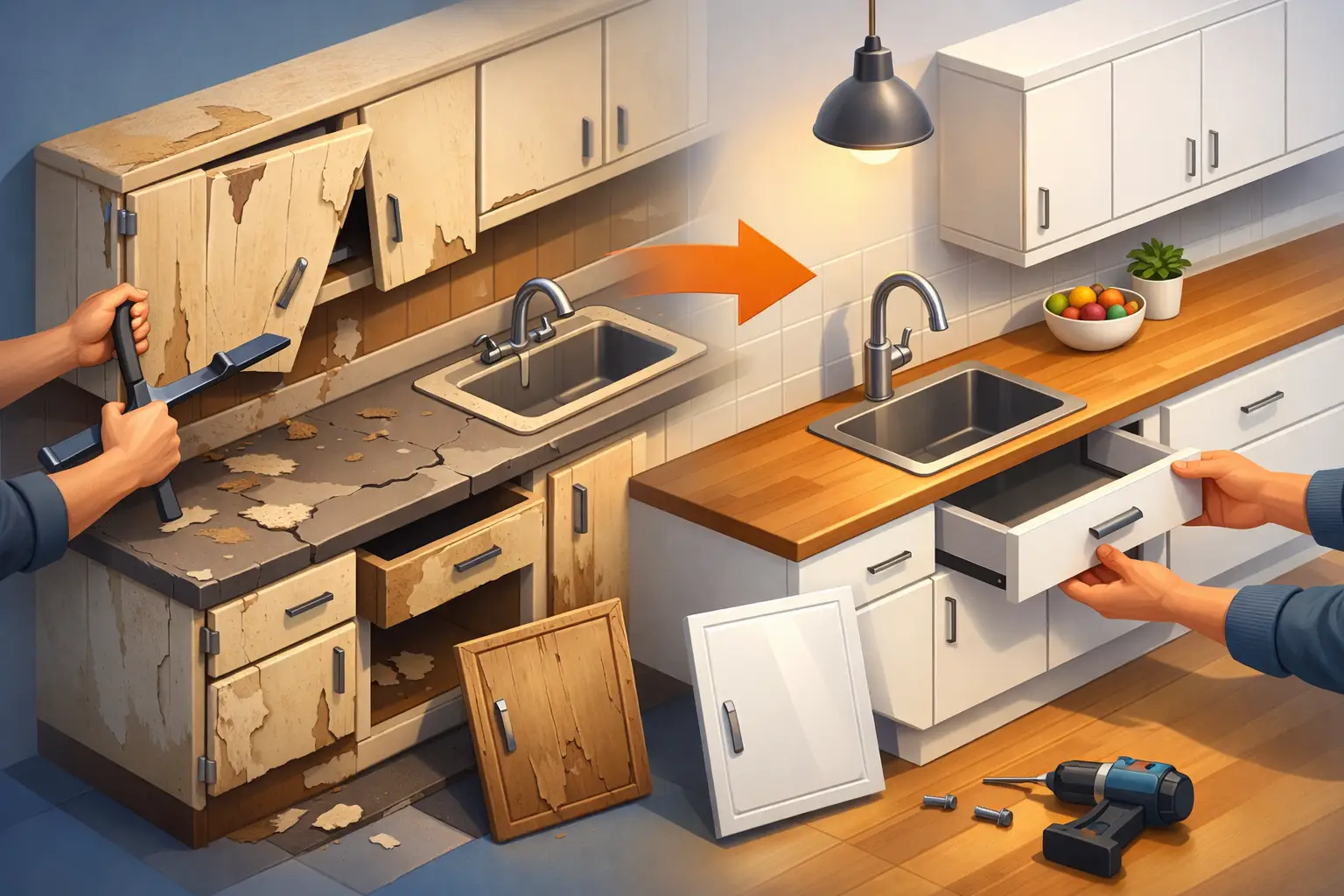

A cabinet door that will not stay closed is more than a daily annoyance. It can be an early warning that the cabinet box, hinges, or mounting points are failing. Homeowners often ask when to replace kitchen cabinets because the answer affects nearly every other remodeling decision, from countertop measurements to appliance placement and plumbing work.
Cabinets do not have a fixed expiration date. A well-built kitchen with solid boxes and quality hardware may serve a home for decades, while lower-grade cabinets exposed to moisture can deteriorate much sooner. The right decision depends on condition, function, layout, and the scope of the renovation you want.
When to Replace Kitchen Cabinets Instead of Repairing Them
A few loose hinges, scratched doors, or an outdated finish do not automatically require new cabinetry. Repairs, new hardware, professional refinishing, or refacing can make sense when the cabinet boxes are solid and the existing layout works well.
Replacement becomes the better value when the underlying cabinet structure has problems or when the kitchen no longer supports how your household cooks, stores, and entertains. Installing new doors on weak particleboard boxes, for example, may improve appearance briefly without solving the issue that will affect the kitchen again in a few years.
1. The Cabinet Boxes Have Water Damage
Water damage is one of the clearest reasons to replace cabinets. Look beneath the sink, around the dishwasher, near the refrigerator water line, and at the base of cabinets along exterior walls. Swollen sides, bubbling laminate, warped panels, dark staining, soft spots, and a persistent musty odor can all point to moisture intrusion.
In South Florida, humidity can make a minor leak more damaging over time. The leak itself must be corrected first, but cabinets made with low-density particleboard often do not return to their original strength after swelling. If the bottom of a sink cabinet is crumbling or the box walls have expanded, replacement is usually more reliable than patching the surface.
2. Doors and Drawers No Longer Operate Properly
One misaligned door can often be adjusted. Several doors that sag, rub, pop open, or refuse to align may signal a bigger problem. The same applies to drawers that scrape, fall off their tracks, or cannot hold normal kitchen weight.
Hardware can be replaced, but hardware only performs as well as the material anchoring it. Repeated hinge failures, stripped screw holes, and drawers pulling away from their mounting points often mean the cabinet box is no longer providing adequate support. New cabinets with soft-close hinges and full-extension drawer glides provide a noticeable upgrade in daily use, especially in a busy family kitchen.
3. The Cabinet Structure Is Cracked, Split, or Pulling From the Wall
Cabinets carry considerable weight. Upper cabinets hold dishes and glassware, while base cabinets support countertops, sinks, and heavy cookware. Cracks at joints, loose face frames, separated panels, or wall cabinets that appear to shift should be taken seriously.
Cabinets can also move when they were installed poorly, fastened into inadequate backing, or altered during previous plumbing and electrical work. A qualified remodeler can determine whether a localized repair is safe. But when multiple cabinets are unstable, replacing them creates an opportunity to correct the installation and start with a properly leveled, securely anchored foundation.
4. The Layout Wastes Space Every Day
Sometimes cabinets are structurally sound but functionally wrong for the home. Narrow drawers, shallow corner cabinets, unusable dead space, insufficient pantry storage, and crowded work zones can make a kitchen feel smaller than it is.
This is often the deciding factor in older Weston, Davie, and Pembroke Pines homes where the kitchen was designed around smaller appliances and different household routines. If you are constantly moving items from one area to another, storing cookware on countertops, or working around an awkward peninsula, replacing cabinets may deliver more value than simply changing finishes.
A new cabinet plan can add deep drawers for pots and pans, pull-out storage, better pantry organization, dedicated trash storage, and more practical corner solutions. It can also improve clearance around an island or create a more efficient relationship between the sink, cooktop, refrigerator, and prep areas.
5. You Are Changing Countertops, Appliances, or Plumbing Locations
A countertop replacement does not always require new cabinets. If the existing boxes are level, strong, and appropriately sized, a new countertop can be installed successfully. However, major countertop upgrades often expose cabinet weaknesses that were easier to overlook before.
Stone and quartz require stable, level support. A cabinet run that is bowed, water-damaged, or poorly secured can complicate fabrication and installation. Likewise, a larger range, wall oven, cooktop, farmhouse sink, or relocated plumbing line may require cabinet modifications that are impractical or unattractive with the existing cabinetry.
When several major elements are changing at once, full cabinet replacement can be the more coordinated approach. It allows the design, cabinet dimensions, appliances, countertop template, and installation sequence to work together rather than forcing new components into an outdated framework.
6. Previous Repairs Are Adding Up
Every kitchen needs occasional maintenance. Replacing a hinge or tightening a drawer glide is normal. But if you have repaired the same doors repeatedly, added makeshift shelf supports, patched water-damaged areas, or dealt with recurring drawer failures, the cabinet system may be reaching the end of its useful life.
There is a budget trade-off here. Continued repairs may cost less in the short term, but they can become expensive when they postpone an inevitable remodel without improving function or resale appeal. It is worth comparing the cost of repairs over the next few years against an investment in durable new cabinetry with plywood boxes, dovetail drawer construction, and dependable soft-close hardware.
7. The Finish Is Dated and the Construction Is Low Quality
A dated color alone is not enough reason to remove cabinets. Solid wood cabinets with good boxes can sometimes be painted or refinished for a refreshed look. Refacing may also be an option when cabinet frames are sound and the layout remains practical.
Replacement is more compelling when dated finishes come with peeling thermofoil, failing laminate, thin cabinet walls, damaged interiors, or low-quality drawers. Cosmetic updates cannot correct poor construction. If the cabinet interiors look worn, shelves bow under everyday dishes, and doors feel lightweight or unstable, investing in better-built cabinetry often produces a longer-lasting result.
Frameless cabinets are a popular choice for homeowners who want a cleaner, more contemporary look and better access to interior storage. The important detail is not just the style. Look at the box material, drawer joinery, hinge quality, shelving support, and installation standards. Those details determine whether the kitchen continues to look and perform well after the renovation dust is gone.
8. Your Kitchen No Longer Matches the Value or Needs of the Home
A kitchen should fit the way you live now, not the way a prior owner lived 20 years ago. Growing families may need more organized storage. Empty nesters may want easier access, more open sightlines, or an island designed for casual meals. Homeowners planning to stay long term often prioritize durability and a layout that makes everyday cooking easier.
If you are preparing to sell, the decision is more strategic. A full remodel is not always necessary, but visibly damaged or severely dated cabinets can shape a buyer’s impression of the entire home. In that situation, the right scope depends on neighborhood expectations, the home’s condition, and how much of the kitchen needs improvement.
Choosing Replacement Cabinets That Deliver Lasting Value
Once replacement makes sense, avoid choosing cabinets on door style alone. Start with the layout and storage needs, then compare construction. Plywood cabinet boxes generally offer stronger resistance to everyday wear than lower-grade particleboard. Dovetail drawers provide durable joinery, while soft-close hardware reduces slamming and helps doors and drawers operate smoothly.
Measure the value of a cabinet package by what is included and who is responsible for the installation. Cabinet quality can be undermined by poor leveling, rushed assembly, or uncoordinated countertop and appliance work. A design-and-installation approach helps prevent costly surprises, particularly when the project involves flooring, electrical changes, plumbing, or wall adjustments.
A cabinet replacement should solve the problems you notice every morning: the drawer that sticks, the crowded counter, the leaking sink base, and the storage that never seems to work. When the structural condition and the daily function both point toward change, a well-planned cabinet upgrade can turn that frustration into a kitchen built for the years ahead.
