


If you look at your kitchen and think, “The cabinets make the whole room feel dated,” but the cabinet boxes themselves are still in decent shape, you are probably asking the right question: what is kitchen cabinets refacing, and is it enough to change the space without starting from scratch?
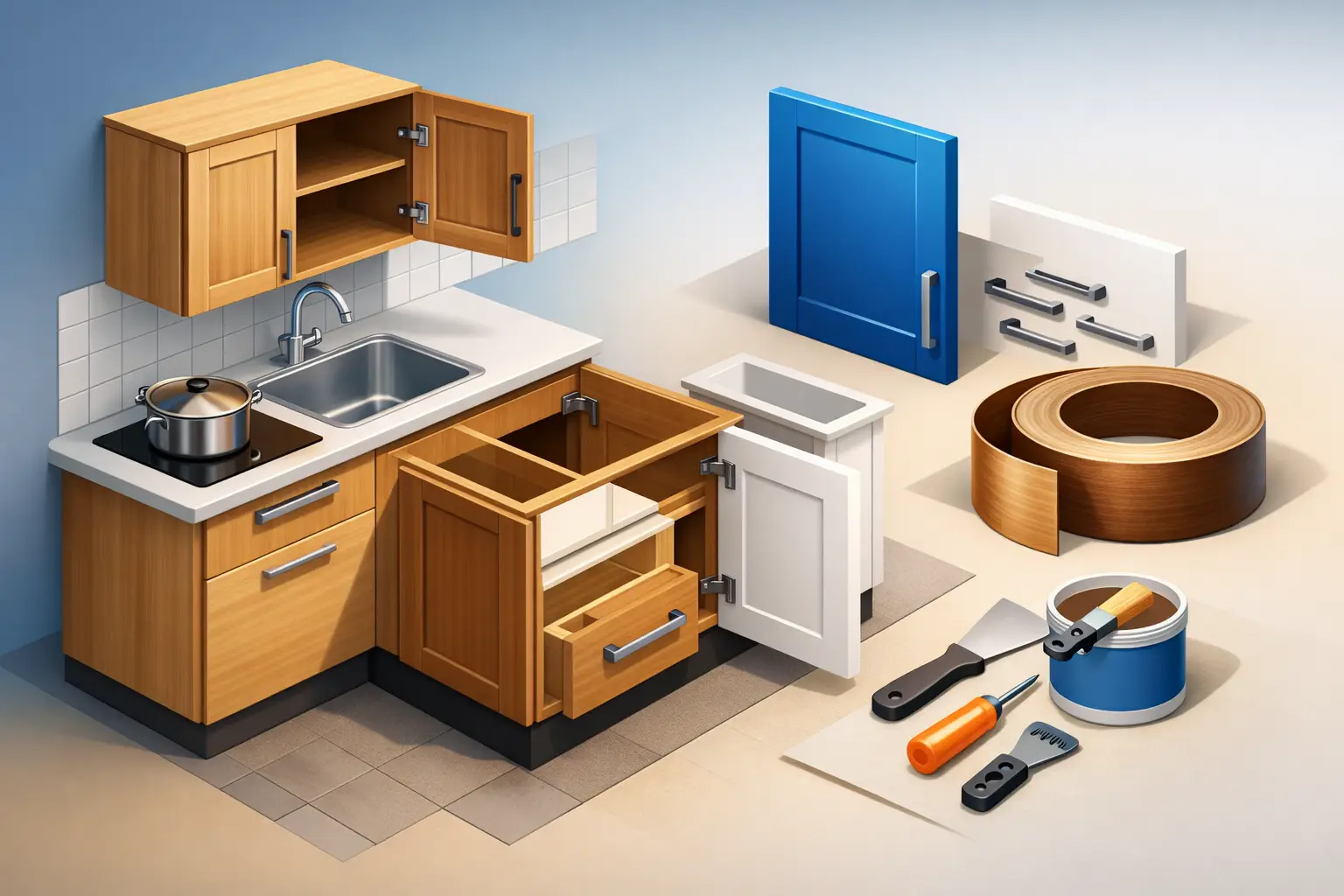
Cabinet refacing is a remodeling method that updates the visible exterior of your cabinets while keeping the existing cabinet boxes in place. Instead of removing everything, the installer keeps the cabinet structure, covers the exposed box surfaces with a matching veneer or laminate, and replaces the doors, drawer fronts, hinges, handles, and often trim or molding. The goal is to give the kitchen a fresh, more current look without the cost and disruption of a full cabinet replacement.
That sounds simple, but whether refacing is a smart investment depends on the condition of your current cabinets, the layout of your kitchen, and what you want the finished space to do better.
What is kitchen cabinets refacing, exactly?
Refacing is not the same as repainting cabinets, and it is not the same as installing new cabinetry. It sits somewhere in the middle.
With painting, you keep your existing doors and drawer fronts and change only the finish. With refacing, those fronts are typically replaced entirely. That matters because old door styles, worn edges, dated profiles, and lower-quality materials do not disappear under paint. Refacing gives you a more noticeable visual change because the parts you see and touch every day are new.
At the same time, refacing is less extensive than a full cabinet replacement. The existing cabinet boxes stay where they are. That means the kitchen footprint usually does not change, plumbing and electrical work are often avoided, and installation time is shorter.
For many homeowners, the appeal is straightforward: you get a cleaner, more updated cabinet appearance without paying for a full tear-out if the underlying cabinet structure is still usable.
How kitchen cabinet refacing works
Most refacing projects begin with an evaluation of the existing cabinets. The boxes need to be structurally sound, level enough to work with, and free from significant water damage, swelling, or broken joints. If the cabinet boxes are weak or poorly built, refacing can turn into a cosmetic fix over a deeper problem.
Once the cabinets are approved for refacing, the old doors and drawer fronts are removed. The exposed ends, face frames, and other visible parts of the cabinet boxes are then covered with a new surface material that matches the new doors and drawer fronts as closely as possible.
After that, the new components are installed. This often includes:
- New cabinet doors
- New drawer fronts
- New hinges
- New handles or pulls
- New molding, panels, or trim where needed
Some projects also include drawer box upgrades or soft-close hardware. Those details can make a refaced kitchen feel more polished and functional, not just different in color.
The finished result should look cohesive, not patched together. That is one reason professional measurement, door alignment, and finish matching matter so much. A refacing project only looks high-end if the details are handled well.
What stays and what changes
The easiest way to understand refacing is to separate the parts you keep from the parts you replace.
You usually keep the cabinet boxes and the basic kitchen layout. If your sink base is in the same location, your range wall is staying put, and your storage setup mostly works, refacing may fit.
You usually replace the doors, drawer fronts, and the visible finish on the cabinet exterior. Decorative elements can also change. That means a kitchen with dated raised-panel oak doors can be updated to a cleaner shaker look or a more modern slab style, depending on the product line and condition of the cabinets.
What does not change much is the internal structure. If your pantry is too shallow, your corner cabinet is awkward, or your drawers are poorly sized, refacing does not fully solve those problems. You can sometimes add accessories or make limited modifications, but the original cabinet framework still sets the boundaries.
When refacing makes sense
Refacing tends to work best when the kitchen looks outdated but functions reasonably well. If the cabinet boxes are solid and the layout is not frustrating, replacing the visible fronts can give the room a major lift.
This can be a practical option for homeowners who want a refreshed kitchen appearance with less downtime. In many cases, refacing is faster than a full cabinet replacement because demolition is limited and the scope is narrower.
It can also make sense when budget control is a major concern. Full remodeling costs add up quickly once you include cabinetry, countertops, demolition, disposal, plumbing changes, electrical adjustments, backsplash work, flooring repairs, and painting. Refacing avoids some of those ripple effects.
For a homeowner preparing to update a kitchen in a well-kept home, refacing can offer a noticeable visual improvement while holding the project to a more contained scope.
When refacing is the wrong choice
This is where the trade-offs matter.
If your cabinet boxes are particleboard and have absorbed moisture, if shelves are sagging, if drawers stick constantly, or if the boxes were cheaply built to begin with, refacing may not be worth it. Installing new doors over weak cabinet structures does not create a better long-term kitchen.
Refacing is also a poor fit when the layout needs work. If the kitchen feels cramped, storage is inefficient, appliances are badly placed, or you want to add larger drawers and better organization, new cabinetry usually makes more sense. The value of replacement is not just appearance – it is the chance to improve function.
Another issue is style expectation. Some homeowners want a truly new kitchen, not an updated version of the old one. If you are already replacing countertops, changing the island, adding lighting, and reworking the flow of the room, cabinet refacing can end up feeling too limited.
That is often the point where a full remodel becomes the better investment.
What is kitchen cabinets refacing compared to replacing cabinets?
The main difference is structural change.
Refacing updates the exterior while preserving the original cabinet framework. Replacement removes the old cabinets and installs new ones entirely. That allows for changes in size, depth, height, storage features, and layout.
Replacement typically costs more, but it also gives you more control over quality and function. If you move from older framed or lower-grade cabinets to well-built frameless cabinetry with plywood boxes, dovetail drawers, and soft-close hardware, the improvement is not just visual. Daily use feels different.
That is especially relevant if your current kitchen has older cabinets that waste space or show wear in ways refacing cannot correct. South Florida homeowners often want a cleaner, more contemporary kitchen that feels efficient as well as attractive. In those cases, the decision should not be based on price alone. It should be based on whether the existing cabinets deserve to stay.
Cost considerations homeowners should weigh
Refacing is usually less expensive than replacing cabinets, but “less expensive” does not always mean “better value.”
If the cabinet boxes are strong, the layout works, and the only real problem is style, refacing can be cost-effective. You avoid full demolition and reduce labor in several areas.
But if you spend money refacing cabinets that are already near the end of their useful life, you may only delay a larger replacement. That can mean paying twice over a relatively short period.
Material choices also matter. Basic thermofoil-style options may lower the initial price, but door quality, finish durability, hardware, and installation precision all affect how the kitchen looks and holds up. A lower quote is not necessarily a better result if the finish ages poorly or the doors feel lightweight.
The smartest comparison is not refacing versus replacing in the abstract. It is refacing your specific cabinets versus installing new cabinets that better match your goals.
How to tell which option fits your kitchen
A good cabinet decision starts with an honest assessment, not a guess based on photos online.
Look at the cabinet boxes first. Are they square, stable, and free from moisture damage? Then look at function. Does the layout support how you cook, store, and move through the room? Finally, think about finish level. Are you trying to make the kitchen look better for now, or are you trying to create a kitchen that feels substantially improved for years?
If the structure is solid and your goals are mostly cosmetic, refacing may be enough. If the kitchen needs better storage, stronger construction, or a more modern layout, replacement is usually the more satisfying path.
At Leonardo’s Kitchens, this is often where homeowners benefit from professional guidance. A quick cabinet update can be the right answer, but only when the existing cabinets truly justify keeping them.
Before you commit to refacing, ask one simple question: are you preserving something worth keeping, or are you dressing up a kitchen that really needs a better foundation? That answer usually points you in the right direction.
