

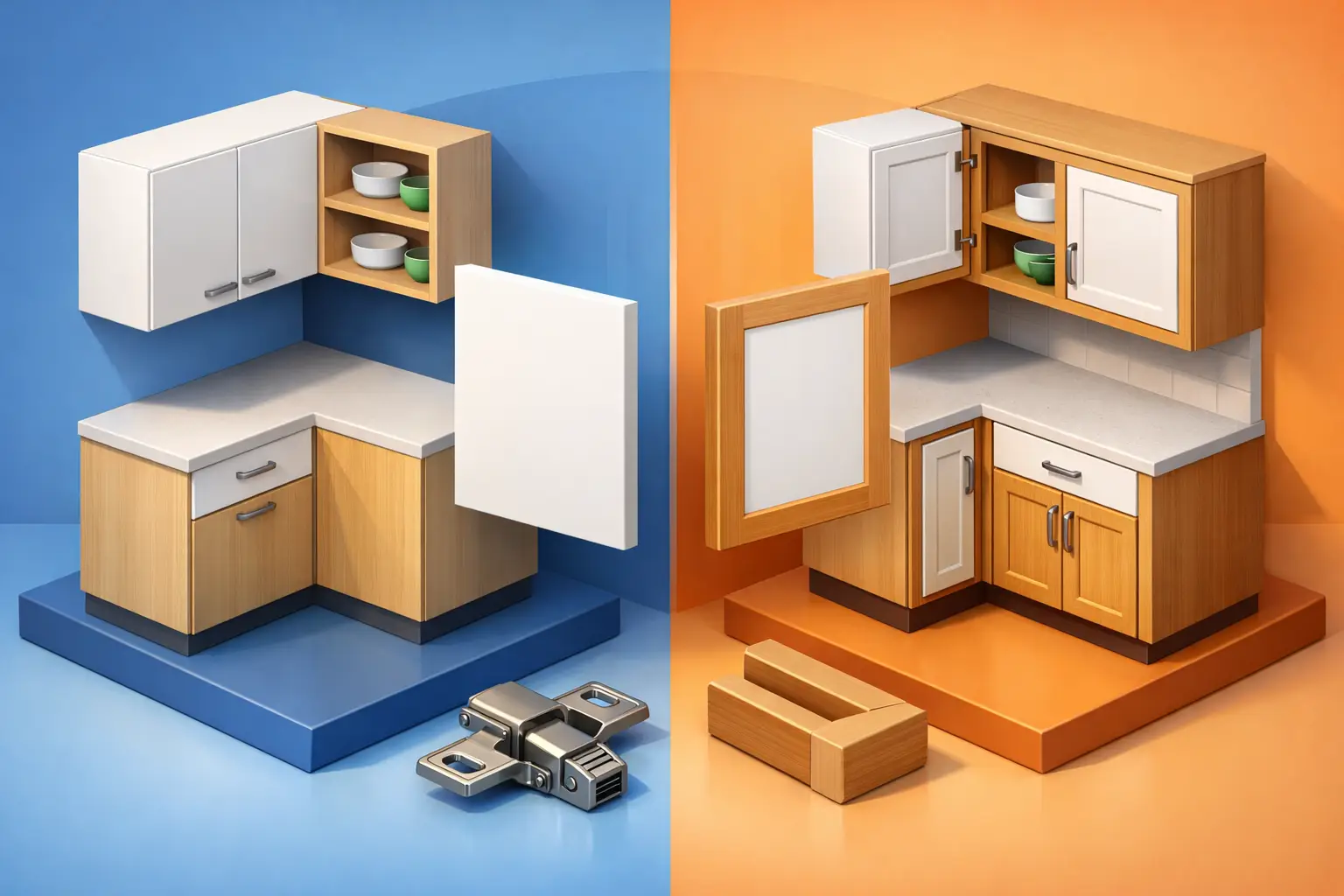

A cabinet door can hide one of the most important decisions in a kitchen remodel: how the cabinet box is built. When comparing frameless vs framed cabinets, homeowners are usually weighing more than appearance. The choice affects usable storage, door style, installation tolerances, and the overall feel of the finished kitchen.
For many South Florida homes, frameless cabinetry is an especially strong fit because it supports the clean, open look homeowners want without requiring luxury-showroom pricing. Still, framed cabinets have advantages in certain designs and budgets. The right answer depends on your layout, style preferences, cabinet construction, and the level of precision your remodel requires.
What Is the Difference Between Frameless and Framed Cabinets?
The difference is in the front structure of the cabinet box. A framed cabinet has a solid wood face frame attached to the front of the box. This frame adds a traditional structural element around the doors and drawer openings. Cabinet doors may sit inside that frame, overlap it slightly, or cover it more fully depending on the door style.
A frameless cabinet does not have that front face frame. Instead, the doors and drawers attach directly to the cabinet box panels. This construction is often called European-style cabinetry, although it is widely used in American kitchens of every style, from contemporary to transitional.
Neither option is automatically better in every situation. Construction quality matters greatly. A well-built frameless cabinet with plywood boxes, durable edge banding, dovetail drawers, and soft-close hardware can provide excellent long-term value. A poorly built cabinet, framed or frameless, will not perform well simply because of its construction category.
Frameless vs Framed Cabinets: Storage and Access
Frameless cabinets generally provide more usable interior space. Because there is no face frame narrowing the opening, drawers can be wider and cabinets offer easier access to the full interior. That extra space may seem small on paper, but it becomes meaningful in a working kitchen.
A frameless base cabinet can give you more room for pots, small appliances, food storage containers, and pull-out organizers. Wider drawer openings are also useful for deep drawers, rollout shelves, and trash pullouts. For homeowners replacing an older kitchen with limited storage, this is often one of the most practical benefits of going frameless.
Framed cabinets lose a small amount of clear opening space because the face frame sits at the front of the box. They can still be highly functional, particularly with good interior accessories, but the frame creates a slight lip at the opening. Reaching into a framed cabinet is not difficult, but frameless construction offers a more open, unobstructed feel.
Style: Modern, Transitional, or Traditional
Frameless cabinetry is known for its clean lines and tighter reveals between doors and drawers. Full-overlay doors cover most of the cabinet box, creating a polished, furniture-like appearance with minimal visible structure. This makes frameless cabinets a natural choice for modern kitchens, slab-door designs, and streamlined transitional spaces.
That does not mean frameless cabinets only work in contemporary homes. A shaker door in a warm wood finish, soft white, or muted gray can look equally at home in a classic Weston or Davie kitchen. The cabinet construction is behind the door. The door profile, finish, hardware, countertop, and backsplash determine much of the visible style.
Framed cabinets are often associated with traditional, farmhouse, and more decorative kitchen designs. The face frame can reinforce the visual character of inset cabinetry, where doors sit within the frame for a refined, custom appearance. If your goal is a historically inspired kitchen or a detailed furniture-style look, framed cabinetry may be the more natural direction.
For a kitchen that needs to feel current without becoming overly trendy, frameless shaker cabinets are often a practical middle ground. They offer crisp alignment and efficient storage while allowing plenty of flexibility in color, hardware, and finish selection.
Construction Quality Matters More Than the Label
Homeowners sometimes hear that framed cabinets are stronger because the face frame adds rigidity. That can be true in basic construction, but it is not the full story. High-quality frameless cabinets are engineered to be strong through the use of substantial box materials, precise joinery, and dependable hardware.
Look beyond the cabinet style and ask what is actually inside the box. Plywood cabinet construction offers better screw-holding strength and moisture resistance than lower-grade particleboard in many applications. Dovetail drawer boxes help support frequent use, while soft-close drawer slides and hinges reduce wear from slamming. Adjustable shelves, full-extension drawer slides, and durable finishes also affect daily performance.
This is particularly relevant in South Florida, where humidity and busy family kitchens can test cabinetry over time. A properly specified cabinet and a careful installation are more valuable than a label alone. Cabinets must be level, secure, and aligned correctly for doors and drawers to operate as intended.
Installation Differences You Should Plan For
Frameless cabinets require precise installation. Their narrow, consistent gaps between doors and drawers create a clean appearance, but they also make uneven walls, floors, and cabinet placement more noticeable. An experienced installer accounts for wall variation, uses the proper shims and fastening methods, and adjusts hardware after installation to keep reveals even.
That precision is not a reason to avoid frameless cabinets. It is a reason to work with a remodeling team that understands cabinetry as part of the entire room. Floor conditions, wall repairs, appliance specifications, countertop templates, lighting, and backsplash planning all affect the final result.
Framed cabinets can be somewhat more forgiving visually because the face frame provides structure at the front of the box. However, they still require professional installation to prevent uneven doors, drawers that bind, and gaps around fillers or crown molding. A cabinet line is only as good as the planning and installation behind it.
Cost: Where Value Actually Comes From
There is no universal rule that frameless cabinets cost more or less than framed cabinets. Pricing depends on the manufacturer, door material, finish, box construction, hardware, modifications, and whether the cabinets are assembled or ready to assemble.
Frameless cabinets can deliver a premium appearance at a sensible price because their construction supports full-overlay doors and efficient storage without the cost of highly customized inset work. Ready-to-assemble wood cabinetry can also be an attractive value when it includes quality components such as plywood boxes, solid wood doors, dovetail drawers, and soft-close hardware.
Framed cabinets range from economical builder-grade options to expensive custom cabinetry. Inset framed cabinets, for example, often require additional labor and highly accurate door fitting, which can increase both cabinet and installation costs. If you are comparing estimates, make sure you are comparing construction details rather than just the number at the bottom of the proposal.
A lower cabinet quote may exclude installation, fillers, panels, trim, hardware upgrades, design revisions, delivery, or coordination with other trades. A complete kitchen plan should clarify what is included before work begins.
When Frameless Cabinets Are the Better Choice
Frameless cabinetry is usually the right fit when you want maximum storage, wide drawer access, and a clean full-overlay look. It works especially well for kitchens with tighter layouts, where every inch of usable cabinet space matters. It is also a strong choice for homeowners who prefer a refined kitchen design but want to stay disciplined about the overall remodeling budget.
Choose frameless if you are prioritizing deep drawers, integrated organizers, modern or transitional styling, and consistent door alignment. It is also ideal when your remodel includes careful design and professional installation that can deliver the precise finish this cabinet style deserves.
When Framed Cabinets Make Sense
Framed cabinets may be the better option when your design calls for true inset doors, decorative face-frame details, or a distinctly traditional aesthetic. They can also make sense when matching existing cabinetry in part of the home or when a specific cabinet line offers a feature, finish, or price point that fits your project.
The decision should not be based on the assumption that one construction type always lasts longer. A properly built and properly installed cabinet is the better investment, whether it has a face frame or not.
A kitchen remodel is easier to manage when cabinetry, layout, and installation are considered together from the start. Leonardo’s Kitchens helps homeowners evaluate cabinet construction alongside the practical details that shape the finished room, including storage needs, appliance placement, and budget. The best cabinet choice is the one that makes your kitchen easier to use every day and still feels like a smart investment years after the remodel is complete.
