

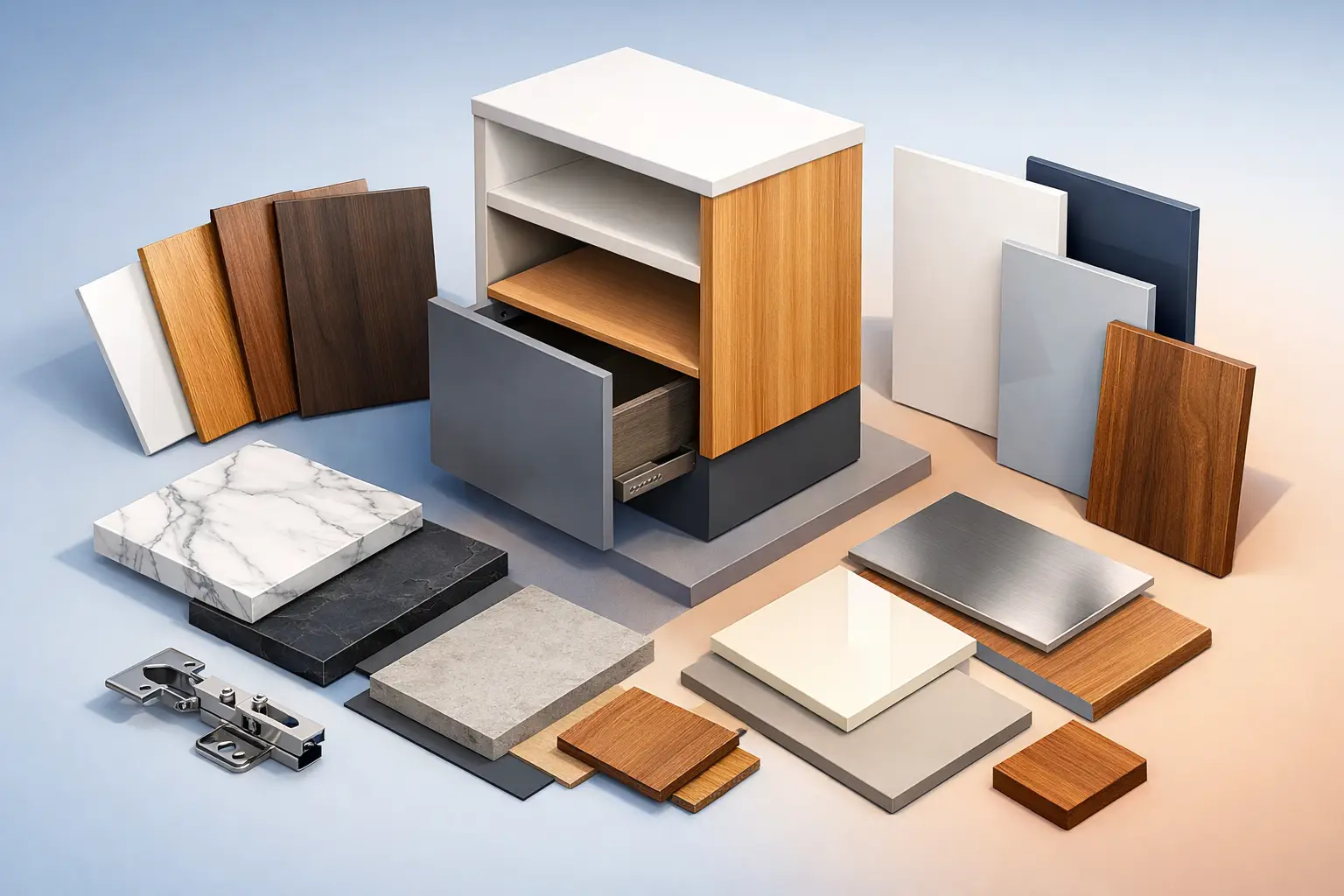

Cabinets usually take the biggest hit in a kitchen remodel budget, so the material you choose matters more than most homeowners expect. When people ask about the best kitchen cabinet materials, they are usually trying to balance three things at once: appearance, durability, and cost. The right answer depends on how you use your kitchen, how long you plan to stay in the home, and how much wear your cabinets will see every day.
A cabinet can look great in a showroom and still be a poor fit for a busy household. That is why material decisions should go beyond color and door style. You want to know what the cabinet box is made from, how the doors are built, how well the finish will hold up, and whether the construction supports long-term value.
What matters most when comparing cabinet materials
Most cabinet material discussions get oversimplified. Homeowners hear terms like solid wood, MDF, and plywood, but those labels only tell part of the story. A good cabinet is not just one material. It is a combination of cabinet box construction, door material, drawer construction, hardware, and finish quality.
For example, plywood cabinet boxes are often preferred because they offer strong screw-holding power, good durability, and better resistance to moisture issues than lower-grade particleboard. But that does not automatically mean every plywood cabinet is better than every MDF or furniture-board cabinet. Thickness, joinery, edging, and assembly quality all matter.
In South Florida, material choice also has a practical side. Kitchens deal with humidity, heavy use, and regular cleaning. A cabinet that performs well in those conditions is usually a better investment than one chosen only for a lower upfront price.
Best kitchen cabinet materials for boxes and frames
If you are comparing the best kitchen cabinet materials, start with the cabinet box. This is the structural core of the cabinet, and it has a direct effect on strength and lifespan.
Plywood
Plywood is one of the strongest and most dependable cabinet box materials available. It is made from thin wood layers bonded together in alternating grain directions, which gives it stability and strength. In a kitchen, that translates to cabinets that hold fasteners well, support countertops effectively, and stand up to daily use.
Plywood is often the preferred choice for homeowners who want a higher-quality cabinet without stepping into fully custom luxury pricing. It tends to perform especially well in frameless cabinet construction because the box itself needs to stay square and strong. It does cost more than particleboard or basic furniture board, but many homeowners find the upgrade worthwhile because it improves both durability and perceived quality.
Furniture board or particleboard
Furniture board and particleboard cabinets are common in lower-cost cabinet lines. These materials are made from wood particles and resin pressed into panels. They can help keep project costs under control, and not every particleboard cabinet is automatically poor quality. Some are finished well and perform adequately in lighter-use kitchens.
The trade-off is durability. These materials are generally more vulnerable to swelling if exposed to moisture, and they do not hold screws as reliably as plywood over time. In a rental property or a short-term budget remodel, they may make sense. In a long-term family kitchen, they usually represent a compromise.
MDF for certain components
Medium-density fiberboard, or MDF, is not typically the top choice for the entire cabinet box, but it has a useful role in cabinetry. It is smooth, stable, and excellent for painted finishes because it does not have the grain pattern of natural wood. That makes it a common choice for painted door panels and some decorative parts.
As a full structural cabinet box material, MDF is heavier and less moisture-tolerant than plywood. Its best use is selective, not universal.
Best kitchen cabinet materials for doors
Door material affects what you see and touch every day, so this is where style and maintenance really come into play.
Solid wood
Solid wood remains one of the most respected options for cabinet doors. It brings natural variation, warmth, and a more premium look than many synthetic alternatives. Wood species such as maple, oak, birch, and cherry each create a different appearance and price point.
The advantage of solid wood is longevity and appearance. It can be stained beautifully and, in many styles, adds real character to the kitchen. The trade-off is movement. Wood naturally expands and contracts with humidity, so door construction and finishing quality matter. In well-built cabinets, this is manageable, but it is still part of the equation.
MDF painted doors
If you want a smooth painted finish, MDF often performs very well as a door material, especially in center panels or full slab-style doors. It resists the visible grain telegraphing that can show through painted wood over time. For modern kitchen designs, that clean finish is a major selling point.
MDF is less ideal where edges are likely to take repeated impact, and it should be well-sealed to protect against moisture. Still, for painted white, gray, or other solid-color cabinets, it is often a smart and cost-effective choice.
Thermofoil
Thermofoil doors use a thin vinyl layer applied over engineered wood, often MDF. They can be affordable and easy to clean, and they offer a consistent finish. For some budget-conscious remodels, thermofoil can be attractive on paper.
The concern is heat and longevity. In kitchens, especially near ovens or other heat sources, thermofoil can peel or warp over time. If you are planning a long-term remodel and want a more durable finish, wood or high-quality painted MDF is often the safer route.
Construction quality matters as much as material
This is where many homeowners make the wrong comparison. They focus on a label like solid wood and miss the fact that the cabinet box is weak, the drawers are stapled together, or the hardware is low grade. Material matters, but construction details tell you whether that material is being used well.
Dovetail drawers, full-extension glides, soft-close hardware, and properly built plywood boxes usually signal better overall value. These are not cosmetic upgrades. They affect how the kitchen functions every single day.
Frameless cabinetry is a good example. It offers a clean, modern look and maximizes storage access, but it relies heavily on precise construction and strong materials. When built with quality plywood boxes and durable hardware, it gives homeowners a polished result that feels upscale without requiring a custom luxury budget.
Which cabinet material is best for your budget?
There is no single winner for every remodel. The best material depends on where you want to invest and where you are comfortable simplifying.
If your goal is long-term value, plywood cabinet boxes with solid wood or high-quality painted MDF doors are often the strongest combination. This gives you structural durability, a refined look, and better day-to-day performance. For many homeowners, this is the sweet spot between quality and affordability.
If the project is highly budget-driven, furniture board cabinets may reduce initial cost, but it helps to be realistic about lifespan and wear. Saving money upfront can make sense, especially if the kitchen is not a forever kitchen. Still, lower-cost materials should be paired with realistic expectations.
If the design priority is a sleek painted finish, MDF doors can be an excellent choice when paired with a stronger cabinet box. That combination often delivers a very clean look without pushing the price as high as all-wood construction.
How to choose the best kitchen cabinet materials for your home
A practical way to narrow the decision is to ask a few simple questions. Is this a cosmetic refresh or a full remodel? Do you cook daily, or is the kitchen used lightly? Are you planning to stay in the home for many years? Do you want stained wood character or a smooth painted finish?
For active households, stronger cabinet boxes and better hardware are usually worth the investment. For homeowners updating an older kitchen in places like Weston, Davie, or Pembroke Pines, the best results often come from choosing materials that support both appearance and long-term performance, not just a lower estimate.
It also helps to view cabinets as part of the full remodel, not as an isolated product. Material choice affects installation, layout flexibility, storage function, and how well the final kitchen holds up. That is one reason many homeowners prefer working with a company that can guide the design, supply the cabinets, and manage the installation with the bigger renovation plan in mind.
The best cabinet material is the one that fits your kitchen the way you actually live in it. A smart choice should look refined on day one, feel solid every morning after that, and still make sense when you look back at what you spent.
