

A kitchen can have beautiful countertops and new appliances yet still feel dated if everyday items have no logical place to go. Modern kitchen storage solutions address the frustrations homeowners notice every day: crowded counters, hard-to-reach pots, overflowing drawers, and cabinets that waste usable space. The goal is not to add storage for its own sake. It is to make cooking, cleaning, and putting groceries away noticeably easier.
For a kitchen remodel, storage decisions should begin before cabinet colors, hardware, or backsplash selections. Cabinet layout, interior accessories, and construction quality all affect how well the room works long after the renovation is complete.
Start With How Your Kitchen Is Actually Used
The best storage plan is based on household habits, not a generic cabinet diagram. A family that cooks most nights needs convenient space for cookware, spices, food containers, and bulk pantry items. A homeowner who entertains often may need a dedicated serving area, glass storage, and room for platters that do not fit in standard upper cabinets.
Start by identifying what currently creates clutter. If pots and pans are stacked in a low cabinet, deep drawers may be the better solution. If small appliances live permanently on the counter, an appliance garage or a designated pantry shelf can restore valuable prep space. If dishes are stored far from the dishwasher, changing that cabinet zone can make cleanup much less tedious.
This planning step also helps determine where money is best spent. Not every cabinet needs a specialty insert, but high-use areas deserve practical upgrades. A well-designed base cabinet near the range, for example, will deliver more daily value than a decorative feature that rarely gets used.
Modern Kitchen Storage Solutions Begin With Better Base Cabinets
Base cabinets carry much of the storage workload, but traditional cabinet layouts often rely on deep shelves behind hinged doors. Those shelves are economical, but items get buried at the back. Homeowners may end up unloading half the cabinet just to find one skillet or serving bowl.
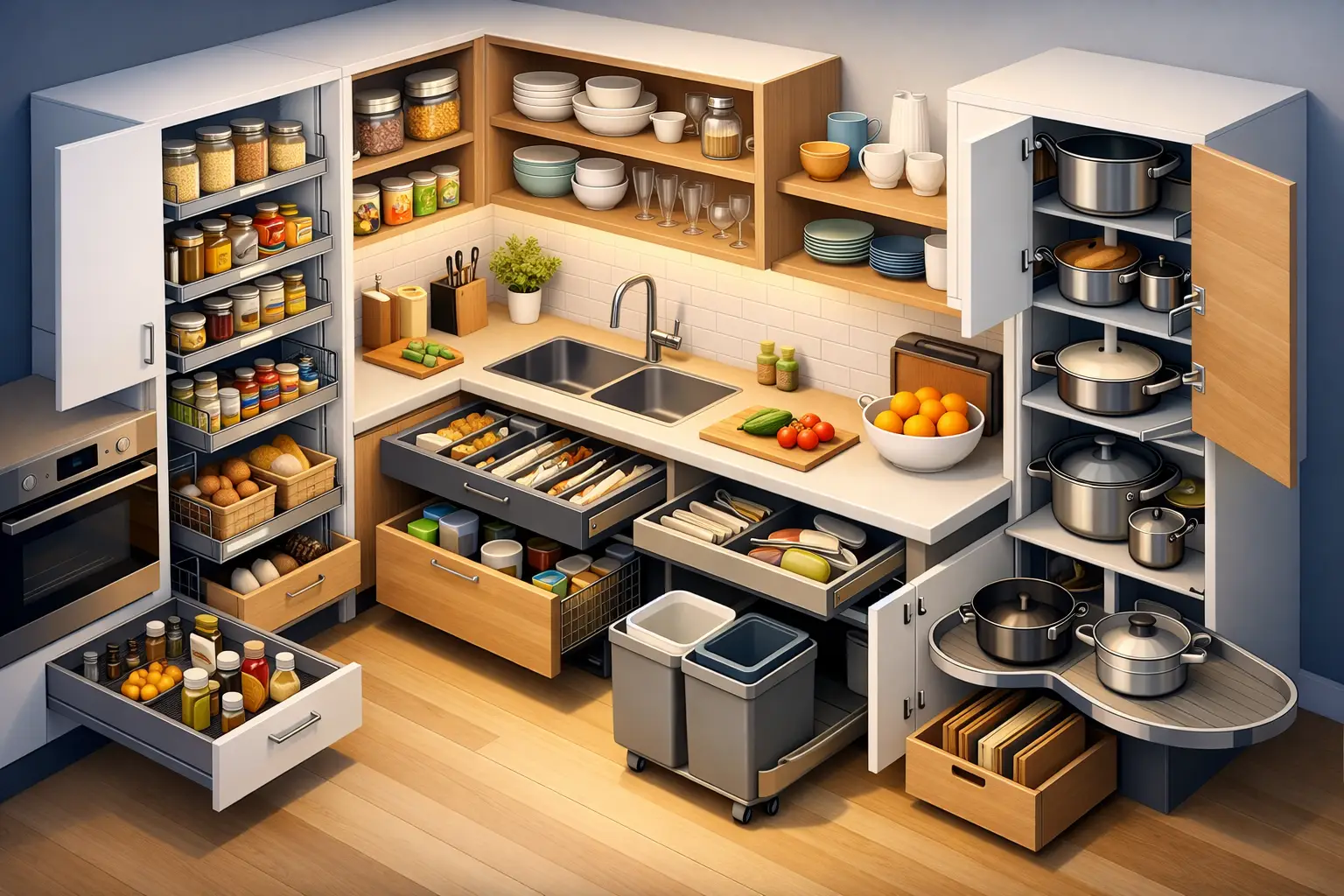
Deep, full-extension drawers solve this problem by bringing contents forward. They are especially effective for pots, pans, baking dishes, food storage containers, and everyday dishes. Instead of bending down and reaching into a dark cabinet, the entire drawer opens for a clear view of what is inside.
For drawers that hold heavier items, construction matters. Plywood cabinet boxes provide dependable strength, while dovetail drawer construction and quality soft-close glides help drawers operate smoothly under regular use. These details are not simply upgrades for a showroom display. They support the durability homeowners expect from a remodeled kitchen.
A drawer stack near the cooktop is often one of the most useful layout decisions. A shallow top drawer can hold utensils, while deeper drawers below can hold cookware. Adding a narrow pull-out for oils, spices, or cooking tools can keep the immediate cooking area organized without taking up much cabinet width.
Make Corner Cabinets Earn Their Space
Kitchen corners can become storage dead zones when they are planned poorly. A standard corner cabinet may offer a large amount of interior volume, but much of it is difficult to access. This is where the right accessory can make a meaningful difference.
A rotating shelf system can work well for homeowners who want an affordable way to access corner cabinet contents. Pull-out corner organizers provide easier reach and a more refined function, although they require a larger investment and careful installation. The right choice depends on the budget and what will be stored there.
Corner space is often well suited to less frequently used cookware, small appliances, or serving pieces. It is usually not the best location for everyday essentials unless the organizer allows contents to pull fully forward. The key is matching the storage mechanism to the frequency of use.
Build a Pantry Around Your Grocery Habits
Pantry storage should do more than hold food. A well-designed pantry makes it easier to see inventory, reduce duplicate purchases, and keep frequently used items within reach. Tall pantry cabinets are a strong option when a walk-in pantry is not available or when the kitchen layout needs a more compact solution.
Pull-out pantry shelves are particularly helpful because they eliminate the problem of forgotten food at the back of a deep cabinet. Adjustable shelves provide flexibility for cereal boxes, canned goods, tall bottles, and countertop appliances. For busy households, a mix of shelves and pull-outs often works better than one uniform interior.
If space allows, consider separating food storage from appliance storage. A pantry cabinet can hold dry goods and snacks, while a second tall cabinet can house a microwave, coffee equipment, blender, or air fryer. This approach helps preserve clean counter space while keeping the kitchen ready for daily use.
Organize Drawers for Small Items Before They Become Clutter
Drawers are only as useful as their interiors. Without dividers, utensils, measuring tools, batteries, takeout menus, and miscellaneous household items quickly become a jumble. Purpose-built drawer inserts create a place for the smaller items that tend to migrate across kitchen counters.
A utensil drawer near the dishwasher or dining area simplifies unloading. A second drawer near the range can hold cooking utensils, thermometers, and oven mitts. Spice drawer inserts are another practical option for homeowners who prefer labels facing upward rather than searching through a crowded cabinet shelf.
The same principle applies to waste and recycling. A concealed pull-out waste cabinet keeps bins out of sight while placing them where meal prep and cleanup happen. It is a straightforward feature, but it can make a kitchen look cleaner and function better every day.
Use Vertical Space Without Making the Kitchen Feel Heavy
Upper cabinets remain essential in many kitchens, especially where floor space is limited. The challenge is using them effectively without making the room feel closed in. Taller upper cabinets can add substantial storage, but their highest shelves are best reserved for seasonal pieces, specialty serving ware, or items used only occasionally.
Glass-front cabinets can visually lighten a section of the kitchen, but they require more disciplined organization because contents remain visible. Open shelving creates an even more casual look, yet it comes with a trade-off: dishes and decorative items collect dust and need to stay neat. For most households, a balanced combination of closed cabinetry and one intentional display area is more practical than replacing large sections of cabinetry with open shelves.
Vertical tray dividers are another high-value addition. Installed in a narrow cabinet, they keep baking sheets, cutting boards, cooling racks, and platters upright instead of stacked. This simple feature prevents the familiar clatter of pulling out several pans to reach the one at the bottom.
Design Storage Around Kitchen Zones
A kitchen feels efficient when storage supports the natural sequence of tasks. In the prep zone, keep knives, cutting boards, mixing bowls, and waste bins close to the main work surface. In the cooking zone, store pans, utensils, spices, and oils near the range. In the cleanup zone, place dishes, glasses, dish towels, and cleaning supplies near the sink and dishwasher.
This zoning approach is especially valuable during a full remodel because cabinet locations can be changed instead of merely reorganized. It can also improve a smaller kitchen without increasing its footprint. Moving one drawer bank or adding a pull-out cabinet in the right place may have a greater impact than adding more cabinets indiscriminately.
Choose Quality That Supports Everyday Use
Storage features work best when they are built into cabinetry designed for regular use. Homeowners comparing cabinet options should look beyond door style and finish. Plywood cabinet boxes, durable drawer construction, soft-close hardware, and properly planned installation all contribute to a kitchen that remains functional over time.
Affordable does not have to mean settling for weak materials or limited choices. Frameless cabinetry can provide a clean, contemporary appearance and maximize interior access, while thoughtful accessories make each cabinet more productive. The best investment is usually a balanced one: durable cabinet construction in the areas used every day, paired with storage upgrades that solve specific problems.
For homeowners in Weston, Davie, Miramar, Southwest Ranches, and Pembroke Pines, Leonardo’s Kitchens can help turn those daily frustrations into a cabinet plan that fits the room, the budget, and the way the household lives. A well-planned kitchen should not require constant reorganizing. It should give every essential item a sensible home and leave the counters clear for the moments that matter.
