

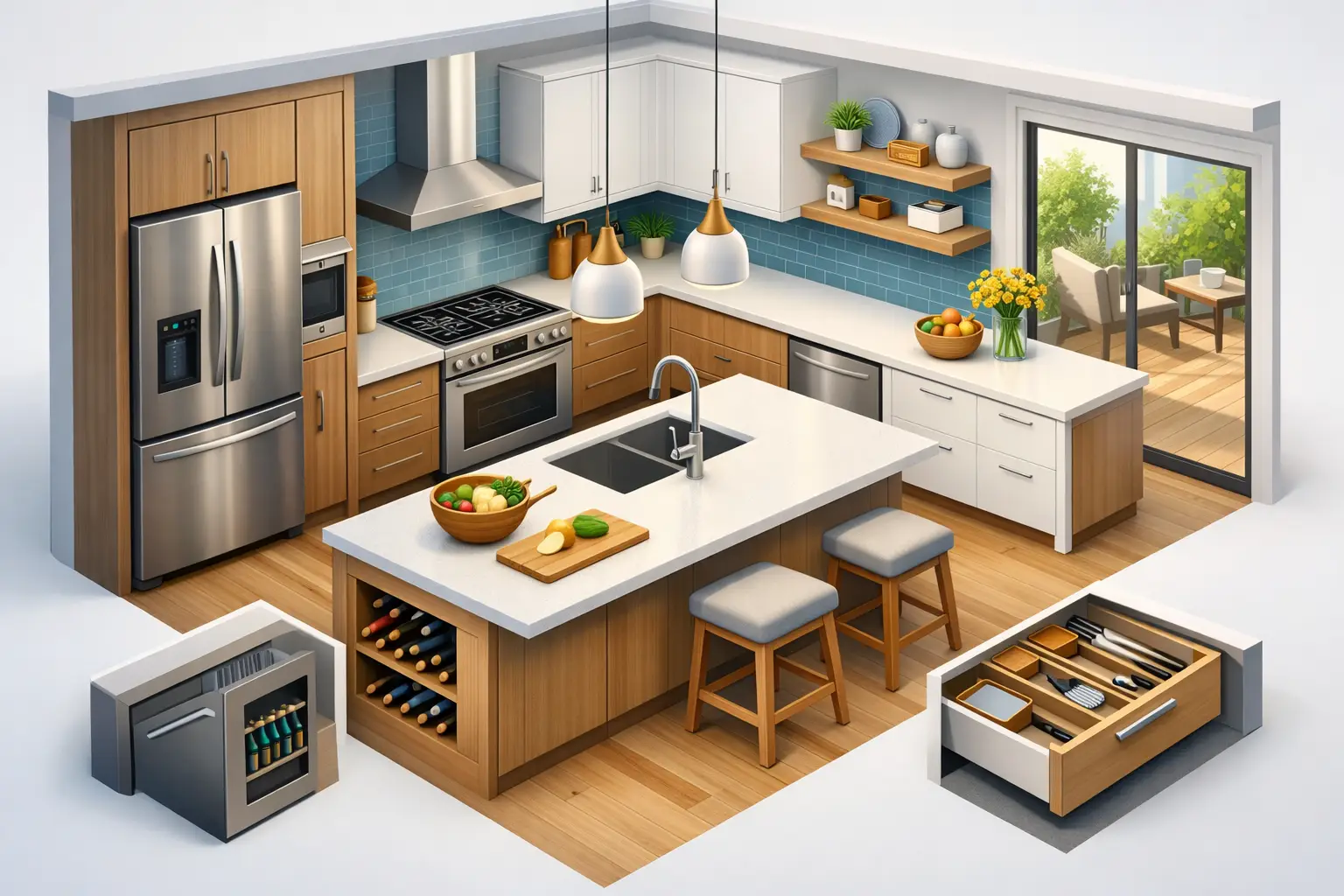

A kitchen can help a buyer picture life in a home, or make them start calculating renovation costs before they leave the room. The best kitchen upgrades for resale are not necessarily the most expensive ones. They are the improvements that make the room look current, work better every day, and reassure buyers that the major components are built to last.
For homeowners in Weston and the surrounding South Florida market, that usually means putting the budget into cabinetry, surfaces, lighting, and layout rather than chasing every short-lived design trend. A well-planned kitchen should feel polished without appearing overbuilt for the home or neighborhood.
The Best Kitchen Upgrades for Resale Start With Cabinets
Cabinets occupy the most visual space in a kitchen, so worn doors, dated finishes, poor storage, and uneven drawers can quickly make the entire room feel older. Replacing low-quality or damaged cabinetry often creates a stronger resale impression than spending the same amount on a decorative backsplash or one premium appliance.
For a resale-focused remodel, choose a cabinet style with broad appeal. Clean shaker doors, simple slab fronts, and restrained transitional profiles tend to work well because they suit a range of buyers. White, warm white, light wood tones, soft gray, and muted greige remain reliable choices. Dark cabinetry can look dramatic, but in a smaller or low-light kitchen it may make the room feel closed in.
Construction matters as much as the door style. Buyers may not inspect every cabinet box, but they notice drawers that stick, doors that slam, and thin components that feel temporary. Plywood cabinet boxes, dovetail drawer construction, and soft-close hardware support the kind of everyday quality people can see and feel during a showing. Frameless cabinets are also a practical choice when maximizing accessible interior storage is a priority.
If the existing cabinet layout is sound and the boxes are in excellent condition, refacing or refinishing may be a reasonable lower-cost option. However, it will not solve inefficient storage, damaged interiors, poor drawer function, or awkward cabinet sizes. When a kitchen needs better functionality as well as a new look, replacement cabinetry usually delivers more meaningful value.
Improve the Layout Before Adding Finishes
A beautiful kitchen with a frustrating workflow still leaves buyers thinking about future work. Before finalizing cabinet selections, consider whether the plan makes cooking, cleanup, and storage easier. Common resale-friendly improvements include adding more usable counter space, widening a narrow aisle where possible, creating a clear path between the refrigerator, sink, and range, and incorporating a pantry cabinet.
An island can be a strong selling feature when the room has enough clearance around it. It can provide seating, storage, and prep space in one upgrade. But forcing an oversized island into a limited footprint is a mistake. Buyers should be able to open appliances, move through the kitchen, and use bar stools without blocking the main work zone.
Storage upgrades often make a bigger difference than homeowners expect. Deep drawers for pots and pans, roll-out trays, a pull-out trash cabinet, vertical tray storage, and organized pantry space make the kitchen feel more functional from the first walkthrough. These are not flashy additions, but they help a buyer see that the kitchen was designed thoughtfully rather than simply updated on the surface.
Choose Durable, Neutral Countertops
Countertops are another high-visibility upgrade, especially around the sink and island. Quartz is a popular resale choice because it provides a clean, consistent appearance, resists staining, and requires less maintenance than many natural stones. It is available in colors and patterns that can complement both traditional and modern cabinetry.
A simple white or light neutral quartz with subtle movement generally has wider appeal than a busy pattern. The goal is not to create a bland kitchen. It is to avoid a surface so specific that a buyer sees it as something they will need to replace. A thicker edge profile or a modest waterfall detail may be appropriate in the right home, but neither is required for a kitchen to look finished and valuable.
Natural stone can still be an attractive option, particularly for homeowners who appreciate its character. The trade-off is maintenance and variation. For resale, quartz often gives buyers the dependable, move-in-ready impression they want.
Upgrade Lighting in Layers
Many older kitchens rely on a single ceiling fixture, which creates shadows on counters and makes finishes look less refined. A better lighting plan combines ambient, task, and accent lighting. Recessed ceiling lights can brighten the room evenly, while under-cabinet lighting improves visibility for prep work and makes the backsplash and countertops stand out.
Decorative pendants above an island or peninsula can add personality, but keep the scale and finish appropriate for the room. A simple fixture in matte black, brushed nickel, or warm brass can look current without becoming the focal point of the entire kitchen. Lighting should support the design, not compete with it.
Also consider color temperature. Warm-neutral light typically presents cabinetry and countertops more naturally than harsh, cool-toned bulbs. Consistent lighting throughout the kitchen helps it feel intentional and well maintained.
Replace Tired Fixtures and Hardware
Smaller details do not carry a remodel by themselves, but they can either reinforce or weaken the effect of larger upgrades. A new faucet, coordinated cabinet hardware, and a clean modern sink help the kitchen look complete. These selections should feel durable and comfortable to use, not merely decorative.
A single-bowl stainless steel sink, a quality pull-down faucet, and straightforward bar pulls or knobs are safe choices for broad buyer appeal. Mixing finishes can work, but it requires discipline. If cabinetry, lighting, faucet, and hardware all introduce different metals or styles, the room can feel pieced together.
This is one category where modest spending can produce a noticeable improvement. Still, avoid choosing the least expensive fixtures simply because they look similar from a distance. A loose faucet or lightweight drawer pull is quickly noticed in person.
Use a Backsplash to Finish, Not Overwhelm
A backsplash protects the wall and ties cabinets to countertops, but it should not dominate the design. White or soft neutral subway tile, a simple stacked pattern, or a restrained porcelain tile often works well for resale. These materials are easy to clean and unlikely to make a kitchen feel dated within a few years.
Highly patterned tile, strong colors, and complex mosaics can be beautiful in the right setting, but they narrow the audience. If you want some visual interest, consider texture, a subtle handmade look, or a slightly varied neutral tone instead of a bold theme. The countertops and cabinetry should remain the primary investments.
Appliances: Match the Home and the Buyer
New appliances can help a kitchen feel move-in ready, especially if the current set is mismatched, visibly worn, or outdated. Stainless steel remains a familiar choice for many buyers, while panel-ready appliances can create a more integrated look in higher-end designs.
The key is proportion. Installing professional-grade appliances in a modest home may not return their full cost, particularly if the cabinetry, electrical system, and layout do not support the same level of finish. On the other hand, replacing a failing range or an old refrigerator before listing can remove an immediate buyer objection.
Prioritize reliable, energy-conscious appliances with a coordinated appearance. Focus on the components buyers use and notice most, rather than adding specialty features that may not matter to the next owner.
Avoid Improvements That Limit Your Return
Resale value is not just about what to add. It is also about avoiding decisions that create unnecessary cost or reduce broad appeal. Overly personalized cabinet colors, very open shelving, oversized range hoods, and complicated smart features can all be appealing to certain homeowners, but they are less universal than durable cabinetry and a functional layout.
Do not overlook workmanship, either. Uneven cabinet installation, poorly aligned doors, rushed countertop seams, and incomplete trim can undermine quality materials. A kitchen remodel involves several connected trades, so design coordination and experienced installation are central to the final result. A well-managed project helps prevent the expensive corrections that often appear when products are purchased separately and installed without a complete plan.
A resale-minded kitchen should make the next buyer feel they can move in, cook dinner, and enjoy the space without adding another renovation to their list. That is why Leonardo’s Kitchens focuses on pairing refined cabinet design with practical construction details and installation guidance. Start with the improvements buyers touch every day, choose finishes that will age well, and let a clear plan guide the budget.
