

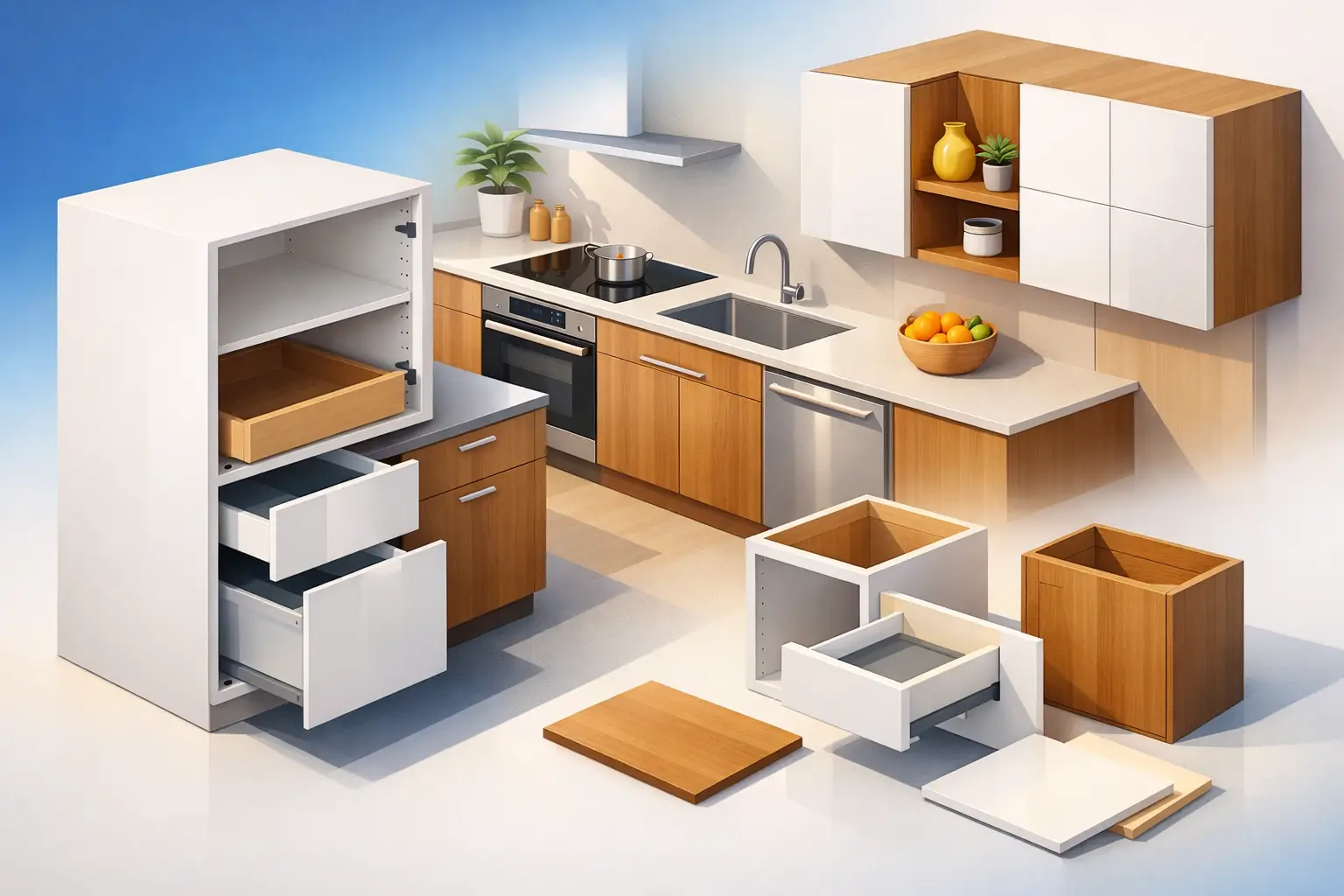

A low cabinet quote can look attractive until the details start adding up: thin cabinet boxes, limited finish choices, drawer hardware that feels light, and installation costs that were never clearly addressed. The best frameless cabinets for value are not simply the least expensive cabinets available. They are the ones that give your kitchen a refined, modern look, reliable daily performance, and construction details worth paying for without pushing the entire remodel beyond your budget.
For homeowners planning a kitchen update in Weston, Davie, Miramar, Southwest Ranches, or Pembroke Pines, the right choice usually falls between basic builder-grade cabinetry and high-end custom work. Frameless cabinets can fit that middle ground particularly well, provided you know what to inspect before comparing prices.
What Makes Frameless Cabinets a Strong Value
Frameless cabinetry is often called European-style cabinetry. Unlike traditional face-frame cabinets, it does not have a wide hardwood frame attached to the front of the cabinet box. Doors and drawer fronts mount directly to the sides of the box, creating clean lines and smaller gaps between components.
That construction gives homeowners two practical benefits. First, frameless cabinets generally provide more usable interior space because there is no face frame reducing the opening. A wide drawer, pull-out trash unit, or pantry cabinet can be easier to access. Second, the full-overlay door style creates the sleek, continuous appearance many homeowners want in a current kitchen design.
Frameless does not automatically mean better. A poorly built frameless cabinet with particleboard sides and weak hardware can still be a poor investment. Value comes from the combination of box material, joinery, drawer construction, hardware, finish quality, cabinet design, and professional installation.
How to Identify the Best Frameless Cabinets for Value
Start by looking beyond the door style. Two kitchens may have nearly identical shaker doors or flat-panel fronts, yet their durability and long-term value can be very different.
Choose plywood cabinet boxes when the budget allows
The cabinet box is the working structure of the kitchen. It supports shelves, countertops, drawer slides, hinges, and the everyday weight of dishes, cookware, and pantry items. Plywood cabinet boxes are a meaningful upgrade over lower-density particleboard or fiberboard options because they offer better screw-holding strength and greater resistance to moisture-related swelling.
This matters in South Florida homes, where humidity, active family kitchens, and occasional plumbing issues can expose cabinet materials to more stress. Plywood is not waterproof, and a cabinet leak still needs immediate attention. But it is a stronger starting point for a kitchen expected to perform for years.
A value-focused cabinet line does not need every component to be premium hardwood. The better question is whether the cabinet box, shelves, and high-stress areas are built from materials appropriate for real use. A durable plywood box often adds more value than spending the same amount on an elaborate door profile.
Look for solid wood dovetail drawer boxes
Drawers receive more daily use than almost any other part of a kitchen. They hold heavy utensils, storage containers, cooking tools, and sometimes small appliances. Dovetail joints, where interlocking cuts connect the front and sides of a drawer box, are a dependable sign of stronger construction than stapled or thinly assembled drawer boxes.
Solid wood dovetail drawers are especially worthwhile in wide drawers, deep pot-and-pan drawers, and high-use areas around the range and prep zone. They do not just look better when opened. They are designed to handle regular loading and unloading without loosening prematurely.
If you need to prioritize your budget, invest in the drawers and cabinets you will use every day. A decorative glass-door cabinet may be appealing, but durable base drawers and a well-built pantry will make a larger difference in how the kitchen functions.
Do not treat soft-close hardware as a luxury add-on
Soft-close hinges and drawer slides have become a practical expectation in a quality kitchen. They reduce slamming, protect doors and drawer boxes from repeated impact, and make the kitchen feel more finished. The key distinction is not whether a cabinet has soft-close hardware, but whether the hardware is properly sized, adjusted, and installed.
A drawer slide should open smoothly under weight and close evenly without scraping. Hinges should allow consistent door alignment across the full run of cabinets. Small gaps, crooked doors, and drawers that do not sit flush are often installation or adjustment issues, but they can also point to lower-quality components.
Ask what hardware is included in the quoted cabinet price. A quote that looks less expensive may exclude upgraded drawer slides, pull-outs, or the labor required to adjust doors after installation.
Compare the finish, not just the color sample
Cabinet finishes affect both appearance and maintenance. Painted finishes offer flexibility, especially for white, off-white, gray, blue, or green kitchens. Stained wood finishes emphasize grain and can add warmth to modern or transitional designs. Thermofoil and laminate doors can also be practical choices for certain budgets and contemporary styles.
There is no single best finish for every homeowner. Painted cabinets offer a polished look but may show chips or hairline cracks over time, especially around high-impact areas. Wood doors can have natural variation, which many homeowners appreciate, though color consistency may not be as uniform. Laminates can be durable and easy to clean but may not deliver the same depth as painted or wood cabinetry.
The value decision is to select a finish that fits the way you live, not just the kitchen photos you saved. Bring home samples when possible and view them in your actual lighting. South Florida sunlight can make a warm white appear yellow or make a cool gray feel blue.
Spend on Function Before Decorative Upgrades
Cabinet value is closely tied to layout. Even the strongest cabinets will not solve a kitchen that lacks storage, has poor work flow, or leaves inconvenient dead space in corners. Before upgrading door details or adding specialty cabinets, make sure the design addresses the work zones you use most.
Deep drawer bases are usually more accessible than standard lower cabinets with fixed shelves. A pull-out trash cabinet can keep waste out of sight and improve traffic flow. A well-planned pantry can reduce countertop clutter. Corner solutions can be useful, although some accessories add substantial cost without providing proportionate storage benefits.
For many kitchen remodels, the best investment is a straightforward cabinet plan with enough drawers, a practical pantry solution, and proper clearance around appliances. Specialty organizers are worth considering when they solve a real daily frustration, not simply because they look impressive in a showroom.
Include Installation in the Value Calculation
Cabinets are only as good as the installation behind them. Frameless cabinets require careful leveling and alignment because their clean lines make inconsistencies easy to see. Walls, floors, and ceilings in existing homes are rarely perfectly straight, so experienced installers must scribe panels, shim cabinet boxes, adjust doors, and coordinate appliance openings precisely.
A low cabinet price can become expensive when the buyer has to separately manage measurements, delivery, installation, countertop coordination, plumbing, electrical work, and final adjustments. There is nothing wrong with purchasing cabinets only, particularly if you have a qualified contractor and a simple project. But for a larger remodel, a provider that can support design and project execution may offer better overall value.
Before making a decision, clarify who is responsible for field measurements, cabinet delivery inspection, damaged-piece replacement, installation, trim, hardware adjustment, and coordination with countertops and appliances. These details protect the schedule and help prevent avoidable change orders.
A Better Way to Compare Cabinet Quotes
When comparing estimates, ask each supplier to identify the construction and services included. Price comparisons are only useful when the scope is similar. One quote may include plywood boxes, dovetail drawers, soft-close hardware, design support, and installation, while another covers only cabinet components.
Review the door material, box construction, drawer construction, shelf thickness, hinge and slide type, finish, molding, panels, accessories, delivery, and installation. Also verify whether the layout includes fillers and end panels needed for a finished appearance. A cabinet package can seem complete on paper but look unfinished without these necessary details.
The goal is not to buy every available upgrade. It is to avoid paying later for basics that should have been included from the start.
Build a Kitchen That Feels Worth the Investment
The best value is rarely found at either extreme. The cheapest cabinets can compromise on the structural components you rely on daily, while fully custom cabinetry may exceed the needs of a practical remodel. Well-built frameless cabinets with plywood boxes, dovetail drawers, dependable soft-close hardware, and a thoughtful installation plan can deliver the elegant look homeowners want at a more disciplined price point.
At Leonardo’s Kitchens, the conversation starts with how you use your space, what your budget needs to accomplish, and which construction details will matter long after the remodel is complete. A kitchen should look polished on installation day, but it should also make cooking, storage, and daily life easier for years to come.
