

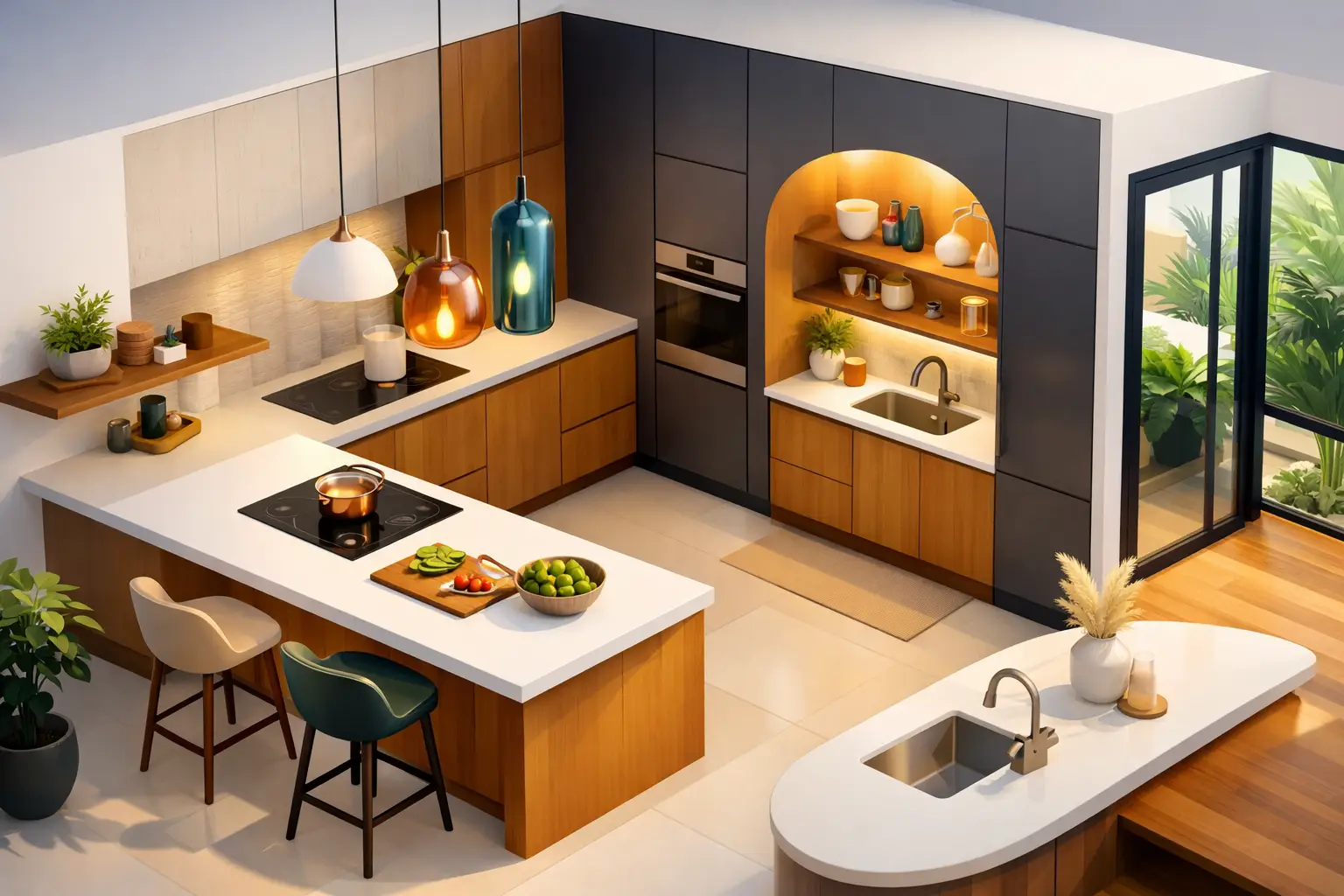

If your kitchen still reflects a 2010s gray-and-white formula, the shift in kitchen remodel 2026 trends will feel noticeable right away. Homeowners are moving toward spaces that look more refined, work harder every day, and justify the investment with better storage, stronger materials, and cleaner design choices. The common thread is not chasing novelty. It is making practical upgrades that age well.
For most households, that means asking better questions before demolition starts. Will this finish still look current in five years? Will these cabinets hold up to real use? Does the layout make cooking, cleaning, and traffic flow easier, or does it just photograph well? In 2026, the best remodels are balancing style with long-term function.
Kitchen remodel 2026 trends start with warmer design
The all-cool palette is fading. White kitchens are not disappearing, but the bright, stark version is giving way to softer whites, light taupes, natural wood tones, and painted finishes with more depth. Warm oak, walnut-inspired stains, mushroom tones, and muted greens are showing up more often because they make a kitchen feel finished rather than clinical.
This matters for resale too. A warmer palette tends to feel more welcoming across different home styles, especially in established neighborhoods where homeowners want an updated kitchen without making the entire house feel out of sync. It is a safer move than highly specific colors that can date quickly.
There is still room for contrast, but it is more controlled now. Instead of black-and-white everything, many remodels are using a light perimeter cabinet color with a medium-tone island, or wood lowers paired with painted uppers. The effect is less harsh and more custom.
Frameless cabinetry keeps gaining ground
One of the clearest kitchen remodel 2026 trends is the continued move toward frameless cabinetry. Homeowners want a clean, modern front, but the real advantage is not just appearance. Frameless construction gives easier access, a more efficient interior, and a streamlined look that works well in both contemporary and transitional kitchens.
For budget-conscious remodels, cabinetry is also where value becomes easier to measure. A cabinet line with plywood boxes, dovetail drawers, and soft-close hardware gives you features you will notice every day. By contrast, spending heavily on decorative extras while settling for weaker cabinet construction usually catches up with a homeowner later.
This is where trade-offs matter. Full custom cabinetry still makes sense for unusual layouts or very specialized storage needs. But many homeowners can get the look and performance they want from well-built frameless RTA or semi-custom options, especially when the design is handled carefully and installation is done correctly. That middle ground is where a lot of smart remodel money is going.
Storage is becoming more specific, not just more abundant
Bigger kitchens are not always the goal. Better-organized kitchens are. In 2026, storage planning is getting more tailored to daily routines. Deep drawers for pots and pans, pull-out trash systems, tray dividers, spice pull-outs, and pantry solutions are taking priority over decorative filler pieces that add cost without improving use.
This shift makes sense because homeowners are more aware of workflow now. People want to unload groceries faster, keep counters clearer, and avoid the dead zones that plague older kitchens. A well-planned drawer base often outperforms a traditional lower cabinet with a single shelf, even if the footprint stays exactly the same.
Appliance garages are also evolving. Instead of bulky, awkward boxes on the counter, newer versions are integrated into the cabinetry in a cleaner way, often with dedicated outlets and easier access. They work best when they are sized for the appliances the homeowner actually uses, not as a generic trend feature.
Islands are still important, but expectations are changing
For years, the oversized island became the default sign of an updated kitchen. That is shifting. Homeowners still want islands, but they are paying closer attention to proportion, clearance, and purpose. An island that blocks movement or forces tight walkways is no longer seen as a good trade, even if it adds seating.
In many remodels, the better move is a right-sized island with meaningful storage and durable countertop space rather than the largest piece that can be squeezed into the room. Some households are choosing seating for two or three instead of trying to make every island serve as a full dining area.
Waterfall edges and dramatic slab statements are still around, but they are no longer automatic. More homeowners are asking whether that budget is better spent on cabinetry upgrades, layout changes, or improved lighting. Often, it is.
Durable surfaces are winning over high-maintenance choices
A kitchen has to stand up to heat, spills, impact, and constant cleaning. That practical reality is shaping material selections more than trend boards. Quartz remains a strong choice because it offers a polished look with less maintenance than natural stone. That said, not all quartz performs equally, and edge profiles, slab pattern, and fabrication quality still make a major difference.
Backsplashes are also getting quieter and more architectural. Instead of busy mosaic patterns, many remodels are using slab backsplashes, larger-format tile, or simple vertical stack layouts that keep the room looking current without overwhelming it. The goal is a cleaner visual field.
For flooring, wood-look porcelain and large-format tile continue to make sense in South Florida homes because they handle humidity, traffic, and cleaning demands well. The exact right choice depends on the household. A home with pets, kids, and frequent entertaining may prioritize slip resistance and durability over a more delicate finish.
Lighting is becoming layered and more intentional
Good lighting can make average materials look better and great materials look expensive. In 2026, kitchen lighting is less about a few eye-catching pendants and more about layering. Recessed lighting, under-cabinet lighting, island fixtures, and in some cases toe-kick or cabinet interior lighting are being planned together.
This improves both function and appearance. Task lighting at counters matters when preparing meals, but it also softens shadows and helps the kitchen feel more finished at night. Under-cabinet lighting, in particular, gives a strong visual return without a massive budget impact.
Decorative fixtures are still important, but scale and restraint matter. Oversized fixtures can quickly dominate a medium-size kitchen. A cleaner fixture with quality finish and proper placement usually ages better.
Hidden technology is preferred over flashy tech
Smart kitchens are not going away, but homeowners are becoming more selective. Voice controls and app-connected appliances sound appealing, yet many buyers are more interested in features that solve real problems, such as better ventilation, improved refrigeration organization, touchless faucets, and charging areas tucked out of sight.
That is an important distinction. Technology should support the kitchen, not compete with it. Built-in convenience tends to outperform novelty because it remains useful long after the first week.
Integrated panels for dishwashers and refrigerators are also gaining attention in higher-end remodels because they reduce visual clutter. This is not necessary for every project, but it shows the larger direction of 2026 design: cleaner lines, fewer interruptions, and a more furniture-like feel.
Budget discipline is part of the trend cycle now
One of the most realistic kitchen remodel 2026 trends is that homeowners are asking harder questions about where the money goes. That is a healthy change. The kitchen is still one of the best places to invest, but the strongest remodels are not built around the most expensive option in every category.
Instead, they are selective. Spend where performance matters most – cabinet construction, layout improvement, installation quality, and durable surfaces. Be more cautious with features that mainly serve as showroom drama. A remodel can look elegant without carrying luxury-level markup in every detail.
This is especially relevant for homeowners in markets like Weston, Davie, and nearby areas where expectations for finish quality are high, but value still matters. A well-executed remodel should feel upgraded, not overbuilt for the neighborhood.
That is also why working with a company that understands both cabinetry and project execution can make a difference. When design choices, cabinet specifications, and installation planning are aligned from the beginning, there is less room for costly mismatch later.
What these trends mean for your remodel
The headline for 2026 is simple: kitchens are getting warmer, smarter, and more disciplined. Not cheaper. Not plain. Just better considered. Homeowners are choosing details that improve the way the kitchen works while creating a finish that feels current without being fragile or overly trend-driven.
If you are planning a remodel, the smartest approach is to filter every trend through your actual space, budget, and routine. The best kitchen is not the one that copies every new idea. It is the one that gives you stronger storage, better cabinet quality, durable materials, and a layout that makes daily life easier. Those choices tend to look just as good five years from now as they do on install day.
